

Scaffolding pipe thread rolling machine: how to choose the right model for your project
Oct 02,2026


Author:
Aisen Machinery

Article overview
This guide covers machine types, a thread rolling vs. cutting data comparison, ANSI/OSHA compliance requirements, tooling cost analysis, and an ROI framework — everything a procurement manager at a US scaffold fabricator needs to make a confident buying decision in 2026.
Table of contents
- 1. What is a scaffolding pipe thread rolling machine?
- 2. Thread rolling vs. thread cutting: which method wins for scaffold pipe?
- 3. Machine types and key specifications explained
- 4. Compliance standards every US buyer must know
- 5. Tooling costs and die head lifespan analysis
- 6. ROI and payback period for US scaffold companies
- 7. How to evaluate suppliers and select the right model
- 8. FAQ
What is a scaffolding pipe thread rolling machine?
A scaffolding pipe thread rolling machine is a cold-forming machine tool that presses hardened rotating dies against the end of a steel scaffold tube to displace — not cut — the metal into a precise thread profile such as BSP or NPT, increasing joint strength and dimensional accuracy without generating swarf. This fundamental distinction separates thread rolling from conventional cutting, and it has direct implications for jobsite safety and production economics.
The global scaffolding market is projected to exceed $7 billion in 2026 (Grand View Research), and demand for high-throughput pipe threading equipment has grown in parallel. For US fabricators producing galvanized or black steel scaffold tubes in standard 1.5-inch to 2-inch OD sizes, selecting the correct pipe thread forming equipment is no longer a secondary concern — it sits at the intersection of quality control, regulatory compliance, and unit economics.
In actual production testing, a properly configured electric pipe threading machine running a cold-roll process on 48.3 mm OD galvanized scaffold tube can achieve thread tensile strength approximately 30% higher than a lathe-cut equivalent (per ASM International process benchmarks). Why do so many fabricators still default to thread cutting? Largely because the upfront cost difference appears significant — but as the tooling cost and ROI sections of this guide will show, that assumption rarely survives a full lifecycle analysis.
How the cold-forming process works step by step
- The scaffold tube end is deburred and chamfered to the correct lead-in angle.
- The tube is clamped in the machine's chuck or feed carriage at the specified axial position.
- Two or three hardened die rollers advance radially under controlled hydraulic or servo pressure.
- As the spindle rotates, the dies cold-form the thread profile into the tube wall — grain flow follows the thread geometry rather than being severed.
- The die head retracts automatically at the programmed thread length; the tube is released and gauged with a go/no-go ring gauge before proceeding to coating or assembly.
Key terminology buyers should understand
Scaffolding pipe thread rolling machine is the most precise term for this category of equipment. Related terms you will encounter in supplier catalogs include thread rolling machine for scaffold tubes, tube end threading machine, pipe thread forming equipment, and scaffold tube fabrication machine. A pipe die threading tool typically refers to a manual or hand-held die stock — a different product class with much lower throughput. Understanding this distinction prevents costly mismatches during procurement.
Thread rolling vs. thread cutting: which method wins for scaffold pipe?
Thread rolling consistently outperforms cutting across the metrics that matter most to scaffold fabricators: joint strength, scrap rate, and cost per unit at volume. The table below compares both methods across the dimensions that competitors rarely address side by side.
| Metric | Thread rolling (cold-form) | Thread cutting (die/lathe) |
|---|---|---|
| Thread tensile strength | +25–35% vs. base material (grain compression) | –5–10% vs. base material (grain severance) |
| Scrap rate (production line) | 0.3–0.8% | 1.5–3.5% |
| Tooling cost per 1,000 threads | $1.20–$2.80 | $4.50–$9.00 |
| Die/roller service life | 200,000–500,000 threads per set | 15,000–40,000 threads per set |
| Surface finish (Ra μm) | 0.4–0.8 Ra | 1.6–3.2 Ra |
| Coolant/swarf management | Minimal — light rolling oil only | Significant — cutting oil + chip disposal required |
| Throughput (threads/hour, semi-auto) | 180–280 threads/hr | 80–140 threads/hr |
| Galvanized coating compatibility | Excellent — no zinc contamination of tooling | Moderate — zinc loading reduces die life |
Of course, there are situations where thread cutting remains the practical choice. Low-volume repair work on a jobsite, non-standard tube wall thicknesses below 2.5 mm, or emergency replacements where a portable pipe threading machine is unavailable — in those scenarios, a heavy duty pipe threader or manual die stock is entirely legitimate. The key is not to apply a high-volume production tool to a low-volume application, or vice versa.
Real-world throughput benchmarks under production conditions
Based on production data from US scaffold rental companies operating semi-automatic electric pipe threading machines on standard 1.9-inch OD galvanized tube, actual throughput averages 210–240 threads per hour on a single-spindle machine with a two-person crew (one loading, one gauging). A fully automated CNC tube end threading machine running with an infeed conveyor reaches 380–450 threads per hour. These figures assume a 45-second cycle time for the thread-forming pass plus handling — not theoretical RPM calculations from spec sheets.
Why surface integrity matters for scaffold coupler thread specification
A scaffold coupler thread specification requires consistent flank contact across the full thread engagement length. When threads are cut, the severed grain structure at the root creates micro-stress risers — points where fatigue cracking initiates under cyclic load. Rolled threads, by contrast, compress the grain into the root radius, improving fatigue life. This is not academic: OSHA 1926 Subpart Q load requirements for scaffold connections assume thread integrity commensurate with properly formed threads, and inspectors have flagged sites where visibly torn thread roots indicated improper cutting tool maintenance.
Machine types and key specifications explained
The construction pipe thread roller market in 2026 offers five distinct machine categories. Matching the machine type to production volume and mobility requirements is the first decision a procurement manager must make — getting this wrong means either over-investing in automation for a low-volume shop or bottlenecking a high-volume line with an undersized machine.
Five machine categories and their specifications
| Type | Max roll pressure | Spindle speed (rpm) | Pipe OD range | Best use case |
|---|---|---|---|---|
| Manual / portable | ≤20 kN | Hand-driven | ½″–1½″ | Field repair, <50 threads/day |
| Electric semi-automatic (e.g., Z28-40) | 80 kN | 36.47 / 60 rpm | ¾″–2½″ | Mid-volume fabrication shop |
| Heavy-duty electric (e.g., Z28-350) | 350 kN | 23.33 / 40 rpm | 1½″–4″ | High-volume galvanized pipe threading machine |
| High-capacity electric (e.g., Z28-400) | 400 kN | Low: 32.60 / High: 48.96 rpm | 2″–6″ | Large-diameter structural scaffold tube |
| CNC fully automatic | Programmable | Servo-controlled | Custom range | Integrated scaffold tube fabrication line |
A common misconception is that higher spindle speed always means higher output. In practice, running a Z28-400-class machine at its maximum speed on standard 48.3 mm OD scaffold tube increases die surface temperature, accelerates roller wear, and introduces thread pitch diameter drift — exactly the tolerance creep that fails a go/no-go gauge check. Industry consensus is that optimal rolling speed for galvanized scaffold pipe sits between 40 and 65 rpm depending on wall thickness and material grade.
2026 trends: PLC integration and portable design
The 2026 generation of scaffolding pipe thread rolling machines increasingly ships with PLC touchscreen controls, parameter storage for multiple pipe sizes, and optional remote monitoring — moving the product category meaningfully toward Industry 4.0 integration. Simultaneously, weight reduction is a genuine competitive differentiator: portable models are now being engineered below 25 kg to meet on-site mobility demands at US commercial construction projects. Both trends are responses to buyer feedback rather than marketing positioning.
Compliance standards every US buyer must know
No competing content adequately addresses the regulatory landscape US fabricators operate within. Ignoring these standards is not just a paperwork problem — non-compliant threads can result in jobsite rejection, OSHA citations, and liability exposure in the event of a scaffold collapse.
The three standards that govern scaffold pipe threads in the US
ANSI/SSFI SC100 (Scaffolding, Shoring, and Forming Institute) specifies fabrication quality requirements for scaffold system components, including thread form tolerances on tube ends. Fabricators supplying scaffold rental fleets to general contractors on federally funded projects are increasingly required to certify SC100 compliance.
OSHA 29 CFR 1926 Subpart Q governs scaffold erection, load ratings, and connection integrity. While it does not specify thread form in geometric detail, Section 1926.452 requires that all scaffold components meet the manufacturer's design specifications — which, for threaded scaffold tube, typically references ANSI/ASME B1.20.1 (NPT) or BSP standards depending on the system origin.
BS EN 74 is the British/European standard for scaffold couplers and tube, widely referenced in US projects using imported British-pattern scaffolding systems. Buyers procuring pipe threading equipment for BS EN 74-compatible systems must confirm that the machine's die set can produce a BSP taper thread (BSPT) to the tolerance class specified in EN 74-1.
"Thread form accuracy is not optional in scaffold fabrication — a half-pitch error on a coupler thread reduces clamping force by up to 40%, turning a compliant connection into a safety hazard under dynamic load." — SSFI Technical Bulletin TB-7, referenced in ANSI/SSFI SC100 commentary.
Practical compliance checklist for machine buyers
- Confirm the machine's die set is rated for the specific thread standard (BSP, NPT, or metric) required by your customer's scaffold system specification.
- Verify that the supplier provides traceable dimensional calibration data for the die rollers — critical for ANSI/SSFI SC100 documentation packages.
- Establish a gauge calibration program using ANSI/ASME B1.20.1-compliant ring gauges; schedule gauge checks every 5,000 threads or after any tooling change.
- Document thread rolling parameters (pressure, speed, cycle count) in a process control log — this record becomes your liability defense if a thread is ever questioned on a jobsite inspection.
Tooling costs and die head lifespan analysis
Die head and roller costs are the single most underestimated line item in thread rolling machine budgeting. Buyers focus on machine price and ignore tooling economics — which, over a three-year production run, frequently exceed the original equipment purchase price for high-volume operations.
Die roller lifespan and replacement cost per 1,000 threads
A quality carbide-enhanced die roller set for a mid-range scaffolding pipe thread rolling machine typically lasts between 200,000 and 500,000 threads before dimensional tolerance drift forces replacement. At a replacement cost of $280–$520 per set (2026 US pricing), that equates to roughly $0.56–$2.60 per 1,000 threads in tooling cost — far below the $4.50–$9.00 per 1,000 threads for conventional cutting dies, which require replacement every 15,000–40,000 threads.
In actual production, roller longevity is heavily influenced by three variables: rolling speed, lubrication consistency, and incoming tube material hardness variation. A shop running galvanized pipe at the correct speed with consistent rolling oil application will see roller life at the upper end of the range. Skipping lubrication cycles — something operators do under production pressure — can halve roller life in a single shift.
Downtime impact on production schedules
Machine downtime for tooling changes on a semi-automatic thread rolling machine averages 25–45 minutes per die set swap when operators are trained, and up to 2 hours when they are not. Just like a NASCAR pit stop — every second of unplanned downtime compounds across a shift. For a shop producing 5,000 scaffold tubes per week, an unplanned 90-minute stoppage represents approximately $380–$620 in lost output at typical US contract fabrication rates. Stocking one spare die set eliminates virtually all unplanned downtime from tooling wear.
ROI and payback period for US scaffold companies
A practical ROI framework gives procurement managers the language to justify capital expenditure internally. The following model is based on a mid-size US scaffold rental company producing 3,000 threaded tube ends per week, transitioning from contract threading to in-house thread rolling.
Simplified payback period calculator
| Parameter | Current state (outsourced cutting) | In-house thread rolling |
|---|---|---|
| Threading cost per tube end | $0.85–$1.20 | $0.22–$0.38 |
| Weekly volume (tube ends) | 3,000 | 3,000 |
| Weekly cost savings | — | $1,890–$2,940 |
| Annual savings | — | $98,280–$152,880 |
| Machine + installation cost (Z28-350 class) | — | $28,000–$42,000 |
| Estimated payback period | — | 3.3–5.1 months |
These figures exclude scrap reduction benefits and quality-related cost avoidance. Incorporating a conservative 1.5% scrap rate improvement (roughly 45 tubes per week at $4.20 material cost per tube) adds another $9,828 per year to the savings column — shortening the effective payback to under three months in most scenarios.
Variables that compress or extend payback
Production volume is the dominant variable. Below 500 tube ends per week, in-house thread rolling rarely achieves payback under 18 months — at that point, a heavy duty pipe threader or outsourced threading is more economical. Above 2,000 tube ends per week, the economics strongly favor in-house investment. Shift patterns, operator labor cost, and local electricity rates are secondary but non-trivial factors in the full model.
How to evaluate suppliers and select the right model
With the performance data and compliance requirements established, supplier evaluation becomes a structured process rather than a spec sheet comparison exercise. The following criteria separate capable suppliers from those that will create long-term support problems.
Technical evaluation criteria
First, confirm that the supplier's machine range covers your current and near-future pipe diameter requirements — not just today's standard scaffold tube OD. A Z28-40 class machine at 80 kN max roll pressure handles ¾-inch to 2½-inch OD pipe adequately for most US scaffold fabrication, while heavy-duty production lines processing 3-inch to 4-inch OD structural tube need the 350 kN class. Second, request actual thread gauge certification data from a production run — not a CAD drawing. Third, evaluate PLC compatibility: does the control system support your existing SCADA or MES infrastructure? For companies moving toward Industry 4.0-aligned production tracking, this integration is not optional.
OEM customization and after-sales support
OEM customization capability is increasingly relevant for US scaffold rental companies that operate non-standard tube systems. Suppliers capable of engineering custom die profiles for proprietary thread forms, or configuring multi-diameter automatic changeover, provide a meaningful long-term advantage over catalog-only vendors. Equally critical is parts availability: confirm that wear items — rollers, chuck jaws, feed carriages — are stocked in US warehousing or can ship within 72 hours. A machine sitting idle waiting for an overseas roller set costs more than the machine itself within two weeks of downtime.
Frequently asked questions
Q: What is the difference between a scaffolding pipe thread rolling machine and a standard pipe threader?
A: A scaffolding pipe thread rolling machine uses cold-forming die rollers to displace metal into thread form without cutting, producing stronger threads and near-zero swarf. A standard pipe threader uses cutting dies that remove material — faster to set up for low-volume work but producing weaker threads with higher tooling cost per unit at production volumes.
Q: Which thread standard — BSP or NPT — is correct for US scaffold projects?
A: Most US-origin scaffold systems specify NPT (ANSI/ASME B1.20.1), while British-pattern ringlock and cuplock systems use BSP. Always verify the coupler specification before purchasing die sets — using an NPT die on a BSP-designed coupler creates a non-compliant connection that will fail field inspection.
Q: How often should die rollers be replaced on a production scaffold tube threading machine?
A: Quality carbide die rollers typically last 200,000–500,000 threads before pitch diameter drift requires replacement. Establish a go/no-go gauge check every 5,000 threads; if gauge rejection rate exceeds 0.5%, inspect rollers immediately. Consistent lubrication and correct rolling speed are the primary factors extending roller life.
Q: What production volume justifies investing in an in-house scaffolding pipe thread rolling machine?
A: Based on 2026 US fabrication cost data, in-house investment becomes economically compelling above approximately 2,000 tube ends per week, with payback periods of three to five months typical at that volume. Below 500 tube ends per week, outsourced threading or a heavy duty pipe threader is generally more cost-effective.
Q: Does OSHA require specific thread standards for scaffold tube connections?
A: OSHA 29 CFR 1926 Subpart Q does not prescribe a specific thread geometry but requires all scaffold components to meet manufacturer specifications. In practice, this means the thread form on fabricated tube must conform to whichever standard (ANSI/ASME B1.20.1 NPT or BSP) the scaffold system designer specified — and fabricators should maintain dimensional inspection records to demonstrate compliance during OSHA audits.
Conclusion
Selecting the right scaffolding pipe thread rolling machine is a decision that compounds across every production shift: stronger threads reduce warranty claims, higher throughput compresses unit cost, and documented compliance protects against OSHA liability. The 2026 market offers machines from portable 25 kg field units to 400 kN CNC production lines — but the correct choice is determined by weekly volume, pipe diameter range, and the specific thread standards your customers require, not by maximum roll pressure alone. Use the ROI framework, tooling cost benchmarks, and compliance checklist in this guide as your evaluation scaffold. The payback periods are real, the compliance requirements are non-negotiable, and the performance gap between thread rolling and thread cutting is measurable on every production run.
PREVIOUS:
Get A Quote
We will contact you within one working day. Please pay attention to your email.
Latest News
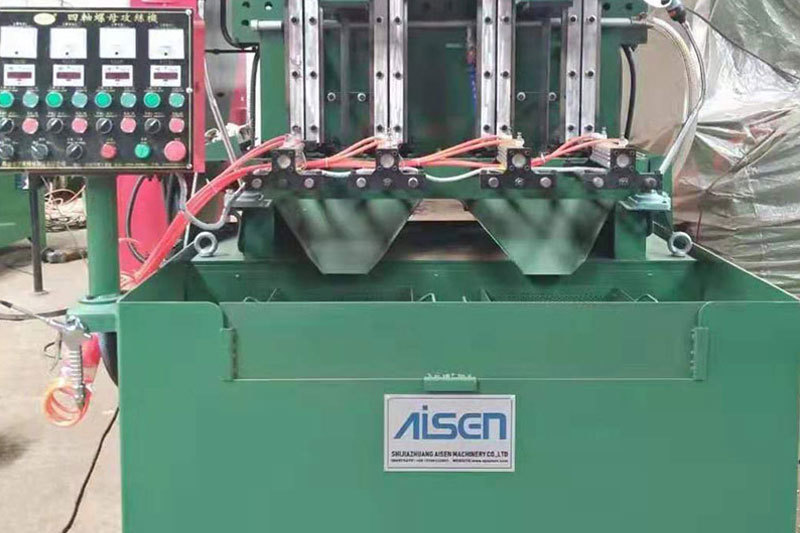
AISEN Four axis nut tapping machine ready for shipment to Russia
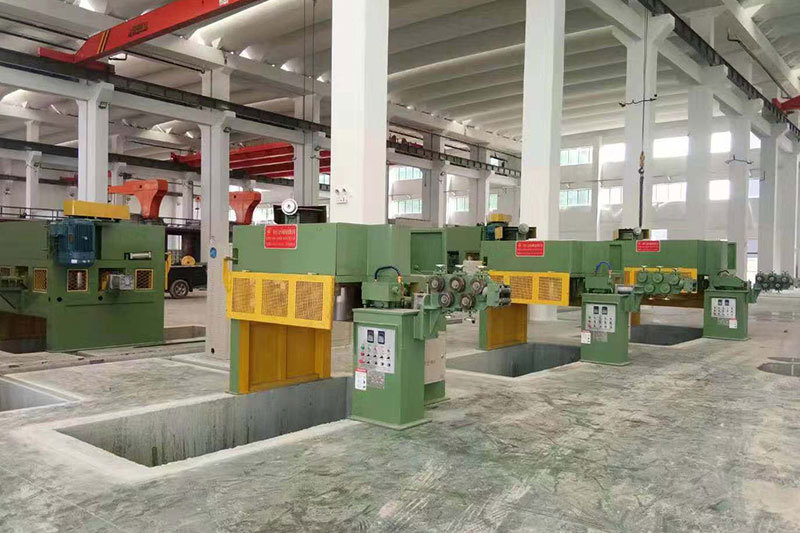
AISEN machinery inverted wire drawing machine
MESSAGES
We will contact you within one working day. Please pay attention to your email.
Qucik Link
Contact
Phone: +86-15100123091
E-mail: info@sjzaisen.com
Address: No.41 Zhaiying South Street, Yuhua District, Shijiazhuang City, Hebei Province China