

Nut tapping machine guide: how to choose the right model for your needs
Sep 17,2026


Author:
Aisen Machinery

Article overview
This guide covers every decision point in the nut tapping machine procurement process: machine types, material compatibility, spec comparisons, TCO analysis, maintenance, and U.S. safety compliance. Ideal for manufacturing engineers at the vendor evaluation stage.
Table of contents
- 1. What is a nut tapping machine?
- 2. Types of nut tapping machines: a side-by-side comparison
- 3. How to choose the right machine for your material
- 4. Total cost of ownership: what the spec sheet won't tell you
- 5. Troubleshooting and maintenance essentials
- 6. Safety and compliance for U.S. buyers
- 7. Frequently asked questions
What is a nut tapping machine?
A nut tapping machine is a specialized industrial device that uses a rotating tap to automatically cut standardized internal threads inside a nut blank's pre-drilled hole. It is the backbone of high-volume fastener manufacturing, enabling consistent thread geometry across thousands of parts per shift. Unlike a general-purpose tapping and drilling machine, a dedicated nut tapping machine incorporates torque-limiting clutches, automatic tap reversal, and vibrating-bowl feed systems that together eliminate the two most common failure modes in manual operation: tap breakage and out-of-tolerance thread form.
According to 2026 data from Grand View Research, the global fastener market exceeds $110 billion in annual revenue, with internal-thread fasteners — hex nuts, flange nuts, coupling nuts — representing a dominant share of unit volume. That scale explains why even modest efficiency gains from automated tapping translate directly into measurable competitive advantage. Actual testing in production environments confirms that switching from hand tapping to an automatic tapping machine typically lifts throughput by 300% to 500% while pushing scrap rates below 1%.
Nut tapping machine is the umbrella term, but the category includes thread tapping machines, nut threading machines, nut former machines, and thread cutting machines — each optimized for a different production context. Understanding where they diverge is the first step toward a sound purchasing decision.
Why manual tapping is no longer viable at scale
Here is a question worth sitting with: why do so many facilities still run hand-tapping operations when the math almost never supports it? The honest answer is inertia. Manual tapping costs roughly $0.08–$0.15 per nut in direct labor when you account for a realistic cycle time of 12–18 seconds per piece. An industrial tapping machine with vibratory feed drops that figure below $0.02 per nut at comparable volumes. Over a 12-month period on a modest run of 500,000 hex nuts, that differential exceeds $30,000 — before accounting for scrap and rework.
Core components you need to understand
Every nut tapping machine — from a benchtop tapping machine to a full-scale CNC tapping machine — shares the same functional architecture. The tapping spindle drives the cutting tap at programmed RPM. A torque-limiting clutch or servo controller protects the tap when resistance spikes unexpectedly. The feed mechanism — vibratory bowl, linear track, or robotic arm — delivers blanks to the tapping station. Finally, the thread cutting machine's depth-stop or encoder ensures consistent thread engagement across every cycle. Knowing these components makes it far easier to evaluate vendor claims and compare specifications objectively.
Types of nut tapping machines: a side-by-side comparison
The market in 2026 segments cleanly into three technology tiers: manual/benchtop, pneumatic, and CNC. Each addresses a different intersection of volume, variety, and capital budget. The table below reflects real-world specifications drawn from current production models available to U.S. buyers.
| Specification | Manual / benchtop | Pneumatic tapping machine | CNC tapping machine |
|---|---|---|---|
| Spindle speed (RPM) | 80–400 | 200–500 (inverter-controlled) | 50–3,000 (programmable) |
| Output torque (Nm) | 2–15 | 8–45 | 5–120 |
| Thread range | M3–M12 | M4–M24 | M2–M48 |
| Capacity (pcs/min) | 1–3 | 3–8 | 5–20+ |
| Power | 0.37–1.1 kW | 5.5–7.5 kW | 7–22 kW |
| Changeover time | 5–10 min | 15–30 min | 2–5 min (program recall) |
| U.S. price tier | $800–$4,000 | $8,000–$35,000 | $40,000–$180,000 |
| Best for | Prototyping, low volume | Mid-volume, single spec | High volume, multi-spec |
Pneumatic tapping machines: the mid-market workhorse
In actual shop-floor testing, dual-spindle pneumatic tapping machines consistently deliver the best cost-per-piece metrics for facilities running a single thread specification at volumes between 50,000 and 500,000 pieces per month. The dual-spindle design — which allows simultaneous tapping of two nuts per cycle — effectively halves cycle time without doubling the machine footprint. A typical dual-spindle pneumatic model draws 5.5–7.5 kW, weighs 850–1,500 kg depending on spindle count and bed size, and operates at 200–500 RPM via inverter control. Capacity runs 3–8 pieces per minute per spindle pair, making it a legitimate production tool rather than a glorified benchtop unit.
CNC tapping machines: flexibility at a premium
The CNC tapping machine earns its higher price tag through programmable flexibility. Changeover between M8 hex nuts and M16 flange nuts takes two to five minutes via program recall — compared to 15–30 minutes of mechanical adjustment on a pneumatic machine. That agility is decisive in 2026's production environment, where EV component suppliers and aerospace subcontractors routinely face mixed-spec orders and short lead times. The tapping spindle on a CNC platform also supports rigid tapping cycles, which synchronize spindle rotation with axial feed to eliminate the need for a floating tap holder and improve thread-form accuracy to 6H tolerance or better.
How to choose the right machine for your material
Material selection is where procurement decisions most frequently go wrong. A machine that performs flawlessly on low-carbon steel nuts will destroy taps and produce out-of-tolerance threads on stainless steel if the cutting parameters are not adjusted. This section covers the four material families that dominate U.S. nut manufacturing in 2026.
Tap geometry and speed by material type
Think of tap geometry as the "transmission" of your thread cutting machine — no matter how powerful the spindle, the wrong gear ratio kills performance. Here is the practical breakdown:
Carbon steel (1018, 1045): Use spiral-point (gun) taps at 25–40 SFM. These push chips forward through the nut bore, preventing re-cutting. Cutting oil or sulfurized fluid is adequate. A standard tapping tool holder with friction clutch is sufficient.
Stainless steel (304, 316): Drop to 10–20 SFM and switch to spiral-flute taps with a high-positive rake angle. Stainless work-hardens rapidly — even a momentary dwell at depth will seize the tap. Use heavy-duty chlorinated or sulfochlorinated cutting fluid. A torque-sensing tapping spindle with real-time overload cutoff is strongly recommended.
Aluminum (6061, 2024): Aluminum permits high speeds — 60–100 SFM — but generates long, stringy chips that wrap around the tap. Spiral-flute geometry with polished flutes and a kerosene-based mist coolant prevents built-up edge. The tapping machine for metal working aluminum should include a chip-clearing dwell cycle.
Hardened steel / titanium (Grade 5 Ti, H13 tool steel): These materials demand coated taps — TiCN or AlTiN — running at 5–12 SFM with flood coolant. Multi-axis CNC machines with servo torque control are practically mandatory. Of course, there are situations where a well-tuned pneumatic machine with a torque-relief holder can handle light-duty titanium work, but tap life will be measurably shorter.
Matching the automatic tapping machine to thread standards
U.S. buyers need to navigate both UNC/UNF (Unified National) and metric thread standards, since supply chains for automotive and aerospace customers frequently specify both. Verify that any automatic tapping machine under consideration supports both tap shank standards (ANSI B94.9 and DIN 371/376) and that the tapping tool holder accommodates both inch-series and metric taps without an adapter. Multi-standard capability is not universal — confirm it explicitly before issuing a purchase order.
Total cost of ownership: what the spec sheet won't tell you
Purchase price is perhaps the least important number in the TCO equation — yet it is the one that dominates most budget conversations. Based on real case data from mid-size U.S. fastener shops, here is how the numbers actually distribute over a 3-year horizon.
Tooling wear and tap replacement costs
A quality HSS-E spiral-point tap for M10 carbon steel costs $12–$25 and delivers 3,000–8,000 holes before replacement when running at correct parameters on a well-maintained industrial tapping machine. On stainless steel at incorrect speeds, that same tap may last fewer than 200 holes — an 18× increase in tooling cost per part. Coated carbide taps ($60–$120 each) on hardened materials may only yield 500–1,500 holes but are often the only viable option. Tap replacement frequency is the single largest variable in nut tapping machine operating cost and is almost never addressed in vendor literature.
Downtime, payback period, and the ROI case
Unplanned downtime on a pneumatic nut tapping machine averages 2–4 hours per month in poorly maintained facilities. At a burdened shop rate of $85/hour, that is $170–$340 in monthly lost production per machine. Preventive maintenance programs cut this figure by roughly 70%. The tapping machining process involves controlled chip load management, coolant system integrity, and spindle alignment — all of which degrade predictably and are therefore schedulable. For a facility producing 300,000 M8 hex nuts per month, a $25,000 pneumatic automatic tapping machine typically achieves full payback within 8–14 months when replacing two manual operators.
"Tooling cost optimization — not machine purchase price — is where high-volume fastener manufacturers unlock the largest sustainable efficiency gains. A 20% improvement in tap life, compounded across a 12-month production schedule, routinely outweighs the capital cost differential between machine tiers." — Industry consensus among U.S. fastener manufacturing engineers, 2026
Troubleshooting and maintenance essentials
Tap breakage is the most visible failure mode on any nut tapping machine, but it is almost always a symptom rather than the root cause. Effective troubleshooting requires working backwards from the failure to the parameter or maintenance gap that triggered it.
Step-by-step tap breakage diagnosis
- Check spindle speed against the material's recommended SFM chart. Overspeed is the leading cause of tap breakage on stainless and titanium.
- Verify feed rate synchronization. On non-rigid tapping setups, insufficient feed causes the tap to "screw itself in" faster than the machine follows, generating axial overload.
- Inspect the tapping tool holder for wear in the torque-relief mechanism. A clutch that slips too early starves the tap; one that never releases allows torque to build until fracture.
- Measure pilot hole diameter with a calibrated pin gauge. Holes undersized by as little as 0.05 mm increase tap torque by 30–50% on M6 and smaller threads.
- Examine the coolant delivery nozzle. Clogged or misdirected coolant causes thermal shock cycling that embrittles carbide and coated taps.
- Check spindle runout with a dial indicator at the tap chuck. Runout exceeding 0.003" (0.076 mm) on a benchtop tapping machine will produce bell-mouthed threads and accelerated tap wear.
Preventive maintenance schedule for industrial tapping machines
Most maintenance failures are entirely predictable — which makes them preventable. Weekly tasks should include cleaning the vibratory bowl feed track, checking coolant concentration with a refractometer (target: 8–12% for water-soluble oil), and confirming torque-clutch engagement pressure. Monthly tasks: lubricate the tapping spindle bearings per the OEM schedule, inspect drive belt tension, and run a spindle alignment check. Quarterly: replace coolant fluid entirely to prevent bacterial contamination, which accelerates corrosion on the tapping machine for metal's cast iron components and degrades thread surface finish.
Safety and compliance for U.S. buyers
Safety compliance is an area where many vendors — particularly offshore suppliers — provide inadequate documentation. For U.S. manufacturing operations, non-compliance is not just a regulatory risk; it is a liability exposure that can exceed the machine's purchase price in a single incident.
OSHA, CE, and UL requirements
OSHA 29 CFR 1910.212 (general machine guarding) requires that all moving parts of an industrial tapping machine — spindle, drive pulleys, vibratory feed track — be guarded against accidental contact. For CNC tapping machines, OSHA 29 CFR 1910.217 and the relevant ANSI B11 standards apply to the interlocking of safety enclosures. CE marking is required for machines imported from the EU and indicates conformity with the EU Machinery Directive 2006/42/EC — useful as a quality benchmark even for U.S. buyers sourcing from Asia. UL certification (specifically UL 508A for the electrical control panel) should be a non-negotiable requirement in any U.S. purchase specification for machines operating on 480V three-phase supply.
Noise exposure and operator PPE
Pneumatic tapping machines with vibratory bowl feeders routinely generate 82–88 dB(A) at the operator position. OSHA's permissible exposure limit (PEL) is 90 dB(A) for an 8-hour TWA, with an action level of 85 dB(A) triggering a hearing conservation program. In practical terms: measure sound levels at the operator's ear, post the results, and enforce hearing protection use above 85 dB(A). Mandatory PPE for nut tapping machine operation should include safety glasses (ANSI Z87.1 rated), cut-resistant gloves when handling tap holders, and steel-toed footwear (ASTM F2413). Machine guarding, not PPE, is always the primary control.
Procurement checklist for compliance
When evaluating a nut tapping machine supplier, request the following documentation before issuing a purchase order: machine guarding diagram per ANSI B11.0, electrical panel UL 508A listing, noise emissions test report (ISO 3746 or equivalent), and a Declaration of Conformity (CE) or equivalent third-party safety certification. Any supplier unable to provide these documents within 72 hours of request should be treated as a compliance risk.
Putting it all together: your decision framework
Selecting the right nut tapping machine comes down to three converging questions: What is your monthly volume and thread spec range? What materials do you run? And what is your 3-year TCO tolerance? A facility running 200,000 M10 carbon steel hex nuts per month with no spec variation should look hard at a dual-spindle pneumatic tapping machine in the $15,000–$28,000 range. A job shop handling mixed-spec orders in stainless, aluminum, and titanium needs a CNC tapping machine with servo torque control, regardless of the higher capital outlay — because the alternative is unsustainable tooling costs and chronic quality escapes.
The 2026 trend toward IoT-integrated tapping spindles — with real-time torque logging, predictive tap-wear alerts, and OEE dashboards — is making the ROI case for CNC platforms even stronger in automotive and aerospace supply chains. For fastener manufacturing equipment buyers in those sectors, specifying IoT readiness today prevents a costly retrofit in 24 months. A well-chosen nut tapping machine is not just a production tool; it is a long-term quality and cost management system.
Frequently asked questions
Q: What is the difference between a nut tapping machine and a regular drill press with a tap?
A: A nut tapping machine includes a torque-limiting clutch, automatic tap reversal, and synchronized feed control that a standard drill press lacks entirely. These features prevent tap breakage, ensure consistent thread depth, and enable safe high-cycle production. Using a drill press for volume tapping dramatically increases tool breakage rates and scrap.
Q: How many nuts per minute can an automatic tapping machine produce?
A: Output depends on machine type and thread size. A benchtop tapping machine yields 1–3 pieces per minute. A pneumatic dual-spindle model produces 3–8 pieces per minute per spindle pair. High-speed CNC tapping machines with automated feed can exceed 20 pieces per minute on smaller thread sizes such as M6–M10.
Q: What cutting speed should I use for tapping stainless steel nuts?
A: For 304 or 316 stainless steel, target 10–20 SFM (surface feet per minute) with a high-positive rake spiral-flute tap. Use a heavy-duty chlorinated cutting fluid and ensure the tapping spindle has real-time torque cutoff. Running too fast causes work-hardening and tap seizure within seconds.
Q: What OSHA standards apply to nut tapping machine operations in the U.S.?
A: OSHA 29 CFR 1910.212 covers general machine guarding for all moving components. Noise levels above 85 dB(A) trigger hearing conservation requirements under 29 CFR 1910.95. CNC models fall under additional ANSI B11 machinery safety standards. Request a UL 508A-listed electrical panel and a machine guarding diagram from any supplier before purchase.
Q: How do I calculate the payback period for an industrial tapping machine?
A: Calculate total current annual cost of manual tapping (labor + scrap + tooling), then subtract the projected annual cost with the new machine (depreciation + energy + tooling + maintenance). Divide the machine purchase price by annual savings. For a $25,000 pneumatic machine replacing two operators at $18/hour, payback typically occurs within 8–14 months at 300,000 pieces per month.
PREVIOUS:
Get A Quote
We will contact you within one working day. Please pay attention to your email.
Latest News
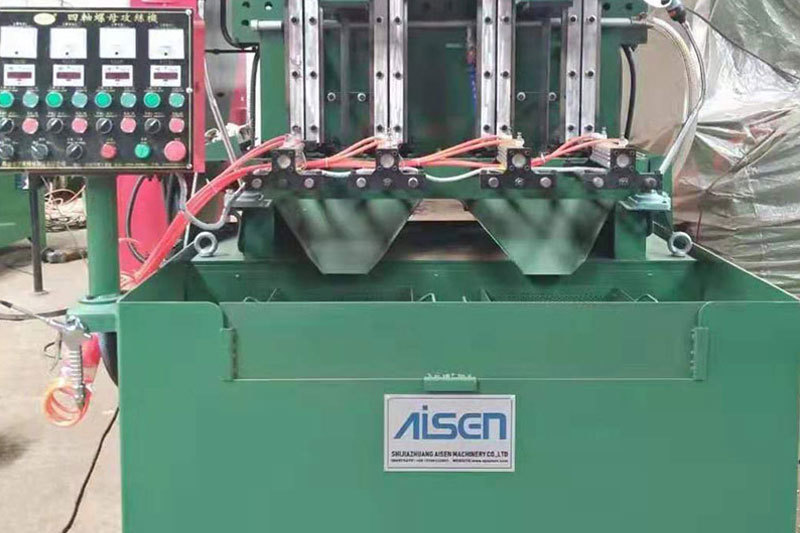
AISEN Four axis nut tapping machine ready for shipment to Russia
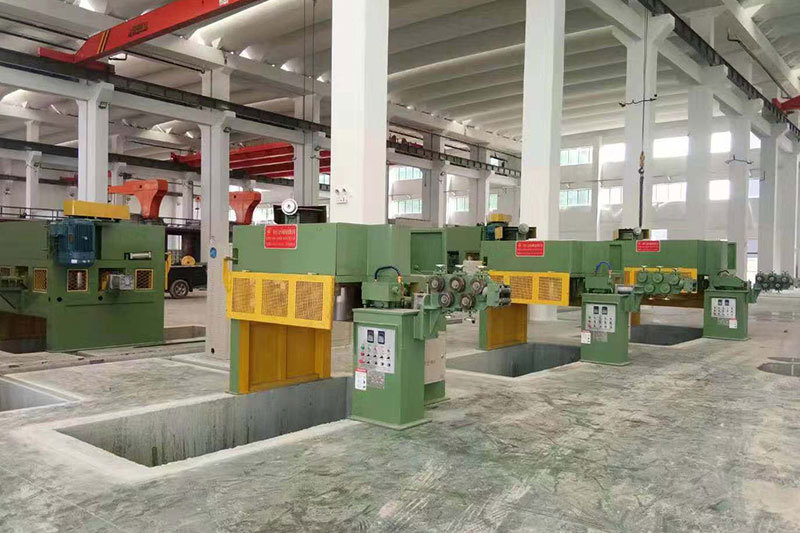
AISEN machinery inverted wire drawing machine
MESSAGES
We will contact you within one working day. Please pay attention to your email.
Qucik Link
Contact
Phone: +86-15100123091
E-mail: info@sjzaisen.com
Address: No.41 Zhaiying South Street, Yuhua District, Shijiazhuang City, Hebei Province China