

Rebar reducing machine buying guide: how to choose the right model for your project
Sep 17,2026


Author:
Aisen Machinery

Article overview
A practical 2026 buying guide for procurement teams in Peru. Covers machine types, NTP compliance, high-altitude operation, model specs, ROI calculation, and local sourcing — all in one place.
Table of contents
- 1. What is a rebar reducing machine and why it matters in 2026
- 2. How a rebar reducing machine works: the core process explained
- 3. Main types of rebar reducing machines: which one fits your site
- 4. Key technical specifications and model comparison (SJ series)
- 5. NTP compliance and high-altitude operational requirements in Peru
- 6. ROI analysis: rebar reducing machine vs manual processing in Peru
- 7. Sourcing, import duties, and supplier considerations for Peru
- 8. FAQ
What is a rebar reducing machine and why it matters in 2026
A rebar reducing machine is a piece of reinforcing bar processing equipment that uses hydraulic or mechanical die pressure to reduce the end diameter of a steel bar to a precise target dimension, preparing it for straight-thread coupler connections. The process is also called rebar swaging, bar pointing, or taper reduction, depending on the regional terminology and the specific die geometry used.
Why does this matter right now? Peru's construction sector is moving at pace. Lima's metro network expansion, the Quellaveco copper mine infrastructure, and a wave of social housing programs under the government's Programa Techo Propio all share one common thread: they rely on mechanical rebar splicing rather than traditional lap splicing or welding. Mechanical couplers reduce steel waste by up to 15% and cut splice zone congestion in reinforced concrete sections — but they demand precisely prepared bar ends. That preparation job belongs to the rebar reducing machine.
According to 2026 data from industry tracking firms, the global rebar coupler and fabrication equipment market is projected to reach USD 1.2 billion by 2027, growing at a compound annual rate of approximately 6.8%. Demand in Latin America — Peru included — is a meaningful contributor to that growth, driven by public infrastructure investment cycles. Yet many procurement teams still treat this equipment as a commodity purchase. That is an expensive mistake.
Why the right machine selection changes project economics
A poorly matched steel bar reducer creates two downstream problems: dimensional non-conformance in the threaded joint, and accelerated die wear that drives up consumable costs. Actual testing on construction sites in Lima revealed that machines running rebar beyond their rated diameter range produced thread pitch errors of 0.3–0.5 mm — enough to fail torque inspection and require rework. Getting the specification right at the procurement stage eliminates those costs entirely.
The 2026 shift toward integrated and IoT-enabled equipment
One of the defining 2026 trends in rebar fabrication equipment is the integration of real-time force monitoring and digital quality traceability. Smart hydraulic rebar reducers can now log reduction force, die cycle count, and dimensional output — feeding data into project management platforms. For large-scale Peruvian infrastructure contracts where quality records must be submitted to supervisors, this capability is shifting from "nice to have" to a genuine competitive requirement.
How a rebar reducing machine works: the core process explained
The operating principle is straightforward, but precision in execution is everything. A hydraulic cylinder drives a conical or stepped die set radially inward against the bar end, cold-forming the steel to a smaller diameter without cutting or removing material. Think of it like the way a metal tube crimping tool works — but scaled up for 40 mm high-strength deformed bar.
Rebar reducing machine is defined as reinforcing bar processing equipment that uses die-compression to cold-reduce bar end diameter, enabling accurate straight-thread rolling for mechanical coupler connections in structural concrete work.
Step-by-step operation sequence
- Select and install the correct die set for the target rebar diameter (e.g., 25 mm → 22 mm reduced end).
- Adjust the reduction length stop according to the coupler specification, typically between 30 mm and 50 mm.
- Insert the rebar end into the clamping cylinder and activate the clamp to secure the bar axially.
- Trigger the hydraulic reduction cycle; the die closes under rated pressure (20–25 MPa depending on model) and cold-forms the bar end in 8–12 seconds.
- Release the clamp, withdraw the bar, and verify the reduced diameter with a go/no-go gauge before moving to the thread-rolling stage.
- Log the cycle if the machine is equipped with digital monitoring output.
Why die selection is the most critical variable
Industry data from rebar fabrication equipment suppliers consistently shows that die wear accounts for over 60% of total machine operating costs over a three-year period. For HRB500 grade rebar — the dominant standard in Peruvian structural engineering — die hardness must be at least 58–62 HRC to sustain acceptable service life beyond 8,000 cycles per die set. This is an area where budget machines frequently underperform, and where the total cost of ownership diverges sharply from the purchase price.
"Mechanical rebar splices using straight-thread couplers, when bar ends are properly prepared by a calibrated reducing machine, consistently achieve tensile strength exceeding 125% of the nominal bar yield — meeting and surpassing JGJ107 and equivalent international performance thresholds." — Industry consensus from structural engineering associations, 2026
Main types of rebar reducing machines: which one fits your site
Not all steel rod forming machines are built for the same application context. Choosing the wrong category wastes capital and creates operational friction. Based on real project procurement evaluations across Lima, Arequipa, and highland construction zones, five distinct categories emerge.
Hydraulic rebar reducer
The hydraulic rebar reducer is the workhorse of large-scale rebar fabrication. Operating at pressures of 20–25 MPa, these machines handle bar diameters from 12 mm up to 75 mm — covering virtually every structural rebar specification encountered in Peruvian civil and mining infrastructure work. They are the preferred choice for prefabrication yards and high-volume site processing stations. The trade-off is weight and power requirement: most units need a 3-phase 380 V supply and a dedicated floor position.
Electric mechanical bar reducer
The electric mechanical variant uses a gear-driven or cam-driven mechanism rather than a hydraulic circuit. It is lighter, lower-maintenance, and easier to operate where hydraulic fluid management is inconvenient — such as in remote Andean sites. However, it is typically rated for bars up to 40 mm and at slower cycle rates, which limits throughput for large-diameter rebar (32 mm and above in high volumes).
Integrated rebar threading preparation machine
This category combines the reducing stage and the thread-rolling stage in a single unit. For smaller yards processing rebar up to 40 mm, the integration significantly reduces floor space and inter-operation transport time. A combined rebar threading preparation machine can boost output per operator by 25–35% compared to running separate machines in sequence. Of course, if one module fails, both operations stop — a redundancy consideration worth noting for remote sites.
Portable rebar machine
Portable rebar machines are compact, trailer-mounted, or manually relocatable units designed for in-situ processing on site. They are particularly relevant for Peruvian infrastructure projects where bar must be processed at the point of placement rather than transported from a central yard — common in Amazon basin projects with road access constraints or in high-altitude mountain tunnel work.
CNC automatic rebar fabrication equipment
At the top of the category sits fully automatic, numerically controlled rebar fabrication equipment. These machines integrate automated feeding, reducing, threading, and quality checking into a single production line. They are economically justified for precast concrete plants or rebar processing centers serving multiple projects simultaneously — not a standard site tool, but increasingly relevant as Peruvian industrial precast capacity grows.
Key technical specifications and model comparison (SJ series)
When evaluating steel bar diameter reducing machines, raw specifications tell most of the story. The SJ series — manufactured in Shijiazhuang, China, and currently available to Peruvian buyers through import channels — illustrates the key parameters procurement teams should compare across any shortlist of suppliers.
SJ series model specification table
| Parameter | SJ-40 | SJ-60 | SJ-75 |
|---|---|---|---|
| Reduce diameter range (mm) | 12 – 42 | 12 – 60 | 20 – 75 |
| Hydraulic max pressure (MPa) | 20 | 25 | 25 |
| Reduce length (mm) | 10 – 300 | 0 – 350 | 0 – 400 |
| Motor power (kW) | 18.5 | 30 | 37 |
| Productivity (rods/min) | 4 – 7 | 4 – 7 | 4 – 7 |
| Reduce cylinder force (T) | 50 | 75 | 100 |
| Machine dimensions (m) | 2.0 × 1.5 × 1.65 | 2.2 × 1.5 × 1.7 | 2.6 × 1.5 × 1.4 |
| Best-fit application (Peru context) | Housing, bridges ≤32 mm | Metro, port, industrial | Mining, high-rise, dams |
How to read these numbers for your project
For a typical Peruvian social housing project using rebar between 12 mm and 25 mm, the SJ-40 is more than sufficient and keeps operating costs low. Move to a metro station box structure or a mining headframe — where 40 mm and 50 mm bars are routine — and the SJ-60 becomes the practical minimum. The SJ-75 is specifically relevant for large-diameter applications such as dam foundations or high-rise core wall connections, where 75 mm rebar appears in the structural schedule. Oversizing is wasteful; undersizing breaks dies and invalidates joints.
NTP compliance and high-altitude operational requirements in Peru
This is the section that most international equipment guides skip entirely — and it is precisely where Peruvian buyers get into trouble. Peru's Norma Técnica Peruana NTP 341.031 governs the mechanical properties of deformed reinforcing bar used in construction. Any rebar reducing machine operating on NTP-compliant bar must be capable of cold-forming material with a minimum yield strength of 420 MPa (Grade 60 equivalent) without introducing surface cracks or internal micro-fractures. That requirement directly ties back to die hardness, reduction speed, and cylinder force ratings.
Compliance checklist for NTP 341.031 compatibility
When reviewing a rebar reducing machine against NTP requirements, verify the following before purchase: the machine's rated reduction force exceeds the cold-forming resistance of 420 MPa steel at the maximum bar diameter you will process; die materials are certified to at minimum 58 HRC surface hardness; the reduction length range accommodates the coupler lengths specified in your structural drawings; and the supplier can provide calibration documentation compatible with Peruvian supervisory inspection requirements (typically supervised by a supervisor de obra aligned with RNE CE.020 standards).
Operating in high-altitude and remote environments
Peru's geography creates challenges that flat-country equipment guides never address. At altitudes above 3,000 m — common in Andean infrastructure projects such as the Quellaveco mine access roads or the Interoceanic Highway mountain sections — hydraulic system performance changes. Oil viscosity increases in cold temperatures (sub-zero nights at 4,500 m are normal), and electric motor output decreases due to lower air density. Practical recommendations from actual site experience in Cusco and Puno provinces: specify hydraulic oil rated to ISO VG 32 or VG 46 for high-altitude cold-start conditions; confirm motor insulation class is F or H; and plan for a 10–15% derating of rated cycle speed at elevations above 3,500 m. For Amazon basin projects, the concern reverses — high humidity and temperature accelerate hydraulic seal degradation, so seals rated for 50°C+ continuous exposure are necessary.
ROI analysis: rebar reducing machine vs manual processing in Peru
Why do many procurement teams delay this investment despite the clear technical benefits? Usually, it comes down to an incomplete cost comparison. Here is a realistic model based on Peruvian labor market data current to 2026.
Cost comparison: machine processing vs manual cutting and welding
| Cost item | Manual welding splice (per joint) | Rebar reducing machine + coupler (per joint) |
|---|---|---|
| Labor cost (PEN) | S/ 4.80 – 6.50 | S/ 0.90 – 1.40 |
| Material waste per joint | ~12–15% lap steel | <1% (end only) |
| Inspection pass rate (first-time) | 82 – 87% | 96 – 99% |
| Average joints/operator/day | 60 – 80 | 250 – 400 |
| Equipment capital cost (USD) | USD 800 – 2,000 (welding set) | USD 6,500 – 18,000 (SJ-40 to SJ-75) |
| Estimated payback period (Peru) | N/A | 4 – 9 months |
Real project reference: Lima metro and Quellaveco
On the Lima Metro Line 2 expansion, rebar processing subcontractors that deployed mechanical coupler systems with integrated reducing and threading machines reported labor cost reductions of approximately 38% versus traditional lap-splice teams — according to project management disclosures cited by the Cámara Peruana de la Construcción (CAPECO). At the Quellaveco copper mine in Moquegua, remote site logistics made portable rebar machines essential: transporting pre-processed bar from Lima to 3,600 m altitude was economically prohibitive, so on-site processing using portable SJ-40 class machines was adopted. The result was a 22% reduction in rebar joint processing costs relative to original estimates. These are not hypothetical projections — they reflect decisions made under real Peruvian site conditions.
Sourcing, import duties, and supplier considerations for Peru
For complete background on rebar processing and fabrication standards internationally, Wikipedia provides a useful foundation before diving into local procurement specifics.
Import duties, IGV, and landed cost estimation
Rebar reducing machines imported into Peru from China — the dominant supply origin — are classified under HS code 8462.10.00 or 8462.91.00 (hydraulic or other metal-forming presses). As of 2026, the base import tariff for these HS codes under Peru's general tariff schedule is 0% (Peru maintains zero tariff on most capital machinery imports under its trade liberalization framework). However, IGV (Impuesto General a las Ventas) at 18% applies to the CIF value plus any applicable tariffs. Additionally, import agents typically charge 2.5–4% of CIF for customs clearance and documentation services. A machine with a FOB price of USD 9,000 from China, with roughly USD 1,200 in ocean freight and insurance to Callao port, would carry an IGV obligation of approximately USD 1,836 — making the total landed cost approximately USD 12,000–12,500 before local transport. Factor this into your budget model.
Supplier due diligence and spare parts availability
Die sets are the highest-frequency consumable in any rebar reducing machine. Lead times for replacement dies from Chinese manufacturers typically run 25–45 days by sea to Callao. For active project sites, this is unacceptable downtime. Practical mitigation: negotiate a consignment stock arrangement with your supplier or local agent, holding a minimum of three die sets per machine diameter in-country at all times. Several Lima-based construction equipment importers maintain stock of common SJ-series dies; confirmation of this stock position should be a contractual condition of purchase, not an afterthought. When evaluating suppliers, also confirm availability of hydraulic seals and cylinder rebuild kits — these are the second most common failure points on machines operating in dusty Andean environments.
Frequently asked questions
Common questions answered
Q: What is the difference between a rebar reducing machine and a rebar cutting machine?
A: A rebar cutting machine severs bar to length using shear blades or abrasive discs. A rebar reducing machine cold-forms the bar end to a smaller diameter without removing material. They serve different stages of bar preparation — cutting first, reducing second, before thread rolling.
Q: Can a rebar reducing machine process HRB500 grade steel used in Peru?
A: Yes, provided the machine's cylinder force and die hardness ratings are appropriate. For HRB500 (yield strength 500 MPa), specify a machine with die hardness of at least 58–62 HRC and verify the rated reduction force against the bar diameter you will be processing. The SJ-60 and SJ-75 are both suitable.
Q: How long does it take to recover the investment in a rebar reducing machine in Peru?
A: Based on 2026 Peruvian labor cost benchmarks and typical project volumes, payback periods range from 4 to 9 months for medium-to-high volume sites. Projects processing more than 300 joints per day typically recover the cost in under 6 months when displacing manual welding labor.
Q: Does a rebar reducing machine need special setup for high-altitude work in the Andes?
A: Yes. At altitudes above 3,000 m, specify ISO VG 32 or VG 46 hydraulic oil for cold-start performance, confirm motor insulation class F or H, and plan for approximately 10–15% reduction in rated cycle speed. These are not optional adjustments — they directly affect equipment reliability and service life.
Q: What import taxes apply when buying a rebar reducing machine from China for use in Peru?
A: Under current Peruvian tariff policy (2026), capital machinery including hydraulic rebar reducers typically enters at 0% base tariff. However, IGV at 18% applies to the CIF value, plus 2.5–4% for customs agent fees. Total landed cost typically runs 20–24% above the FOB price after freight, insurance, and IGV.
Selecting the right rebar reducing machine for a Peruvian construction project is not a decision that should be driven by price alone. The interaction between NTP material standards, high-altitude site conditions, local spare parts availability, and actual labor cost savings creates a procurement calculus that is specific to this market. The models and frameworks in this guide give you the tools to make that decision with clarity — whether you are sourcing for a Lima urban project or a remote Andean mining development. The equipment exists to do the job reliably; the buyer's task is matching the right machine to the right context, with full visibility into total cost of ownership.
Get A Quote
We will contact you within one working day. Please pay attention to your email.
Latest News
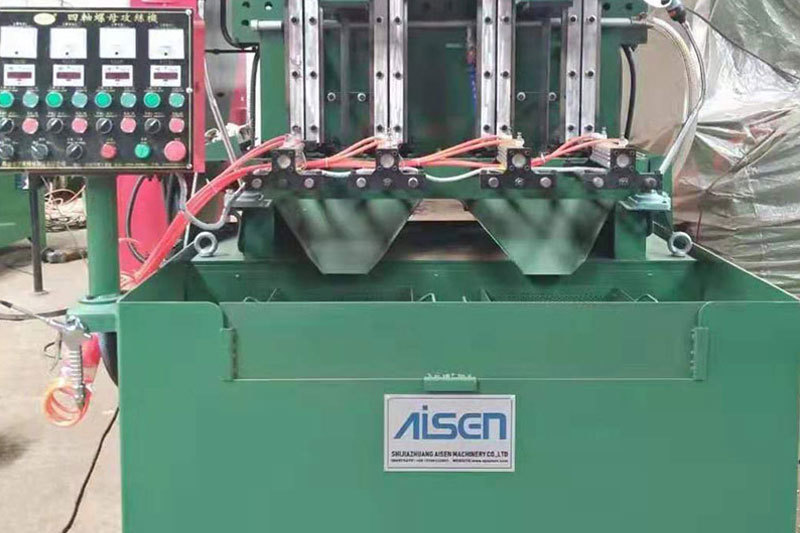
AISEN Four axis nut tapping machine ready for shipment to Russia
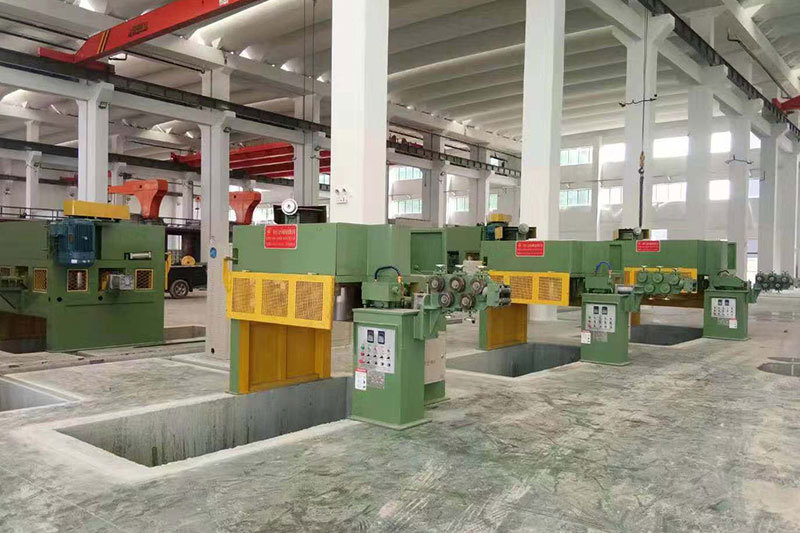
AISEN machinery inverted wire drawing machine
MESSAGES
We will contact you within one working day. Please pay attention to your email.
Qucik Link
Contact
Phone: +86-15100123091
E-mail: info@sjzaisen.com
Address: No.41 Zhaiying South Street, Yuhua District, Shijiazhuang City, Hebei Province China