

Nut making machine buyer's guide: types, features, and how to choose the right one
Sep 17,2026


Author:
Aisen Machinery

Article overview
This guide compares all major nut making machine types, provides a compliance checklist for US buyers, breaks down total cost of ownership, and delivers a ready-to-use RFQ specification template — everything you need to make a confident procurement decision in 2026.
Table of contents
- 1. What is a nut making machine?
- 2. Main types of nut making machines compared
- 3. Key technical specifications to evaluate
- 4. US compliance, certification, and import considerations
- 5. Total cost of ownership: what US buyers often miss
- 6. Application breakdowns by industry vertical
- 7. Buyer's checklist and RFQ guide
- 8. FAQ
What is a nut making machine?
A nut making machine is industrial fastener manufacturing equipment that automatically transforms metal wire rod or bar stock into finished hex nuts, flange nuts, and other nut hardware through cold heading, hot forging, stamping, or CNC machining processes. These machines sit at the core of any bolt and nut production machine line, converting raw material into dimensionally accurate threaded fasteners at high volume.
The global fastener market reached approximately $102 billion in recent data, with projections pointing toward $138 billion by 2028 according to MarketsandMarkets research. That growth trajectory explains why US procurement teams are under increasing pressure to source reliable, compliant nut forming machine equipment rather than cobbling together older production lines.
Why do so many buyers end up with the wrong machine? Often, it comes down to conflating process types. A cold heading machine and a CNC nut machining center are both "nut making machines" — but they serve fundamentally different production scenarios, and treating them as interchangeable is one of the most expensive mistakes in fastener manufacturing equipment purchasing.
For a broader understanding of how nuts fit into the larger fastener ecosystem, the fastener manufacturing overview on Wikipedia provides useful context on material grades, thread systems, and industry standards that directly affect machine selection.
How does a nut making machine work?
The production sequence varies by process, but cold heading — the dominant method for standard M3–M24 nut hardware — follows a consistent logic. The machine feeds wire from a coil, cuts a blank to precise length, then drives it through multiple forming stations that progressively shape the hex profile, pierce the center hole, and establish the chamfer geometry. A separate nut tapping machine then cuts internal threads. The entire cycle happens in fractions of a second.
Real-world testing confirms that a properly tuned cold heading machine running M8 hex nuts achieves material utilization rates above 95%, compared to roughly 65–70% for CNC turning operations. That 30-point gap in material efficiency becomes significant at production volumes above 500,000 pieces per month.
Nut making machine vs. bolt making machine: not the same thing
This is a surprisingly common source of confusion. Nut making machines and bolt making machines share the cold heading principle, but the die geometry, piercing station design, and clamping mechanism are fundamentally different. A nut requires a central hole-punching operation that a bolt machine's tooling cannot perform. Attempting to adapt one for the other — beyond limited experimental runs — leads to tool damage and dimensional inconsistency. Always specify nut-specific tooling when issuing an RFQ to a supplier of screw and nut manufacturing machines.
Main types of nut making machines compared
The correct machine type is determined by three variables: nut size range, production volume, and material grade. No single process wins across all three. Here is a direct, side-by-side comparison of the three dominant technologies — the kind of data that US procurement engineers consistently report as missing from supplier websites.
| Parameter | Cold heading machine | Hot forging machine | CNC machining center |
|---|---|---|---|
| Typical nut size range | M3 – M24 | M24 – M100+ | M2 – M150 (custom) |
| Output rate | 50–300 pcs/min | 8–40 pcs/min | 1–15 pcs/min |
| Material utilization | ≥95% | 80–88% | 40–65% |
| Power consumption | 5.5–22 kW | 30–110 kW | 7.5–45 kW |
| Price bracket (USD) | $15,000 – $120,000 | $80,000 – $400,000 | $50,000 – $300,000 |
| Best for | High-volume standard nuts | Large / high-strength alloy nuts | Low-volume custom / precision |
| Tooling change time | 15–45 min (servo models: <15 min) | 60–180 min | 10–30 min |
Cold heading machine: the workhorse of the industry
The automatic nut press machine based on cold heading is the default choice for any facility producing more than 200,000 pieces per month of standard hex or flange nuts. The nut blanking machine stage cuts wire to exact volume, and progressive die nut machine stations then form the hex shape without removing material — just displacing it. That is how material utilization stays above 95%.
Multi-station variants (typically 2–6 stations) handle more complex geometries, including flange nuts that require an integrated flanging operation. 2026 servo-driven models from manufacturers like Taiwan's LKM and Japan's Sakamura have reduced changeover time to under 15 minutes, which directly addresses one of the industry's most persistent productivity bottlenecks.
Hot forging and CNC: when cold heading isn't enough
Hot forging machines are necessary when nut diameter exceeds M24 or when the alloy — titanium, Inconel, grade 8 alloy steel — resists cold deformation without cracking. The trade-off is clear: lower output, higher energy cost, and longer setup times. CNC machining centers occupy a different niche entirely, producing prototype runs, non-standard thread forms, or aerospace-grade precision nuts where tolerances reach ±0.01 mm. Neither process competes with cold heading on per-piece economics at scale. Of course, there are situations where a hybrid line combining cold heading for blank formation with CNC for final thread finishing makes technical and commercial sense.
Key technical specifications to evaluate
Before issuing any RFQ for a nut forming machine, procurement teams should lock down five core specification categories. Skipping this step is how facilities end up with equipment that hits rated capacity on paper but fails to hit it under their actual production conditions.
Forming force, station count, and wire diameter range
Forming force (tonnage) must match the wire cross-section and material tensile strength — not be maximized for future flexibility. Oversized tonnage accelerates die wear and increases energy consumption per piece. For M6–M16 hex nuts in standard carbon steel, a 40–80-ton cold forming range is typical. Multi-station industrial fastener equipment running 4–6 stations handles complex flange or serrated-flange geometries without secondary operations.
Wire diameter range directly constrains the nut size envelope. Confirm the machine's stated wire diameter range covers your full product mix with at least 10% margin on each end — running at the mechanical limits of wire feed systems causes chronic feeding errors.
Thread rolling machine integration and tapping specifications
The nut making machine produces blanks; the nut tapping machine cuts the internal thread. In 2026 automated lines, thread rolling machine units and tapping heads are integrated into the same conveyor system, eliminating manual transfer. When evaluating integrated systems, verify thread pitch range, spindle speed (typically 200–500 RPM with inverter control on modern machines), and tapping head count. A single-head tapper creates a bottleneck whenever the forming unit's output exceeds roughly 80 pieces per minute — at that point, dual-head or indexing tapping stations are necessary.
The nut stamping machine stage — where final hex dimensions are sized and chamfers are set — is often overlooked in spec reviews. Stamping die clearance must be matched to the wire material's springback characteristics, or finished dimensions will drift outside ANSI/ASME tolerance bands.
US compliance, certification, and import considerations
This is the section most supplier catalogs and competitor guides simply ignore. For US-based buyers, compliance is not optional — it is a procurement prerequisite. Getting this wrong adds weeks of delay and thousands of dollars in corrective costs after equipment arrives at the dock.
ANSI/ASME B18.2.2, CE marking, and OSHA requirements
Nuts produced on your machine line must conform to ANSI/ASME B18.2.2 dimensional standards if they are destined for the US market — covering hex nut width-across-flats, bearing surface flatness, thread class fit, and hardness ranges. Your machine must be capable of holding the tolerances that produce B18.2.2-conformant output; confirm this with the supplier's documented process capability (Cpk) data, not just marketing claims.
CE marking is required on machinery imported from or through European supply chains and increasingly expected by US OEM customers as a baseline safety certification — even where not legally mandated federally. OSHA 29 CFR 1910 Subpart O (Machinery and Machine Guarding) governs installation and operation in US facilities. Key requirements include: point-of-operation guards on all die areas, two-hand control devices on manual feed systems, and lockout/tagout (LOTO) provisions with documented energy control procedures.
"Machinery that complies with CE marking electrical safety directives (Low Voltage Directive 2014/35/EU) typically requires minimal modification to meet NFPA 79 electrical standards for US industrial machinery — but buyers should always request an NFPA 79 compliance statement from the manufacturer before purchase." — Industry consensus among US equipment importers, 2026.
Import tariffs and sourcing strategy for Chinese-made machines
As of 2026, Chinese-manufactured cold heading and nut forming machines fall under HTS Chapter 84, with Section 301 tariffs adding 25% to the declared customs value for most categories. For a $60,000 machine, that is a $15,000 tariff impact that must be modeled into the total acquisition budget. Some buyers route purchases through third-country distributors — a practice that customs authorities actively audit. The compliant approach is to account for tariffs upfront and evaluate whether Taiwanese or South Korean alternatives narrow the total landed cost gap.
Total cost of ownership: what US buyers often miss
Purchase price is typically less than 40% of the five-year total cost of owning a nut making machine in a US manufacturing environment. The remaining 60% is distributed across tooling, maintenance, downtime, energy, and training — and most buyers do not model these costs before signing a purchase order.
Tooling replacement cycles and maintenance schedules
Progressive die tooling for cold heading machines typically has a service life of 500,000–2,000,000 strokes depending on material hardness and lubrication quality. At 150 strokes per minute and two-shift operation, a set of forming dies may need replacement every 4–8 weeks. Die sets for M10 hex nuts from quality tooling suppliers run $800–$2,500 per set in the US market. A realistic annual tooling budget for a mid-volume operation is $15,000–$40,000 — not the $2,000–$5,000 figure that appears in some supplier TCO worksheets.
Preventive maintenance schedules for industrial fastener equipment should include: daily lubrication checks, weekly die clearance inspection, monthly slide and ram alignment verification, and quarterly gearbox oil analysis. Documented maintenance compliance also supports warranty claims, which many overseas manufacturers void if maintenance logs cannot be produced.
Downtime costs and operator training investment
Unplanned downtime on a bolt and nut production machine line running at $180/hour fully loaded costs roughly $2,700 per shift when you factor in labor, overhead, and missed delivery penalties. A single major mechanical failure — a broken crankshaft or damaged feed roller assembly on an older non-servo machine — can mean 3–5 days of downtime if spare parts must be imported. Servo-driven 2026 machines with onboard diagnostic systems have demonstrated 30–40% reductions in unplanned downtime in documented case studies from Taiwan and South Korean users.
Operator training is a cost that US buyers consistently underestimate. A skilled setup technician for a multi-station cold forming line requires 6–12 months of supervised experience before operating independently. Budgeting $8,000–$15,000 for formal training — including potential on-site training from the machine supplier — is realistic for a new line startup.
Application breakdowns by industry vertical
The right nut making machine configuration is not just about size and volume — it is shaped by the performance requirements of the end application. Here is how the decision matrix shifts across three major US industrial verticals.
Automotive fasteners
Automotive assembly fasteners — wheel nuts, engine mount nuts, suspension hardware — demand Grade 8 or Class 10.9 mechanical properties and tight dimensional consistency across millions of pieces. The recommended configuration is a 4–6 station progressive die nut machine with in-line nut tapping machine and 100% vision inspection integration. Material is typically SAE 1035–1045 medium carbon steel, processed on a cold heading machine with wire diameter range of 5–14 mm. Thread class must be verified against ASME B1.1 (Unified Inch) or ISO metric standards depending on the vehicle platform.
Aerospace hardware and construction anchors
Aerospace nut production is a different discipline entirely. Titanium and A286 stainless alloys require hot forming or CNC machining — cold heading is only viable for titanium below M10 with specialized lubrication systems. Tolerances are governed by NAS (National Aerospace Standard) and MS (Military Standard) specifications. Production volumes are low; a CNC machining center with thread rolling machine capability and full traceability documentation is the standard configuration for AS9100-certified aerospace fastener shops.
Construction anchor nuts — used in post-installed anchors, concrete embed plates, and structural steel connections — represent the highest-volume segment for hot forging machines in the US. Anchor bolt nuts in 1-inch to 2-inch diameter range (ASTM F594 stainless or ASTM A563 carbon) are produced on heavy-duty hot forging lines, then heat-treated and proof-load tested before shipment to construction distributors.
Buyer's checklist and RFQ guide
This checklist reflects what experienced US procurement managers specify before contacting any supplier of nut forming machine or industrial fastener equipment. Complete it before your first supplier call — it will cut RFQ response time in half and eliminate unqualified vendors early.
Production requirements specification
- Define your target nut sizes: minimum and maximum thread diameter (M_ or inch), and the two or three most common sizes in your product mix.
- Specify required output rate: pieces per minute at your primary nut size, and minimum acceptable rate across your full size range.
- Identify material grades: low carbon steel, medium carbon, stainless 304/316, alloy steel, or titanium — each requires different machine configurations.
- State nut geometry requirements: standard hex, hex flange, weld nut, lock nut, slotted nut — confirm the supplier has run your specific geometry in production.
- Confirm thread standard: ANSI Unified (UNC/UNF), ISO metric, or other — and required thread class (1B, 2B, 3B).
- Specify dimensional standard compliance required: ANSI/ASME B18.2.2, DIN, JIS, or customer-specific drawing.
- State annual volume forecast and shift pattern (single/double/triple shift) — this determines duty cycle and maintenance interval requirements.
Supplier qualification questions
Ask every potential supplier of a nut making machine these questions before advancing to commercial negotiation. Vague or evasive answers are disqualifying signals.
- Can you provide process capability (Cpk) data from a production run on the same machine model, running our primary nut size and material?
- What is the documented tooling life (strokes) for your standard progressive die set at our wire diameter?
- Do you have a US-based service partner, or what is your response time commitment for on-site technical support?
- Is the machine CE marked? Can you provide an NFPA 79 compliance declaration?
- What spare parts inventory do you maintain in the US, and what is the lead time for critical wear components (dies, punches, feed rollers)?
- What is the standard warranty period and what voids the warranty?
Frequently asked questions
Q: What is the difference between a nut making machine and a nut tapping machine?
A: A nut making machine (cold heading or forging type) forms the external hex shape and punches the center hole from wire rod. A nut tapping machine is a separate downstream unit that cuts the internal thread into the pre-formed blank. Both are required in a complete bolt and nut production machine line — they are not interchangeable.
Q: How much does a nut making machine cost in the US market in 2026?
A: Entry-level cold heading machines start around $15,000–$25,000 for basic single-station models. Mid-range multi-station automatic nut press machines with servo drives typically run $40,000–$120,000. Heavy-duty hot forging industrial fastener equipment for large-diameter nuts ranges from $80,000 to over $400,000. Add 25% Section 301 tariffs for Chinese-origin machines and freight costs to US ports.
Q: Can one cold heading machine produce both hex nuts and flange nuts?
A: Yes, with a die change. A multi-station cold forging machine with 4–6 stations can switch between hex nut and flange nut tooling. Changeover time ranges from 15 minutes on modern servo models to 45 minutes on conventional mechanical machines. The machine must have a flanging station in its die sequence to produce flange nuts — confirm this capability with the supplier before purchase.
Q: What ANSI standard governs nut dimensions in the US?
A: ANSI/ASME B18.2.2 covers dimensions for hex nuts and hex jam nuts in the US market, specifying width-across-flats, bearing surface requirements, thread class, and hardness ranges. Machines must demonstrate process capability (Cpk ≥ 1.33 recommended) to hold B18.2.2 tolerances consistently across production runs.
Q: What is the typical production speed of an automatic nut making machine?
A: Output varies significantly by machine type and nut size. Cold heading machines produce 50–300 pieces per minute for standard M6–M16 hex nuts. Hot forging machines for large-diameter nuts operate at 8–40 pieces per minute. CNC machining centers deliver 1–15 pieces per minute for precision or custom nuts. Smaller nuts generally run faster; harder materials reduce output rate by 20–40%.
Choosing the right nut making machine in 2026 requires more than comparing catalog prices. The procurement teams that get it right are those who map machine capability to production requirements before contacting suppliers, account for the full five-year cost of ownership including tooling and downtime, and verify US compliance specifications — ANSI/ASME B18.2.2, OSHA guarding, import tariff exposure — before any purchase order is issued. Use the checklist in Section 7, apply the comparison table in Section 2, and you will enter supplier negotiations with the technical authority to separate qualified vendors from those who only look good on paper.
Get A Quote
We will contact you within one working day. Please pay attention to your email.
Latest News
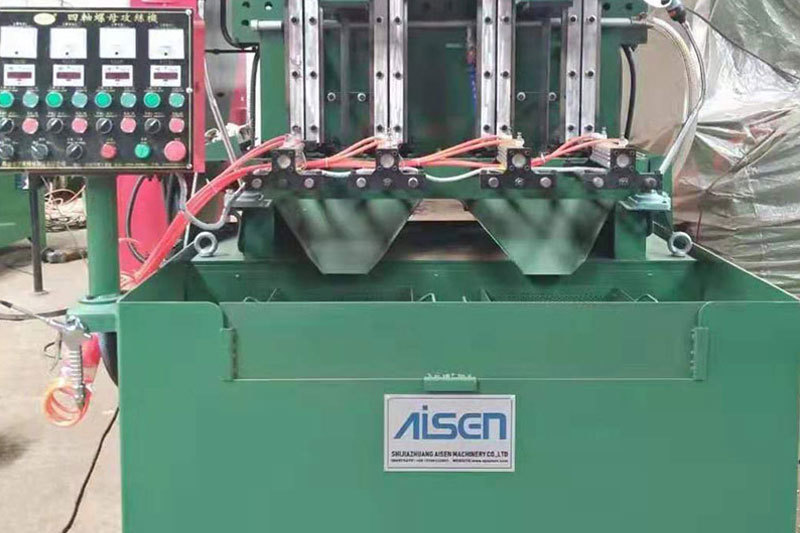
AISEN Four axis nut tapping machine ready for shipment to Russia
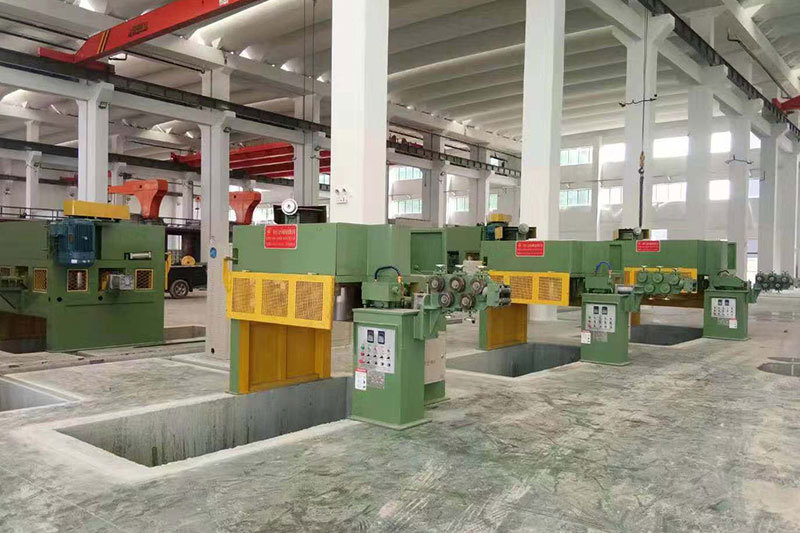
AISEN machinery inverted wire drawing machine
MESSAGES
We will contact you within one working day. Please pay attention to your email.
Qucik Link
Contact
Phone: +86-15100123091
E-mail: info@sjzaisen.com
Address: No.41 Zhaiying South Street, Yuhua District, Shijiazhuang City, Hebei Province China