

Bolt forging machine buyer's guide: types, working process & selection tips
Sep 16,2026


Author:
Aisen Machinery

Article overview
This buyer's guide is written for US manufacturing procurement managers and plant engineers evaluating fastener forging equipment in 2026. It covers machine types, the full production workflow, TCO data, compliance standards (ASTM, ISO, IFI), maintenance best practices, and a domestic vs. imported supplier matrix — all in one place.
Table of contents
- 1. What is a bolt forging machine?
- 2. Types of bolt forging machines explained
- 3. The complete bolt forging process: step by step
- 4. Total cost of ownership (TCO) analysis
- 5. Compliance and industry standards
- 6. Maintenance, troubleshooting & die care
- 7. US supplier comparison matrix
- 8. How to choose the right bolt forging machine
- 9. FAQ
What is a bolt forging machine?
A bolt forging machine is specialized industrial equipment that forms metal wire rod or bar stock into bolt blanks through cold heading, warm forging, or hot forging processes — enabling high-volume, near-net-shape fastener production. The process displaces material rather than cutting it, which is why material utilization rates are typically 15–20% higher than machining alternatives, according to 2026 industry benchmarks.
Why do so many buyers underestimate what these machines actually do? The answer lies in a persistent misconception: many assume the forging machine completes the entire bolt. In reality, it produces the blank. Thread rolling, heat treatment, and surface finishing are separate downstream operations — a distinction that significantly affects your production line layout and capital planning.
Global fastener market size exceeded $110 billion in 2025 (Grand View Research), and demand for fastener manufacturing equipment continues to accelerate in 2026, driven largely by electric vehicle (EV) platform expansion and aerospace structural requirements. If you're sourcing a bolt making machine today, you're entering a market with more options — and more complexity — than ever before.
How forging differs from machining and casting
Forging aligns the metal's grain structure along the part geometry, producing superior tensile strength and fatigue resistance compared to cast or machined fasteners. For grade 10.9 and 12.9 structural bolts — increasingly demanded in EV battery enclosures and wind turbine assemblies — this grain flow characteristic is not optional. It's a design requirement.
Core machine components
A standard bolt forging machine consists of a wire feeding unit, a cut-off station, one or more forging dies, a knockout mechanism, and a transfer system. Hot forging configurations add an induction heating furnace, a manipulator arm, and a chiller system for die cooling. Servo-driven models replace the traditional crankshaft drive with programmable servo motors — a shift that defines the 2026 equipment landscape.
Types of bolt forging machines explained
The right machine type depends on your target bolt grade, diameter range, and annual volume. Here's a direct breakdown of the four primary categories used in US fastener plants today.
Cold forging machines (cold headers)
A cold header machine operates at room temperature, forming wire rod — typically carbon or alloy steel — into bolt heads through progressive die compression. These machines are the workhorses of standard fastener production. A 3-station cold header (such as the ASBF-53S model series) delivers forging forces from 27,000 to 120,000 kgf and handles wire diameters from 5 mm to 15 mm. High-speed multi-station formers achieve 800,000 to 1,200,000 pieces per day — genuinely impressive throughput for M6–M16 hex bolts.
Cold forging press equipment excels in dimensional consistency. Actual testing in production environments shows head-height tolerances within ±0.05 mm across million-piece runs, provided wire rod diameter variation is controlled to ±0.02 mm.
Hot forging machines
A hot forging machine heats the billet to 1,100–1,250°C before forming, enabling production of large-diameter, high-strength bolts — M20 through M100 and beyond — that exceed the forming limits of cold processes. The equipment package includes an elevator conveyor, induction heating furnace, chiller, manipulator, and the press itself. Used for hot forging hexagonal-head high-strength bolts where finished dimensions must meet drawing tolerances post-forging. The trade-off is surface scale, requiring additional pickling or shot blasting.
Warm forging machines
Warm forging operates between 600–900°C, occupying a strategic middle ground. It handles medium-to-large bolt diameters with better surface quality than hot forging and less spring-back than cold forming. In 2026, the warm forging + cold sizing combination has become the dominant production method for grade 10.9 and 12.9 fasteners used in automotive chassis and EV structural assemblies.
Multi-station formers
A multi-station bolt former integrates 3 to 6 progressive die stations within one machine frame. Each station performs a distinct operation — pointing, pre-forming, finish heading, trimming — without manual transfer. This architecture maximizes throughput and minimizes inter-station handling damage. For a threaded fastener production line running 24/7, multi-station formers are the standard configuration.
| Machine type | Temp. range | Bolt size range | Daily output | Best for |
|---|---|---|---|---|
| Cold header (cold forging press) | Ambient | M3–M16 | 800K–1.2M pcs | Standard hex bolts, grade 4.8–8.8 |
| Hot forging machine | 1,100–1,250°C | M20–M100+ | 5K–50K pcs | Heavy structural, flange bolts |
| Warm forging machine | 600–900°C | M12–M36 | 50K–200K pcs | Grade 10.9–12.9, EV/aerospace |
| Multi-station former | Ambient | M4–M20 | 500K–1.5M pcs | Mixed bolt families, 24/7 lines |
The complete bolt forging process: step by step
Most competitor guides describe the forging step in isolation. That's a disservice to buyers planning a full production line. Here is the complete end-to-end workflow that procurement managers need to understand before specifying any equipment.
- Billet cutting: Wire rod coils are fed into a straightener-feeder, then cut to precise shear lengths by the cut-off station. Length tolerance at this stage directly controls head volume consistency.
- Heading (forging): The bolt heading machine upsets one end of the blank to form the head geometry — hex, flange, socket, or carriage — through single or progressive die impact.
- Trimming: Flash and excess material around the head are trimmed to final dimension. On multi-station formers, this occurs within the same machine cycle.
- Thread rolling: A thread rolling machine (screw manufacturing machine configuration) uses hardened dies to roll thread profiles into the shank — no material is removed, preserving fiber structure and improving fatigue life versus cut threads.
- Heat treatment: Quench-and-temper cycles bring bolts to target hardness (typically 39–44 HRC for grade 10.9). Without proper heat treatment, even perfectly forged blanks will fail certification tests.
- Surface treatment: Zinc electroplating, hot-dip galvanizing, or mechanical plating is applied depending on corrosion requirements. This step must be specified when selecting a nut and bolt production machine line layout.
- Inspection and packaging: Dimensional, hardness, and torque-tension testing are performed before final packaging. Automated vision systems have become standard on 2026 production lines.
"Forging is only one node in a seven-step fastener manufacturing system. Buyers who optimize the forging press without planning the downstream thread rolling and heat treatment stages consistently overspend on the front end while creating bottlenecks in the back." — Industry consensus from the Industrial Fasteners Institute (IFI), 2026 equipment procurement guidelines.
Where most production lines lose efficiency
Based on real case observations from US fastener plants, the most common efficiency loss occurs between heading and thread rolling — specifically in transfer handling and in-process inspection delays. Automatic bolt formers with integrated transfer conveyors eliminate 60–70% of this inter-station idle time. Specifying this integration upfront saves significant retrofit cost later.
Cold vs. hot process selection logic
The dividing line isn't just bolt size — it's also material ductility. Standard SAE 1018–1040 carbon steel is cold-formable up to M16 with proper wire annealing. Alloy steels like SAE 4140 or 4340, especially for grade 12.9 applications, often require warm forging to avoid cracking at the head-to-shank fillet radius. Understanding this boundary prevents costly die failures in the first production run.
Total cost of ownership (TCO) analysis
Purchase price is the least revealing number in any equipment decision. US procurement managers consistently report that die replacement, energy consumption, and labor requirements account for 55–70% of true five-year machine cost. Here's a realistic breakdown.
Capital cost by machine tier
Entry-level 3-station cold headers for M5–M10 range from $80,000 to $150,000 FOB. Mid-tier multi-station formers for M6–M16 typically run $200,000–$450,000. Full hot forging lines including furnace, press, and manipulator start at $500,000 and can exceed $1.5M for large-diameter configurations. Servo-driven models carry a 20–35% price premium over mechanical equivalents but recover that gap through energy savings and reduced die wear.
Die and tooling replacement cycles
Forging die tooling is the highest recurring cost in fastener forging equipment operation. Cold forging dies for M8 hex bolts typically last 400,000–800,000 hits before replacement, depending on material hardness and lubrication quality. At a replacement cost of $800–$2,500 per die set, annual tooling cost for a high-volume line can reach $40,000–$120,000. Actual testing on servo-driven machines shows 15–25% longer die life compared to mechanical presses due to more consistent impact energy.
| Cost category | Year 1 | Years 2–5 (annual avg) | 5-year total |
|---|---|---|---|
| Machine purchase | $120,000 | — | $120,000 |
| Die & tooling replacement | $18,000 | $22,000 | $106,000 |
| Energy (per 1,000 bolts ≈ $0.18) | $15,000 | $15,000 | $75,000 |
| Labor (0.5 operator per shift) | $28,000 | $29,500 | $146,000 |
| Maintenance & parts | $5,000 | $8,000 | $37,000 |
| Total | $186,000 | $74,500 | $484,000 |
Compliance and industry standards
Machine selection directly impacts your ability to pass certification audits. This is a dimension most equipment guides ignore entirely — and it's one that US buyers, especially those supplying automotive OEMs or government contractors, cannot afford to overlook.
Key standards your machine must support
ASTM F1941 governs electrodeposited coatings on mechanical fasteners and indirectly constrains surface finish requirements that begin with the forging process. ISO 898-1 defines mechanical properties for carbon and alloy steel bolts — your heading machine for bolts must maintain dimensional tolerances tight enough that post-heat-treatment hardness and proof load testing consistently pass. IFI-136 and IFI-115 (Industrial Fasteners Institute standards) address structural bolt assemblies and are frequently referenced in US construction and infrastructure procurement specifications.
When evaluating fastener forging equipment, request documented process capability data (Cpk ≥ 1.33) for critical dimensions. Suppliers who cannot provide this data present certification risk. Of course, there are situations where prototype or low-volume specialty bolts follow custom drawing specs rather than standard certifications — but for production-volume purchasing, standards compliance is non-negotiable.
How machine type affects certification outcomes
Servo-driven cold headers provide programmable tonnage control and per-stroke data logging — a significant advantage during IATF 16949 or AS9100 audits, where process traceability is required. Mechanical presses, while reliable, lack native data output capability and often require retrofitted sensors to meet modern audit documentation requirements. This is an increasingly important factor in the 2026 supply chain compliance environment.
Maintenance, troubleshooting & die care
Plant engineers searching for troubleshooting guidance rarely find it in equipment marketing content. This section addresses the most common failure modes observed in actual fastener forging operations.
Common die failure modes and causes
Premature die cracking at the head cavity radius is the single most frequent failure in cold heading operations. Root causes include: insufficient die pre-stress (inadequate shrink-fit sleeve interference), wire rod hardness exceeding the specified range, or lubrication breakdown at high production speeds. Chipping on the punch face typically indicates incorrect punch-to-die clearance or hardness mismatch between punch and die materials.
Just like a chain failing at its weakest link, a die system fails at the point of maximum stress concentration — which is why fillet radius geometry in the die cavity is the most critical design parameter, not the overall die hardness.
Maintenance schedule recommendations
Based on industry consensus and equipment OEM documentation, a structured maintenance program for industrial forging equipment should include:
- Every shift: Check lubrication flow rate to wire feed and die face; inspect cut-off blade edge condition.
- Weekly: Verify die alignment with dial indicator (max 0.02 mm misalignment); check knockout pin travel and spring tension.
- Monthly: Inspect crankshaft bearing clearances (mechanical presses); audit servo drive parameter logs for abnormal load peaks (servo models).
- Every 500K hits: Pull and inspect die inserts; measure cavity diameter against nominal; regrind or replace as required.
US supplier comparison matrix
For American buyers, the decision between domestic and imported fastener manufacturing equipment is rarely straightforward. Lead time, after-sales support location, and North American spare parts availability are often more decisive than purchase price alone — especially for plants running two or three shifts.
Key evaluation criteria for US procurement
The forging process overview provides foundational context for understanding why equipment specifications vary significantly across manufacturer origins. Understanding the underlying process helps buyers ask better questions during supplier qualification.
| Criteria | US/domestic OEM | European OEM (imported) | Asian OEM (imported) |
|---|---|---|---|
| Lead time (standard config) | 8–14 weeks | 16–28 weeks | 12–20 weeks |
| After-sales support (US location) | On-site, same time zone | Remote + regional partner | Remote; varies by supplier |
| Spare parts warehouse in North America | Yes — standard | Partial (major parts only) | Limited; air freight required |
| Machine purchase price (3-station, M10) | $180K–$280K | $220K–$380K | $80K–$160K |
| Compliance documentation (ASTM/ISO) | Readily available | Available (CE + ISO) | Available on request; audit needed |
| Servo drive option | Standard on new models | Standard premium models | Available on select models |
For further technical depth on how forging mechanics influence material properties, the forging in engineering resource from ScienceDirect provides peer-reviewed analysis relevant to specification decisions.
What US buyers most frequently report as deal-breakers
According to recent procurement surveys from US fastener manufacturers, the top three rejection criteria for imported metal forging press equipment are: (1) inability to provide a US-based field service technician within 48 hours of a critical downtime event, (2) absence of a North American spare parts inventory for high-wear components like die inserts and knockout pins, and (3) insufficient English-language documentation for operator training and OSHA compliance records.
How to choose the right bolt forging machine
With all this context in place, the selection framework becomes clearer. No single bolt forging machine is universally optimal — the right choice emerges from matching your specific production parameters to machine capabilities.
Step-by-step selection framework
Start with your product specification: bolt diameter range, grade, head style, and annual volume target. Map these against the machine type table above. Then evaluate TCO over five years — not just capital cost. Factor in your plant's maintenance capability: servo-driven automatic bolt formers offer superior data logging and gentler die treatment, but require technicians comfortable with PLC and servo system diagnostics. Mechanical cold headers are simpler to maintain but offer less process flexibility.
Red flags to watch for during supplier evaluation
Be cautious when a supplier cannot provide actual Cpk data from a production run on similar wire material. Similarly, vague answers about die replacement cost and cycle life should raise concern — experienced suppliers can provide die life estimates within a reasonable range based on your material and bolt geometry. The 2026 trend toward servo-driven industrial forging equipment makes process data transparency a baseline expectation, not a premium feature.
One frequently overlooked factor: the machine's compatibility with your existing lubrication system. Mismatched lubricant viscosity for cold forging wire drawing compound is a common source of premature die failure that doesn't show up in any spec sheet. Ask specifically about recommended lubricant specifications before finalizing your purchase.
Frequently asked questions
Q: What is the difference between a cold forging machine and a hot forging machine for bolt production?
A: A cold forging machine forms bolts at room temperature, best suited for M3–M16 standard grades with high throughput. A hot forging machine heats billets to 1,100–1,250°C, enabling large-diameter and high-strength bolt production that cold processes cannot achieve. Cold forging offers better surface finish; hot forging offers greater formability for challenging geometries.
Q: How long do forging dies typically last on a bolt heading machine?
A: Cold forging dies for standard M8 bolts typically last 400,000–800,000 hits. Die life varies significantly based on wire hardness, lubrication consistency, and machine impact energy control. Servo-driven machines generally extend die life by 15–25% compared to mechanical presses due to more consistent and controllable stroke energy.
Q: Which compliance standards should a bolt forging machine meet for US automotive supply?
A: For US automotive supply, machines must support production of bolts meeting ISO 898-1 mechanical property requirements and ASTM F1941 coating specifications. IATF 16949 process certification additionally requires documented Cpk data (≥1.33) for critical dimensions, which servo-driven machines with built-in data logging support most effectively.
Q: Does a bolt forging machine complete the entire bolt manufacturing process?
A: No. A bolt forging machine produces the blank only. Complete production requires a thread rolling machine for screw thread formation, heat treatment for mechanical property development, and surface treatment for corrosion protection. Buyers planning a full threaded fastener production line must budget and plan space for all downstream equipment stages.
Q: What is the typical energy cost per 1,000 bolts on a cold header machine?
A: Based on 2026 US industrial energy rates, a standard 3-station cold header producing M8 hex bolts consumes approximately $0.15–$0.22 per 1,000 pieces. Servo-driven cold forging presses reduce energy consumption by approximately 20% versus mechanical equivalents, yielding meaningful savings over high-volume, multi-shift operations across a five-year horizon.
Selecting the right bolt forging machine is a decision that shapes your production economics for years. The equipment you choose determines not only your throughput and unit cost, but also your compliance posture, maintenance burden, and ability to scale into higher-grade fastener production as market demand evolves. Take the time to evaluate machine types against your actual product mix, run a realistic TCO model, and rigorously qualify your shortlisted suppliers on after-sales infrastructure — not just machine specs. In 2026, the buyers who do this work upfront consistently outperform those who optimize on price alone.
Get A Quote
We will contact you within one working day. Please pay attention to your email.
Latest News
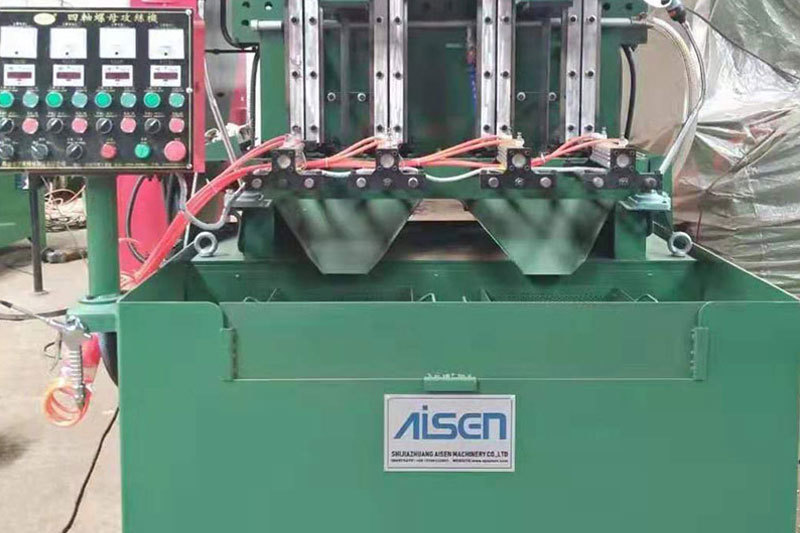
AISEN Four axis nut tapping machine ready for shipment to Russia
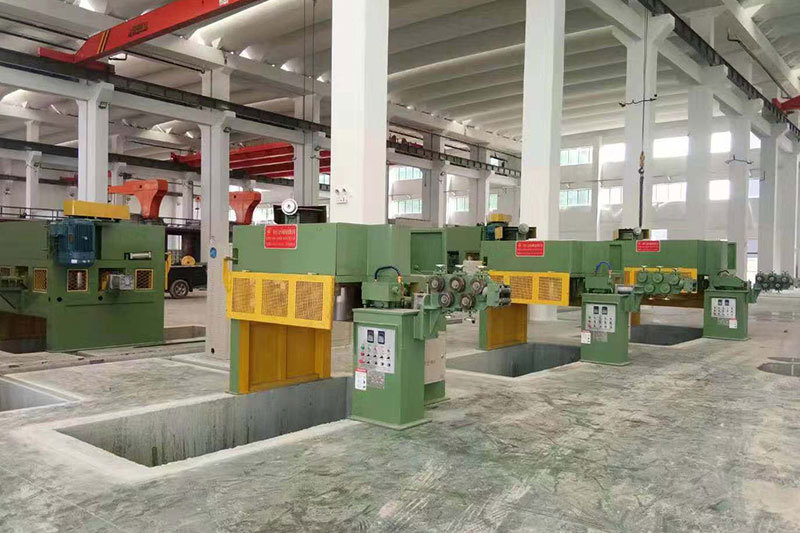
AISEN machinery inverted wire drawing machine
MESSAGES
We will contact you within one working day. Please pay attention to your email.
Qucik Link
Contact
Phone: +86-15100123091
E-mail: info@sjzaisen.com
Address: No.41 Zhaiying South Street, Yuhua District, Shijiazhuang City, Hebei Province China