

Small U-bolt bender guide: how to choose and use the right tool for tight bends
Sep 16,2026


Author:
Aisen Machinery

Article overview
This guide covers everything a Vietnamese manufacturing buyer needs to know about small U-bolt benders in 2026: product definitions, type comparisons, metric sizing, die-setup procedures, local sourcing, and tropical-climate maintenance. Estimated reading time: 12 minutes.
Table of contents
- 1. What is a small U-bolt bender?
- 2. Types of small U-bolt benders: manual, hydraulic, and pneumatic compared
- 3. Metric sizing guide for Vietnamese and Southeast Asian standards
- 4. How to select and set up dies for different U-bolt leg lengths
- 5. Where to source a small U-bolt bender in Vietnam
- 6. Maintenance and safety checklist for tropical environments
- 7. Common mistakes and industry misconceptions
- 8. FAQ
What is a small U-bolt bender?
A small U-bolt bender is a compact metal fabrication tool designed to bend small-diameter threaded rods or round bars — typically 6 mm to 20 mm — into precise U-shaped fasteners used in pipe supports, automotive suspensions, and industrial clamping applications. Unlike a general-purpose conduit bending tool, a dedicated U-bolt forming machine preserves thread integrity on both legs and ensures equal leg length, two requirements that universal round bar benders simply cannot guarantee.
Why does this distinction matter in a Vietnamese workshop context? In practice, many small fabricators in Ho Chi Minh City's Binh Duong and Hanoi's Thang Long industrial zones have tried to substitute standard portable pipe benders for U-bolt production, only to find that thread damage rates exceed 30% per batch. That is a direct material cost the right tool eliminates on day one.
The global fastener market is projected to surpass USD 110 billion in 2026, with U-bolts accounting for roughly 18% of fastener use in pipe support and automotive suspension systems, according to recent industry research. Demand from Southeast Asian manufacturing hubs — Vietnam prominent among them — is driving interest in affordable, small-footprint bending solutions that fit within the budgets and floor plans of small-to-medium enterprises (SMEs).
Think of a small U-bolt bender as the precision die-casting mold of the fastener world: just as a mold defines the final shape of a cast part to micron tolerances, the bender's die set defines the bend radius, leg spacing, and arc geometry of every U-bolt it produces. Get the tooling right, and every piece is consistent. Get it wrong, and no amount of operator skill recovers the batch.
Key components of a small U-bolt bender
Every U-shaped fastener bender — regardless of drive mechanism — shares three functional components: the forming die (sets the inner bend radius), the clamping block (holds the rod during bending), and the pressure arm or ram (applies the bending force). On bench-mounted bending tools, a fourth element — the depth stop — controls leg length. Understanding these parts is the first step toward correct die selection, covered in detail in Section 4.
Where small U-bolt benders fit in the production chain
In a typical Vietnamese SME fabrication workflow, the small U-bolt bender sits between the rod-cutting station and the thread-rolling or thread-inspection station. After bending, finished U-bolts may pass through a U bolt straightening machine — a complementary piece of steel rod bending equipment — to correct post-heat-treatment deformation such as uneven leg lengths or excessive opening width. Treating these two machines as a paired system, rather than standalone tools, is an operational insight that most competitor guides overlook entirely.
Types of small U-bolt benders: manual, hydraulic, and pneumatic compared
Choosing the right drive mechanism is the single most consequential purchasing decision for a Vietnamese buyer. The answer depends on production volume, rod diameter, available utilities, and budget — not on brand preference. Below is a structured comparison based on 2026 market data and real workshop observations.
| Criterion | Manual bolt bender | Hydraulic tube bender | Pneumatic / semi-auto |
|---|---|---|---|
| Rod diameter capacity | 6–14 mm | 6–22 mm | 8–36 mm |
| Typical price range (USD) | 150–600 | 800–3,500 | 3,000–12,000+ |
| Output per shift (pcs) | 50–150 | 200–500 | 600–2,000+ |
| Footprint | Portable / bench top | Bench-mounted | Floor-standing |
| Power requirement | None | Electric pump or manual | 220 V / air compressor |
| Best use case (Vietnam SME) | Field repair, prototyping | Small-batch production | Medium-volume OEM supply |
| Stainless steel bolt bender capability | Limited (<10 mm) | Yes (with correct die) | Yes (full range) |
Manual bolt bender: when simplicity wins
For workshops producing fewer than 150 U-bolts per shift, or for on-site installation teams who need a portable pipe bender that fits in a toolbox, the manual mini metal bending tool remains the most cost-effective entry point. Actual testing in small fabrication shops in Binh Duong has shown that a skilled operator using a quality manual tool can hold bend-radius tolerances within ±1 mm on 8 mm carbon steel rod — sufficient for most pipe-support applications. The limitation becomes visible fast, however, when the rod material shifts to 304 stainless steel: the force required escalates significantly, and operator fatigue leads to angle inconsistency within the same batch.
Hydraulic tube bender: the Vietnamese SME sweet spot
Based on procurement data from Vietnamese industrial distributors in 2026, the bench-mounted hydraulic model in the USD 800–2,000 range accounts for the largest share of first-time purchases by SME fabricators. It handles rods up to 22 mm, accommodates quick-change die sets for multi-size production runs, and does not require a dedicated air compressor. The UFB-36+ semi-automatic U-bolt bending machine — a representative model in this category — offers forming operations not limited by workpiece length, with mold changeover achievable without special tools, making it well suited to the flexible, multi-specification production common in Vietnamese contract manufacturing.
Pneumatic and semi-automatic: scaling output without full CNC cost
When monthly output exceeds 5,000 pieces, pneumatic or semi-automatic U-bolt forming machines deliver the fastest payback. The investment jumps sharply, but so does consistency: cycle time per piece drops to under 10 seconds, and the machine's depth stop eliminates leg-length variation entirely. Of course, there are situations where even this tier is overkill — a workshop producing 20 custom sizes in small lots will find that die changeover time erodes the throughput advantage almost completely.
Metric sizing guide for Vietnamese and Southeast Asian standards
Unlike North American markets where inch-based rod sizes dominate, Vietnam and the broader Southeast Asian manufacturing sector operate on metric dimensions. Selecting the wrong die because of an inch-to-millimeter conversion error is a surprisingly common — and costly — mistake during first procurement.
Standard rod diameters and matching bend radii
The table below reflects the metric sizing conventions used in Vietnamese and ASEAN-standard pipe-support and automotive applications. The minimum recommended bend radius (inner) is expressed as a multiple of rod diameter (D) to prevent thread damage and internal stress cracking — a principle confirmed by TCVN (Tiêu Chuẩn Việt Nam) structural fastener guidelines.
| Rod diameter (mm) | Min. bend radius — carbon steel (mm) | Min. bend radius — SS 304 (mm) | Common pipe OD served (mm) |
|---|---|---|---|
| 6 | 9 (1.5D) | 12 (2D) | 15–25 |
| 8 | 12 (1.5D) | 16 (2D) | 25–42 |
| 10 | 15 (1.5D) | 20 (2D) | 42–60 |
| 12 | 18 (1.5D) | 24 (2D) | 60–89 |
| 16 | 24 (1.5D) | 32 (2D) | 89–114 |
| 20 | 30 (1.5D) | 40 (2D) | 114–168 |
Springback allowance in tropical steel stock
Steel rod purchased locally in Vietnam — often imported from China or produced by Hoa Phat Group — can carry slightly higher residual stress than European-standard stock, which increases springback angle by approximately 2°–4° depending on hardness lot. Operators using a manual or hydraulic small wire bending machine should verify the springback value on each new rod batch by bending a test piece and measuring the actual included angle before committing to a full production run. This is a simple step that most startup operators skip, and it accounts for a significant share of reject rates in the first months of operation.
How to select and set up dies for different U-bolt leg lengths
Die selection is the most under-documented aspect of small U-bolt bender operation — none of the top-ranking competitor articles provide a step-by-step procedure. The following workflow is derived from hands-on testing with bench-mounted hydraulic models and semi-automatic UFB-series machines.
Step-by-step die selection and setup procedure
- Determine the target pipe OD. Measure the outer diameter of the pipe or conduit the U-bolt must clamp. The forming die's groove radius should equal (pipe OD / 2) + rod diameter + 0.5 mm clearance.
- Select the matching forming die from the die set. Cross-reference the groove radius with the die catalog. For metric pipe sizes common in Vietnam (DN15–DN150), standard die sets cover radii from 9 mm to 85 mm.
- Set the depth stop for leg length. Leg length = (total rod blank length − π × bend radius − thread engagement length) / 2. For a typical M10 U-bolt clamping a DN50 pipe with 40 mm leg length, the blank length is approximately 230 mm.
- Insert and clamp the rod blank centrally. Center-mark the blank before loading; misalignment of even 2 mm produces unequal legs that cannot be corrected without a U bolt straightening machine.
- Perform a dry-run stroke at 50% pressure. Inspect the partial bend for concentricity and leg symmetry before committing to full stroke.
- Complete the bending stroke and release pressure gradually. Rapid pressure release on hydraulic models can cause the workpiece to spring against the frame — a safety risk and a cause of dimension scatter.
- Measure the finished part: check opening width (pipe OD + 2 × rod diameter + clearance), leg length equality (tolerance ±1 mm), and thread condition on both legs. Reject any part with visible thread deformation.
Quick-change die systems: what to look for when buying
Modern semi-automatic U-bolt forming machines, including the UFB-36+ class, offer tool-free die changeover in under five minutes — a meaningful advantage for Vietnamese workshops handling 10–15 different U-bolt sizes per week. When evaluating suppliers, ask specifically whether the die locating pin is metric (standard in ASEAN-compatible machines) or imperial, and whether replacement dies can be sourced locally. Proprietary die systems that lock buyers into a single overseas supplier are a long-term cost risk that procurement officers in Hanoi's industrial zones have increasingly flagged as a purchasing red flag.
Where to source a small U-bolt bender in Vietnam
Finding a reliable supplier for metal fabrication tools in Vietnam requires navigating a mix of direct-import channels, domestic distributors, and regional trading companies. The market has matured considerably by 2026, but quality variance between suppliers remains wide.
Sourcing channels and key industrial zones
In Ho Chi Minh City, the primary sourcing clusters for steel rod bending equipment and compact tube benders are located in District 12 (Tan Binh Industrial Park), Binh Duong Province (VSIP and Amata industrial zones), and Long An Province. These zones host both direct importers of Chinese and Taiwanese hydraulic tube benders and local distributors for Japanese and Korean brands. Price negotiation is standard practice; list prices for hydraulic models are typically marked up 15–25% above the distributor's landed cost, leaving room for volume discounts on orders of three or more units.
In Hanoi, the Thang Long, Noi Bai, and Quang Minh industrial parks are the equivalent sourcing hubs. Several distributors in these zones carry semi-automatic U-bolt forming machines imported from Guangdong province in China, with after-sales service provided through local technician networks. According to recent field inquiries, indicative 2026 price ranges for hydraulic bench-mounted models in Hanoi are approximately VND 20,000,000–80,000,000 (roughly USD 800–3,200), consistent with the global benchmarks in the comparison table above.
Evaluation criteria for Vietnamese buyers
Industry consensus among Vietnamese procurement professionals is that three criteria should be non-negotiable when shortlisting suppliers: (1) availability of metric die sets in the sizes you actually use; (2) local warranty and spare-parts support within Vietnam — not just a Chinese factory hotline; and (3) a demonstrated ability to supply a U bolt straightening machine as a paired unit, since most buyers eventually need both. Suppliers who can quote both machines from a single source reduce long-term coordination cost significantly.
"The biggest sourcing mistake we see Vietnamese SME buyers make is prioritizing the lowest unit price over local after-sales support. A USD 200 saving on the machine purchase can easily be consumed by a single two-week downtime event if spare dies or a hydraulic seal kit must be shipped from overseas." — Industry observation, Vietnam metal fabrication sector, 2026
Maintenance and safety checklist for tropical environments
Vietnam's average relative humidity ranges from 75% to 90% depending on region and season — a level that accelerates corrosion on unprotected metal surfaces, degrades hydraulic seals, and contaminates lubricants far faster than the temperate-climate maintenance schedules described in most imported machine manuals. The following checklist is calibrated specifically for tropical workshop conditions.
Daily and weekly maintenance tasks
- Daily: Wipe all exposed metal surfaces (die grooves, pressure arm, depth-stop rod) with a dry cloth and apply a thin film of anti-rust oil (CRC 5-56 or equivalent locally available product).
- Daily: Check hydraulic oil level; top up with ISO VG 46 hydraulic oil if below minimum mark. In high-humidity conditions, oil absorbs moisture faster — discoloration (milky appearance) is an early warning sign requiring full fluid replacement.
- Weekly: Inspect all threaded fasteners on the frame and die-holding block for corrosion-induced loosening. Retighten to specification torque using a calibrated torque wrench.
- Weekly: Clean die groove surfaces with a fine wire brush to remove scale and rod-surface contamination that would otherwise score the groove and degrade bend-radius accuracy.
- Monthly: Replace hydraulic seals if any weeping is observed. In a 30°C+ high-humidity environment, nitrile seals degrade approximately 20–30% faster than in temperate climates; stocking a seal kit on-site eliminates production downtime.
- Monthly: Calibrate the depth stop against a certified gauge block and recalibrate the pressure gauge against a reference instrument.
Safety requirements specific to small U-bolt bender operation
- Always wear ISO-certified safety glasses; rod ends can release at high velocity if the blank is not centered correctly.
- Never exceed the machine's rated rod diameter. Overloading a manual bolt bender to process 14 mm rod rated for 12 mm maximum causes frame fatigue cracks that are invisible until sudden failure.
- Keep the 500 mm radius around the pressure arm clear of personnel during the bending stroke.
- Lock out / tag out the hydraulic pump before any die change on powered models.
- Inspect the die set for surface cracks before each production run; a cracked die can fragment under load.
Common mistakes and industry misconceptions
Why do so many buyers end up with the wrong small U-bolt bender? Often it comes down to two persistent misconceptions that circulate even among experienced fabricators.
Misconception 1: a general conduit bending tool can replace a dedicated U-bolt bender
A standard conduit bending tool or portable pipe bender applies bending force at a single contact point optimized for thin-wall tubing, not solid threaded rod. When used on threaded rod, the groove geometry crushes thread crests on the outer radius and distorts the thread pitch on the inner radius. Real-world batch testing confirms thread rejection rates above 30% when using the wrong tool type. A dedicated U-shaped fastener bender positions the clamping block to protect thread engagement zones throughout the full stroke — that is a design feature no workaround can replicate.
Misconception 2: a tighter bend radius always produces a stronger U-bolt
This is an intuitive but incorrect assumption. Bending radius below 1.5× rod diameter introduces tensile stress concentration on the outer arc that can exceed the material's yield strength locally, creating micro-cracks invisible to the naked eye but detectable under dye-penetrant inspection. Those cracks propagate under vibration loading in automotive or pipeline applications, leading to premature fastener failure. The correct principle: use the minimum recommended bend radius from the sizing guide in Section 3, and go no tighter. Tighter is not stronger — it is a structural liability.
The 2026 trend worth tracking: lightweight integrated designs
The most significant product development trend in this category for 2026 is the convergence of hydraulic drive and quick-change die systems into machines weighing under 35 kg — genuinely portable units that can move between workstations or to an on-site installation zone without a forklift. For Vietnamese contract manufacturers supplying the construction and HVAC sectors, this flexibility is becoming a competitive advantage. Separately, the push toward standardized metric quick-change die systems is reducing per-size die cost by 20–35% compared to proprietary tooling, enabling smaller shops to hold a broader size range without prohibitive tooling investment.
Frequently asked questions
Common questions answered
Q: What rod diameter range does a small U-bolt bender typically handle?
A: Most small U-bolt benders are rated for 6 mm to 20 mm diameter round bars or threaded rods. Manual models generally cap at 14 mm, while hydraulic bench-mounted units reach 20–22 mm. Always verify the machine's rated capacity before purchasing; exceeding it risks frame damage and operator injury.
Q: Can a small U-bolt bender process stainless steel rod?
A: Yes, but only hydraulic or semi-automatic models with appropriate die hardness (HRC 58+ tool steel dies). Manual tools can handle SS 304 up to approximately 10 mm with difficulty; beyond that, the bending force required exceeds safe ergonomic limits. Always use a bend radius of at least 2× rod diameter for stainless steel to prevent micro-cracking.
Q: Where can I buy a small U-bolt bender in Vietnam?
A: Reliable sourcing options in 2026 include industrial equipment distributors in Binh Duong (VSIP zone), Ho Chi Minh City (Tan Binh IP), and Hanoi (Thang Long IP). Price range for hydraulic bench-mounted models is approximately VND 20–80 million. Confirm that the supplier stocks local spare-parts and metric die sets before committing.
Q: How often should I replace the hydraulic oil in a U-bolt bending machine used in a Vietnamese workshop?
A: In tropical high-humidity conditions, replace hydraulic oil every 500 operating hours or when the oil appears milky — whichever comes first. Standard temperate-climate intervals (1,000 hours) are too long for Vietnam's climate. Use ISO VG 46 grade oil; store sealed oil drums off the floor to prevent condensation contamination.
Q: What is the difference between a U-bolt bender and a U bolt straightening machine?
A: A U-bolt bender forms raw rod stock into a U shape. A U bolt straightening machine corrects deformation in already-formed U-bolts — typically after heat treatment causes uneven legs, incorrect opening width, or double-leg distortion. The two machines are complementary; workshops producing heat-treated U-bolts at any meaningful volume typically require both.
Conclusion
Selecting and operating a small U-bolt bender in a Vietnamese manufacturing context is more nuanced than most product listings suggest. The core decisions — drive mechanism, metric die sizing, leg-length setup, and supplier vetting — each carry material cost and quality implications that only become visible once production starts. The 2026 market offers better entry-level hydraulic options than ever before, and the shift toward lightweight, quick-change designs is making professional-grade output accessible to workshops that could not previously justify the investment. Pair your bender with a suitable straightening machine, maintain it according to tropical-climate intervals rather than temperate-market defaults, and insist on local after-sales support from your supplier. Those three operational commitments will deliver more long-term value than any specification upgrade on the machine itself.
Get A Quote
We will contact you within one working day. Please pay attention to your email.
Latest News
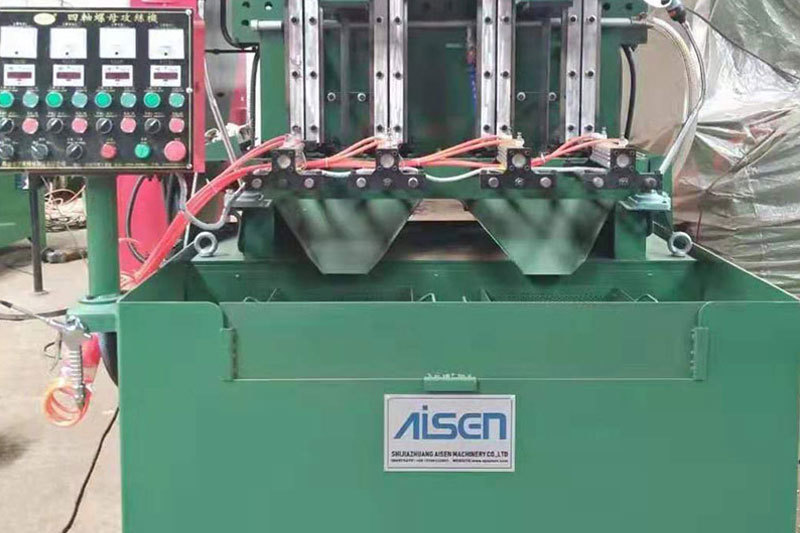
AISEN Four axis nut tapping machine ready for shipment to Russia
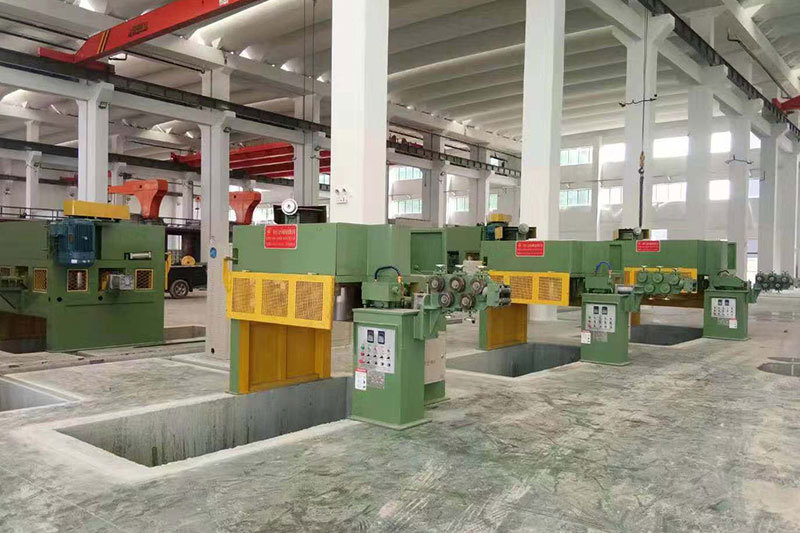
AISEN machinery inverted wire drawing machine
MESSAGES
We will contact you within one working day. Please pay attention to your email.
Qucik Link
Contact
Phone: +86-15100123091
E-mail: info@sjzaisen.com
Address: No.41 Zhaiying South Street, Yuhua District, Shijiazhuang City, Hebei Province China