

Pipe end facing machine buyer's guide: key features to compare
Nov 18,2026


Author:
Aisen Machinery

Article overview
This buyer's guide covers every critical feature procurement managers and welding engineers must evaluate when selecting a pipe end facing machine. Topics include configuration types, technical parameters, drive systems, compliance standards, cost modelling, fault diagnosis, and Argentina-specific import guidance.
Table of contents
- 1. What is a pipe end facing machine?
- 2. Portable vs. stationary: which configuration fits your operation?
- 3. Key technical specifications to compare
- 4. Drive mechanism: hydraulic vs. servo-electric
- 5. Compliance standards and bevel angle tolerances
- 6. Operating costs, tooling life, and ROI calculation
- 7. Common defects, troubleshooting, and maintenance schedule
- 8. Sourcing in Argentina: import duties, lead times, and local support
- 9. Frequently asked questions
What is a pipe end facing machine?
A Pipe End Facing Machine is a precision-driven cutting tool that machines the end surface of pipes and tubes to a flat, square, or beveled profile ready for welding, flanging, or threading. Without a properly prepared end, even the most skilled welder cannot achieve the root fusion and joint integrity that oil and gas codes demand. That is the fundamental problem this equipment solves.
In practice, a pipe end facing machine removes material from the pipe end using a rotating cutter head — producing a square face, a standard 37.5° weld bevel, a compound bevel, or a J-groove, depending on the tooling setup. The machine clamps onto the pipe externally or internally and advances the cutter at a controlled feed rate. The result is a prepared end that meets dimensional tolerances tight enough to satisfy AWS D10.10, ASME B31.3, and API 5L acceptance criteria.
Think of it like a lathe — but instead of spinning the workpiece, the machine spins the tool around a stationary pipe. This reversal is what makes field deployment possible without overhead cranes or pipe-spinning rollers.
Why accurate pipe end preparation matters for weld quality
Weld failures in pipeline systems rarely originate at the filler pass. According to weld inspection data compiled across South American oil and gas projects, the majority of root-pass rejections trace back to inconsistent bevel angles, non-square faces, or excessive oxide layers at the joint. A tube end facing machine eliminates all three root causes in a single setup. The investment in proper pipe end preparation equipment pays back through reduced rework rates — often cutting radiographic rejection rates by 30–50% compared to manual grinding, based on field observations from prefabrication shops in the Neuquén basin.
Application scope: who needs one?
The primary users of pipe end machining tools span oil and gas pipeline construction, industrial boiler fabrication, shipbuilding, power plant piping, and structural steel erection. In Argentina's context, YPF-linked pipeline contractors, Vaca Muerta shale development subcontractors, and industrial plant maintenance teams represent the core demand. Any facility processing more than 20 pipe joints per shift has a strong economic case for mechanized pipe end preparation over manual angle grinders.
Portable vs. stationary: which configuration fits your operation?
The single most important configuration decision is whether you need a portable pipe facing machine for field work or a fixed-station unit for shop fabrication. Each choice carries fundamentally different tradeoffs in accuracy, throughput, power source, and total cost of ownership.
Portable pipe facing machines: advantages and limitations
Portable units clamp directly onto the pipe in the field — on a trench bank, on scaffolding, or inside a confined space. They are indispensable for maintenance shutdowns and cross-country pipeline repairs where the pipe cannot be moved to a workshop. The tradeoff is speed: a portable pipe end finishing tool typically completes one bevel in 4–8 minutes depending on wall thickness, while a fixed-station machine cycles the same joint in 90–150 seconds. Accuracy is also slightly lower on portable units due to vibration and clamping variability — typical squareness tolerance is ±0.5° vs. ±0.1° on CNC-controlled stationary equipment.
Fixed-station pipe end milling machines: throughput and precision
When your operation runs continuous production — a spool prefabrication yard, for instance — a stationary pipe end squaring machine or tube facing lathe delivers the cycle times and repeatability that justify the higher capital cost. These machines anchor to a workshop floor, accept pipes loaded by roller conveyor, and can be programmed for multiple bevel profiles without retooling. Single-end models process one pipe end per cycle; dual-end models face both ends simultaneously, cutting cycle time nearly in half and reducing material handling labour significantly.
| Parameter | Portable unit | Fixed-station unit (single-end) | Fixed-station unit (dual-end) |
|---|---|---|---|
| Pipe diameter range | 1″–24″ (25–610 mm) | 2″–48″ (50–1220 mm) | 2″–36″ (50–914 mm) |
| Wall thickness capacity | Up to 25 mm | Up to 80 mm | Up to 60 mm |
| Squareness tolerance | ±0.5° | ±0.1° | ±0.1° |
| Cycle time (DN100, WT 8 mm) | 4–6 min | 90–120 sec | 90–120 sec (both ends) |
| Power source | Battery / compressed air / 110–230 V | 380–440 V 3-phase | 380–440 V 3-phase |
| Approximate CIF Buenos Aires price (USD) | USD 3,500–18,000 | USD 22,000–90,000 | USD 55,000–160,000 |
Key technical specifications to compare
Once you have decided on a configuration, comparing the technical specifications across candidate machines requires a structured approach. Skipping even one parameter can mean buying equipment that cannot handle your heaviest-walled pipe — an expensive mistake in Argentina's current import environment where re-importing a replacement takes 90–120 days.
Diameter range and clamping method
Every pipe weld preparation machine is rated for a minimum and maximum outside diameter (OD). Verify that your full pipe schedule — including any heavy-wall or large-bore special items — falls within that range with margin to spare. External clamping suits most field applications; internal mandrel clamping delivers superior concentricity on thin-wall tubing where external jaws risk ovality. For DN50–DN300 operations in Argentina's industrial plant sector, a machine covering 2″–12″ OD with both clamping options provides maximum flexibility.
Spindle speed, feed rate, and material compatibility
Spindle speed (RPM) and feed rate (mm/rev) together determine surface finish quality and tool life. Carbon steel pipes run well at 30–80 m/min cutting speed. Stainless steel — common in process piping and food-grade applications — demands slower speeds (15–40 m/min) with higher feed rates to avoid work hardening. Duplex and super-duplex alloys require still more careful parameter selection. A pipe chamfering machine or pipe cutting and facing machine that lacks variable-speed control forces operators into suboptimal parameters, shortening insert life and raising per-joint cost. Always confirm the spindle has stepless variable speed, not fixed speed steps.
Drive mechanism: hydraulic vs. servo-electric
The drive mechanism determines torque delivery, controllability, maintenance burden, and energy consumption. This is one of the most debated choices among pipeline welding engineers, and the right answer depends heavily on your operating environment.
Hydraulic drive: high torque, rugged, proven in field conditions
Hydraulic pipe end preparation tools excel in heavy-wall applications — say, 20 mm+ wall thickness on API 5L X65 or X70 linepipe. The hydraulic circuit delivers constant torque regardless of load variation, which matters when cutting interrupted surfaces or dealing with pipe scale. Downsides are real: hydraulic systems require clean oil, regular filter changes, and leak monitoring. In remote Argentine Patagonia locations, sourcing hydraulic fluid and replacement seals adds logistical complexity. That said, hydraulic portable units remain the dominant choice for field pipeline work in high-pressure, large-diameter environments.
Servo-electric drive: precision, efficiency, and digital integration
Servo-electric pipe end milling machines have gained significant ground since 2024. Closed-loop servo control enables feed-rate accuracy to ±0.01 mm/rev, dramatically improving bevel angle repeatability. Energy consumption is 20–35% lower than equivalent hydraulic models according to recent equipment surveys. The control panel can store multiple bevel programs — switch from a 37.5° standard bevel to a compound 10°/37.5° bevel in seconds. Why do so many fabrication shops still default to hydraulic? Primarily because servo drives carry a 15–25% price premium and require technicians comfortable with PLC diagnostics — skill sets less uniformly available outside Buenos Aires and Rosario.
"Mechanized pipe end preparation is no longer optional in code-compliant welding programs. The tolerances demanded by ASME B31.3 and API 5L cannot be consistently achieved by manual grinding — cycle-to-cycle variability alone disqualifies it for high-integrity service." — Welding Technology Institute of Australia, Pipe Fabrication Best Practices Report (referenced in pipe beveling and end preparation industry literature)
Compliance standards and bevel angle tolerances
Compliance is not paperwork — it is the technical foundation that determines whether a welded joint passes radiographic inspection on the first attempt. Any pipe end facing machine you purchase must demonstrably produce ends that meet the applicable standard for your project.
Applicable standards: API 5L, ASME B31.3, AWS D10.10, ISO 9001
API 5L covers linepipe manufacturing and specifies end squareness within 1.6 mm across the diameter for pipes up to 508 mm OD. ASME B31.3 Process Piping requires bevel angles of 37.5° ±2.5° for standard V-groove welds, with root face width 0–3.2 mm. AWS D10.10 governs heating and welding of austenitic stainless piping and adds surface finish requirements (Ra ≤ 3.2 µm) to prevent sensitization. ISO 9001 certification of the machine manufacturer ensures that dimensional control in production is systematic rather than sample-based. When reviewing supplier documentation, request test reports verifying that the machine achieves these tolerances across its full diameter range — not only at the nominal test diameter.
Bevel angle tolerance and acceptance criteria
The practical acceptance window for a 37.5° bevel is ±2.5° — meaning 35° to 40°. Beyond that range, the weld joint geometry changes enough to affect fusion width and require a welding procedure requalification. A well-maintained pipe end preparation tool should hold ±0.5° routinely; operator setup errors account for most out-of-tolerance results. Establish a first-article inspection protocol: machine the first pipe end of each shift, measure with a bevel protractor gauge, and record the value before proceeding to production. This simple step catches tool wear and clamping issues before they propagate through a batch.
Operating costs, tooling life, and ROI calculation
Capital cost alone is a misleading metric. The total cost of operating a pipe weld preparation machine over five years often exceeds the purchase price when tooling, energy, maintenance, and downtime are factored in.
Insert and tooling consumable costs
Carbide inserts are the primary recurring consumable on any pipe end machining tool. On carbon steel pipe (API 5L Grade B, WT 8 mm), a quality carbide insert typically faces 60–120 pipe ends before requiring replacement. At current 2026 pricing, carbide inserts cost approximately USD 8–25 each depending on grade and geometry. That translates to USD 0.10–0.40 per joint in insert cost — negligible relative to labour savings. Stainless and duplex alloys reduce insert life by 40–60%, raising per-joint tooling cost to USD 0.25–0.70. Always verify that the machine accepts standard ISO insert geometries (CCMT, DCMT, VCMT series) rather than proprietary shapes — proprietary inserts can cost three to five times more and have unreliable local availability in Argentina.
Energy consumption and payback period
A typical servo-electric fixed-station machine draws 3.5–7.5 kW under load. At Argentina's current industrial electricity tariff (approximately ARS 180–220 per kWh for large industrial users as of 2026), energy cost per joint is under ARS 15 — genuinely minor. The ROI case rests almost entirely on labour displacement and rework reduction. Consider a spool fabrication yard processing 150 joints per day: manual grinding at that volume requires 3–4 dedicated operators plus a QC inspector to re-check angles. A single pipe end facing machine operated by one person replaces that entire workflow, with better first-pass acceptance rates. Under conservative assumptions (USD 90,000 machine, 150 joints/day, 240 working days/year), payback typically falls within 18–30 months in an Argentine mid-sized fabrication context.
Common defects, troubleshooting, and maintenance schedule
Even well-specified pipe end preparation equipment produces defects when setup, tooling, or maintenance lapses. Knowing the failure modes before you buy helps you evaluate a machine's design robustness and the supplier's after-sales support quality.
Three most common bevel defects and their root causes
Of course, some defects occur even with correct machine settings — particularly when processing pipes with significant OD ovality or heavy mill scale. The three most frequently reported issues are:
- Burr residue on the bevel face: Usually caused by a dull insert or insufficient feed rate. The burr catches on the root gap during fit-up and prevents consistent root pass fusion. Remedy: replace insert, increase feed by 10%, verify clamp torque is within spec.
- End-face perpendicularity error (squareness deviation >1 mm): Typically caused by pipe not seated square in the clamping chuck, or by worn clamping jaws that cannot hold the pipe axis parallel to the spindle axis. Remedy: clean jaw serrations, check jaw wear against the manufacturer's wear limit table, re-seat the pipe using a dial indicator on the OD.
- Insert edge chipping (premature tool failure): Often the result of interrupted cuts on pipes with weld seams or heavy scale. Use a tougher insert grade (higher cobalt content), reduce depth of cut on the first pass over the seam, then increase depth for finishing passes.
Preventive maintenance schedule
| Interval | Task | Estimated time |
|---|---|---|
| Every shift | Inspect insert edge, clean clamping jaws, check coolant level (if applicable) | 5–10 min |
| Weekly | Lubricate spindle bearings and feed screw, verify jaw wear, check electrical connections | 20–30 min |
| Monthly | Full dimensional check on test pipe, inspect gearbox oil level (hydraulic: change filter), calibrate feed rate indicator | 45–60 min |
| Annually | Spindle runout measurement, bearing replacement (if runout >0.05 mm TIR), hydraulic oil full replacement, servo drive firmware update | Half-day |
Sourcing in Argentina: import duties, lead times, and local support
Buying a pipe end facing machine in Argentina involves navigating import regulations, currency controls, and logistics variables that buyers in other markets simply do not face. Ignoring these factors at the budgeting stage routinely blows project timelines.
Import tariffs, SIMI/SIRA regime, and CIF Buenos Aires costs
As of 2026, pipe end preparation equipment classified under Argentine tariff codes HS 8456–8462 is subject to import duties of 10–14% on CIF value, plus 21% IVA and 3% statistical fee, bringing the total landed cost to approximately 135–138% of the CIF price before internal freight and customs agency fees. Obtaining an SIMI (Sistema Integral de Monitoreo de Importaciones) pre-approval now takes 15–45 business days depending on product classification and origin country. Factor this into your procurement timeline: a machine ordered today in Europe or Asia will typically arrive at Puerto Buenos Aires 60–90 days after order placement, then clear customs in an additional 20–35 days under normal conditions.
Local technical support and spare parts availability
Perhaps the most underestimated factor in the Argentine market is after-sales service. A flange facing machine or portable pipe facing machine sitting idle waiting for a spare part from overseas costs real money every day — particularly on a time-sensitive pipeline shutdown. Before committing to a supplier, ask these specific questions: Does the supplier maintain a stock of carbide inserts, clamping jaws, and spindle bearings in Argentina or at a regional depot in Brazil? Is there a certified service technician within 24-hour travel of your site? Is the user manual and control software available in Spanish? Suppliers who cannot answer these questions confidently represent a hidden lifecycle cost risk that the invoice price does not reflect.
Frequently asked questions
Q: What is the difference between a pipe end facing machine and a pipe beveling machine?
A: A pipe end facing machine produces a flat, square end face — the reference surface for dimensional inspection and flange mating. A pipe beveling machine (or pipe chamfering machine) adds an angled profile to that face for weld joint preparation. Many modern units perform both operations in a single setup, making the distinction largely commercial rather than functional.
Q: What pipe diameter range should I specify to cover most oil and gas pipeline work in Argentina?
A: The majority of Vaca Muerta gathering and transmission lines run from 4″ (DN100) to 24″ (DN600). A machine covering 2″–24″ OD with interchangeable clamping jaw sets handles over 90% of field scenarios. For large-bore export pipelines (30″–48″), you will need a dedicated large-diameter unit or a flange facing machine with extended toolhead reach.
Q: How many pipe ends can a portable pipe facing machine process per shift?
A: Under typical field conditions — 6″ Schedule 40 carbon steel pipe, standard 37.5° bevel — a portable unit processes 25–45 pipe ends per 8-hour shift. Fixed time for clamping, repositioning, and first-article checks accounts for 30–40% of elapsed time. A fixed-station tube end facing machine operating in a shop environment can achieve 180–300 ends per shift on the same pipe specification.
Q: Can a pipe end facing machine process stainless steel and duplex alloy pipes?
A: Yes, but it requires the correct insert grade (PVD-coated carbide or cermet for stainless; high-cobalt grades for duplex), reduced spindle speed (20–40 m/min), and positive-rake tooling geometry to minimize work hardening. Confirm with the supplier that the machine's torque curve supports these lower speeds without stalling — not all portable units do.
Q: What documentation should I request from a supplier before purchasing?
A: Request: (1) dimensional accuracy test report on a certified test pipe covering the full diameter range; (2) ISO 9001 manufacturer certificate; (3) CE or equivalent safety certification; (4) spare parts list with current USD pricing; (5) service network confirmation for Argentina or Mercosur region; (6) user manual in Spanish. Any supplier unable to provide items 1–4 represents an unacceptable quality risk for code-compliance welding programs.
Making the final decision
Selecting the right Pipe End Facing Machine for your operation comes down to four converging criteria: the pipe schedule you actually process (diameter, wall thickness, material grade), the daily volume that determines whether a portable or fixed-station unit pencils out economically, the compliance standard your project specification enforces, and the total landed and lifecycle cost within Argentina's import environment. No single machine is optimal for every buyer — but the buyer who structures their evaluation around these four criteria rather than headline price will consistently make the better commercial decision.
Use the comparison tables in this guide as your specification checklist, insist on documented accuracy test data before purchase, and verify local service capability before signing any purchase order. The pipe end preparation step is too consequential to your weld quality outcomes — and your project schedule — to leave to guesswork.
Get A Quote
We will contact you within one working day. Please pay attention to your email.
Latest News
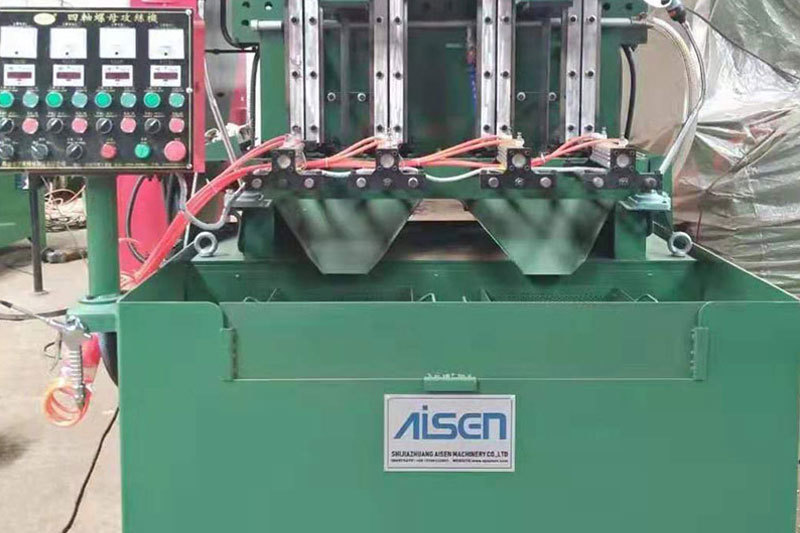
AISEN Four axis nut tapping machine ready for shipment to Russia
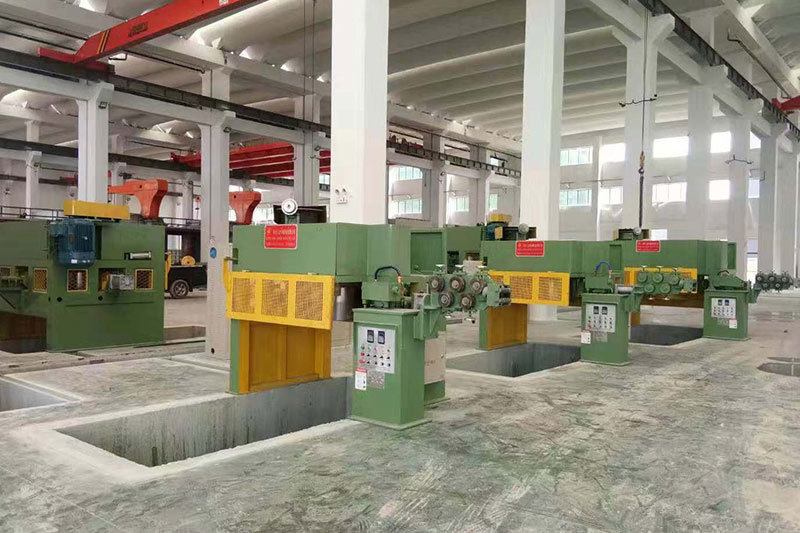
AISEN machinery inverted wire drawing machine
MESSAGES
We will contact you within one working day. Please pay attention to your email.
Qucik Link
Contact
Phone: +86-15100123091
E-mail: info@sjzaisen.com
Address: No.41 Zhaiying South Street, Yuhua District, Shijiazhuang City, Hebei Province China