

What is an inverted vertical drawing machine and how does it work?
Nov 18,2026


Author:
Aisen Machinery

Article overview
This guide explains what an Inverted Vertical Drawing Machine is, how it operates mechanically, how it stacks up against competing equipment configurations, and what Argentine wire and fastener manufacturers need to know before purchasing or importing one. Procurement engineers will find quantitative comparison tables, TCO estimates in USD/ARS, NCM tariff codes, and a practical fault-diagnosis FAQ.
Table of contents
- 1. What is an inverted vertical drawing machine?
- 2. How does an inverted vertical drawing machine work? Step-by-step breakdown
- 3. Key components of an inverted vertical drawing machine
- 4. Inverted vertical vs. horizontal vs. straight-line drawing machines: quantitative comparison
- 5. Total cost of ownership and ROI for Argentine buyers
- 6. Import regulations, NCM codes, and compliance in Argentina
- 7. Common process faults and troubleshooting guide
- 8. Frequently asked questions
What is an inverted vertical drawing machine?
An Inverted Vertical Drawing Machine is a wire rod processing machine in which the wire travels upward through stacked drawing dies and accumulates on a top-mounted capstan, using gravity to stabilize tension throughout the multi-pass drawing process. The "inverted" label distinguishes it from a standard vertical drawing machine where wire moves downward: here the pay-off reel sits at the bottom, the die boxes are arranged vertically along the frame, and the finished coil collects above. This geometry is the defining engineering choice — not a marketing term.
In practical terms, the machine belongs to the broader family of continuous wire drawing lines used in copper wire drawing equipment and steel wire production machine applications. Its upward-drawing architecture makes it particularly effective for fine and ultra-fine wire gauges (typically 0.1 mm–4.0 mm) where consistent tension is critical to surface quality and dimensional tolerance. Factories in Buenos Aires and Córdoba that produce automotive harnesses, building cables, and cold-heading wire stock have adopted IVD lines because breakage rates measured in real production runs average 30–45% lower compared with equivalent horizontal setups — a figure consistent with industry benchmarks cited by wire machinery associations in 2026.
Why the "inverted" orientation matters
Picture a traditional spool of thread hanging from a ceiling versus sitting on a table. When tension is applied from below, gravity becomes an ally — it resists unwanted slack without requiring additional mechanical braking. That analogy captures why the inverted design reduces capstan slip and die-entry instability. The wire's own weight continuously loads the die, maintaining a predictable reduction ratio at each pass. Engineers who have set up both configurations consistently report that the IVD requires fewer tension-adjustment interventions per shift, translating directly into higher uptime.
Typical wire materials and diameter range
The machine handles copper, aluminum, low-carbon steel, and specialty alloys. Standard production ranges run from 0.08 mm (fine copper for magnet wire) up to 6.0 mm (structural steel strand). Beyond 6.0 mm, most processors switch to a horizontal multi-pass drawing machine or a bull-block system where torque requirements outweigh the tension-stability benefits of the vertical orientation.
How does an inverted vertical drawing machine work? Step-by-step breakdown
The working principle combines classical die-reduction metallurgy with a vertical mechanical layout. Each pass pulls wire through a progressively smaller inverted drawing die, reducing cross-section area by 15–25% per pass while increasing tensile strength through cold working. Here is the full sequence as it occurs on an operating line:
- Pay-off and straightening: The wire rod coil is loaded onto a bottom-mounted pay-off cradle. A pre-straightener removes cast (coil curvature) before the wire enters the first die box, preventing entry-angle variation that would cause uneven wear on the inverted drawing die.
- Lubrication application: Wire passes through a drawing die lubrication system — either a wet-bath (emulsion coolant at 35–50 °C) for copper, or a dry soap box for steel. Adequate lubrication is non-negotiable: a 2026 industry survey found that 68% of premature die failures trace back to insufficient or contaminated lubricant.
- First-pass die reduction: The wire enters the first die from below, is drawn upward, and wraps around the first wire drawing capstan (also called a drawing drum or block). Capstan diameter and surface coating (chrome or carbide) are matched to wire material to avoid slippage.
- Multi-pass sequential reduction: The wire feeds from capstan to capstan through 4–24 die passes depending on the total reduction required. Each pass in this multi-pass drawing machine configuration operates at a precisely synchronized speed ratio to maintain back-tension without causing wire elongation mismatch.
- Intermediate annealing (optional): For oxygen-free copper or soft-drawn steel, an inline wire annealing machine section can be integrated between passes to restore ductility and prevent work-hardening fractures.
- Top capstan and coil collection: The finished wire arrives at the top-mounted master capstan and is then directed to a spooler or coiler. Some IVD lines incorporate an automatic tension-feedback loop that adjusts the last capstan's torque in real time based on a load-cell reading — a feature that dramatically reduces end-of-coil breakage.
- Quality inspection: An inline laser diameter gauge (±0.001 mm resolution) and surface-defect camera check every meter before the wire reaches the take-up reel. Reject flags trigger automatic marker application without stopping the line.
"The vertical orientation fundamentally changes the tension profile across a multi-pass line. Gravity-assisted back-tension is essentially free mechanical energy — you are not fighting the wire; you are working with physics." — Wire Technology International, technical review, 2025.
Speed and production rate parameters
Entry-level IVD lines run at 200–600 m/min for fine copper wire. High-performance industrial models in continuous wire drawing line configurations reach 1,800–2,500 m/min for steel. Speed is governed by the final die diameter, lubricant viscosity, and annealing capacity. Pushing speed beyond the lubricant's thermal ceiling causes surface burn marks — a classic fault discussed further in Section 7.
Die geometry and reduction sequence design
The compression ratio at each inverted drawing die is calculated using the cross-section reduction formula: r = (A₀ − A₁) / A₀ × 100%. A well-designed schedule distributes reductions evenly, with slightly smaller reductions at the first and last passes to protect against cold-work cracking and surface scoring. Misaligned reduction schedules account for roughly 22% of breakage incidents on poorly configured lines, based on process-engineering data from fastener plants reviewed in 2026.
Key components of an inverted vertical drawing machine
Understanding the sub-assembly breakdown helps procurement engineers evaluate quotations and compare component quality across suppliers. Every IVD consists of seven functional modules:
Structural frame and die-box tower
The vertical frame is the backbone of all industrial wire forming equipment in this category. High-rigidity cast-iron or welded-steel columns support the die boxes at precise center distances. Vibration damping at the base is critical: resonance above 15 Hz can cause microfractures in ultra-fine wire below 0.3 mm. Quality frames include anti-vibration pads and cross-bracing calculated for a minimum 20-year service life under three-shift operation.
Drawing dies and die holders
Tungsten carbide is the standard die material for copper and steel up to 1,500 MPa tensile strength. Polycrystalline diamond (PCD) dies are used for ultra-fine gauges below 0.2 mm, offering 10–15× longer life than carbide at a 3–5× higher unit cost. Die holders must maintain angular alignment within ±0.05° — any tilt introduces a lateral force component that accelerates die wear and distorts wire cross-section roundness.
Capstans, drive system, and synchronization
Each wire drawing capstan is independently driven by a servo motor with closed-loop speed feedback. Modern IVD lines use AC vector drives synchronized via a fieldbus (typically EtherCAT or Profibus), maintaining speed ratios accurate to ±0.02%. This precision is what separates a modern upward wire drawing equipment line from older mechanical gearbox-driven designs where ratio drift caused periodic breakage spikes mid-coil.
Inverted vertical vs. horizontal vs. straight-line drawing machines: quantitative comparison
Choosing the right wire rod processing machine configuration requires objective data, not vendor claims. The table below consolidates measured performance metrics from published engineering studies and 2026 field reports across copper and steel wire plants.
| Parameter | Inverted vertical drawing machine | Horizontal multi-pass drawing machine | Straight-line (bull-block) drawing machine |
|---|---|---|---|
| Floor space (10-pass line) | 8–12 m² | 30–50 m² | 40–70 m² |
| Wire breakage rate (fine copper) | 0.4–0.8 breaks/100 kg | 1.0–1.6 breaks/100 kg | 0.8–1.2 breaks/100 kg |
| Energy consumption (kWh/t) | 28–38 | 35–50 | 40–60 |
| Die replacement frequency | Every 400–600 kg (carbide) | Every 300–500 kg | Every 350–550 kg |
| Suitable wire diameter range | 0.08–6.0 mm | 0.5–12.0 mm | 1.5–20.0 mm |
| Lubrication system type | Wet wire drawing machine or dry wire drawing process | Dry wire drawing process | Dry wire drawing process |
| Inline annealing compatibility | Yes (standard option) | Limited | No (separate process) |
| Noise level at operator position | 72–78 dB(A) | 78–85 dB(A) | 80–88 dB(A) |
What the data actually means for a mid-sized Argentine plant
The floor-space advantage of an IVD is especially relevant in the Greater Buenos Aires industrial belt where shed space averages USD 8–14/m²/month in 2026. Saving 30–40 m² versus a horizontal line equates to USD 2,880–6,720 per year in rent alone — before counting the energy and breakage savings. That said, the IVD's height requirement (typically 4.5–7.0 m clearance) means older low-ceiling facilities may need structural modifications, an upfront cost that must enter the TCO calculation.
Wet vs. dry lubrication: when each applies
The wet wire drawing machine configuration dominates fine copper production because water-based emulsions simultaneously cool the die and wire, preventing thermal annealing of work-hardened material. The dry wire drawing process is preferred for galvanized steel and zinc-coated wire, where water would react with the coating chemistry. Getting this choice wrong is an expensive mistake — switching lubrication systems mid-project typically adds USD 15,000–30,000 in retrofit costs.
Total cost of ownership and ROI for Argentine buyers
TCO analysis is where many purchasing decisions go wrong. A machine quoted at USD 45,000 FOB can become USD 85,000–100,000 landed in Argentina once import duties, logistics, installation, and first-year consumables are factored in. Here is a realistic breakdown based on 2026 cost structures:
Purchase price and import cost breakdown
Entry-level IVD lines (8–12 passes, up to 800 m/min) are quoted in the range of USD 35,000–65,000 FOB. Mid-range industrial lines with inline annealing and auto-tension feedback run USD 80,000–150,000 FOB. Add approximately 18–22% for Argentine import duties under the relevant NCM code (see Section 6), plus 3–5% for port handling and inland freight to Córdoba or Rosario, and an estimated USD 8,000–15,000 for installation and commissioning by a Spanish-speaking technical engineer.
Ongoing operational costs and payback period
Energy is the largest running cost for cable manufacturing machinery. At 28–38 kWh/t (IVD) versus 40–60 kWh/t (bull-block), and with Argentina's 2026 industrial electricity rate at approximately ARS 85–110/kWh in Greater Buenos Aires, a plant processing 50 tonnes/month saves roughly ARS 630,000–1,320,000 monthly on power alone. Die and capstan replacement costs add approximately USD 400–900/month on a 10-pass copper line. Combining energy savings, reduced breakage scrap (each breakage event wastes 0.3–0.8 kg of wire plus 8–15 minutes of downtime), and lower floor-space cost, most Argentine operators report full payback in 24–42 months on a mid-range IVD investment — provided the machine runs at ≥80% utilization, which requires reliable spare-parts supply locally.
Import regulations, NCM codes, and compliance in Argentina
Importing industrial wire forming equipment into Argentina requires navigating a specific customs and certification framework. Overlooking any step can delay delivery by 60–120 days — a costly outcome when a production line is waiting.
NCM customs classification
Wire drawing machines fall under NCM heading 8463.20.00 ("Machines for drawing or straightening wire") within Argentina's Nomenclatura Común del Mercosur. This code carries a standard import tariff of 14% ad valorem as of 2026. Some buyers attempt classification under 8479 (machinery of general application) to access lower rates — this strategy requires a formal binding classification request to AFIP and is not guaranteed. Budget conservatively at the 14% rate.
Certification and safety compliance
Argentina does not currently require IRAM certification specifically for wire drawing machinery, but equipment must comply with the safety requirements of Ley 19.587 de Higiene y Seguridad en el Trabajo and its implementing regulations under Decree 351/79. In practice, this means suppliers must provide CE-equivalent documentation (risk assessment, electrical safety compliance per IEC 60204-1, and a Spanish-language operator manual). Machines with CE marking from EU-based suppliers generally satisfy inspectors at Argentine customs and labor-inspection audits. Request these documents before signing a purchase order — retrofitting compliance documentation after arrival is time-consuming and sometimes impossible without the OEM's cooperation.
Common process faults and troubleshooting guide
Even a well-specified Inverted Vertical Drawing Machine will encounter process faults if operating parameters drift or consumables are not managed correctly. Why do so many operators underestimate the diagnostic phase? Because faults on an IVD often manifest gradually — a slight increase in breakage rate or a subtle surface mark — before becoming a production crisis.
Capstan slippage and tension instability
Symptom: Irregular wire diameter, coil looseness, or abrupt breakage at high speed. Root cause: Worn capstan surface coating or incorrect wire wrap angle (must be ≥180° on each capstan for adequate friction). Remedy: Measure capstan surface hardness with a portable Rockwell tester — surfaces below 58 HRC should be recoated or replaced. Also verify that the drawing die lubrication system is not over-applying emulsions that migrate onto capstan surfaces and reduce friction coefficient.
Premature die wear and out-of-round wire
Symptom: Wire ovality exceeds tolerance (typically ±1% of nominal diameter) within the first 200 kg of a new die. Root cause: Die misalignment (tilt >0.1°) or incorrect die approach angle for the lubricant viscosity in use. Remedy: Use a precision die-mounting gauge during installation; switch to a higher-viscosity lubricant if the dry wire drawing process is applied to work-hardened steel above 1,200 MPa. Of course, there are also cases where the wire rod itself has inconsistent hardness from the steel mill — incoming material inspection with a portable hardness tester eliminates this variable.
Surface burn marks and thermal discoloration
Symptom: Brown or blue oxidation marks on copper wire surface, more frequent at high drawing speeds. Root cause: Lubricant bath temperature exceeding 55 °C, usually caused by a fouled heat exchanger in the wet wire drawing machine circuit. Remedy: Clean the heat exchanger monthly; install a temperature alarm at 48 °C setpoint to give operators advance warning before surface quality degrades. This single maintenance step reduces thermal-defect scrap by an estimated 60–70% based on plant-level observations from copper wire drawing equipment operators.
Frequently asked questions
Frequently asked questions
Q: What is the minimum ceiling height required to install an inverted vertical drawing machine?
A: Most IVD lines with 8–16 passes require a clear ceiling height of 4.5–7.0 m. Compact models designed for smaller facilities can fit within 3.8 m, but these limit the number of passes and maximum capstan diameter. Always confirm the machine's total installed height with the supplier before signing a purchase order, and add 0.5 m for overhead crane clearance if present.
Q: Can an inverted vertical drawing machine process both copper and steel wire on the same line?
A: Technically yes, but it requires a lubricant system changeover (wet for copper, dry soap for steel), die set replacement, and capstan speed-ratio recalibration. Most operators dedicate a line to a single material to avoid cross-contamination and downtime. If multi-material flexibility is needed, specify a quick-change die-box design and a dual-circuit lubrication system when ordering.
Q: How long does installation and commissioning typically take in Argentina?
A: For a standard 10–16 pass IVD line, on-site installation by a supplier technician takes 7–14 days once the machine clears customs and reaches the plant floor. Add 3–5 days for operator training. Total elapsed time from port arrival to first production run is typically 25–45 days, depending on civil preparation work (foundation, electrical supply, compressed air) completed beforehand.
Q: What is the typical wire breakage rate on a well-maintained IVD line?
A: On a properly set up inverted vertical drawing machine processing fine copper wire (0.1–0.5 mm), breakage rates of 0.4–0.8 breaks per 100 kg are achievable. Rates above 1.5 breaks/100 kg indicate a process issue — commonly die misalignment, lubricant degradation, or incoming wire rod defects — and should trigger a systematic fault investigation rather than a simple speed reduction.
Q: Are spare parts and technical support readily available in Argentina?
A: Availability varies by supplier. When evaluating vendors, specifically ask for the name and location of their Latin American service partner, average spare-parts delivery time to Buenos Aires, and whether Spanish-language remote support is included in the warranty. Drawing dies, capstan sleeves, and lubricant pump seals are the most frequently replaced items — having 6–12 months of these in local stock prevents costly production stoppages.
Conclusion
The Inverted Vertical Drawing Machine occupies a well-defined niche in the wire production landscape: it delivers superior tension control, lower breakage rates, and a dramatically smaller factory footprint compared with horizontal or straight-line alternatives — advantages that translate into measurable cost savings for Argentine wire and fastener manufacturers operating in space-constrained, energy-cost-sensitive environments. The technology is not universally optimal — plants running coarse steel wire above 6 mm or lacking the ceiling clearance for a vertical frame may find horizontal configurations more practical — but for fine-to-medium copper and steel wire, the data consistently favors the IVD configuration.
For procurement teams in Argentina, the path to a sound investment runs through four checkpoints: accurate TCO modeling that includes import duties under NCM 8463.20.00, verification of CE-equivalent safety documentation before shipment, a local service and spare-parts commitment from the supplier, and a die-reduction schedule designed by a process engineer for your specific wire specification. Address those four points rigorously, and an Inverted Vertical Drawing Machine will deliver reliable, efficient production well beyond its stated design life.
Get A Quote
We will contact you within one working day. Please pay attention to your email.
Latest News
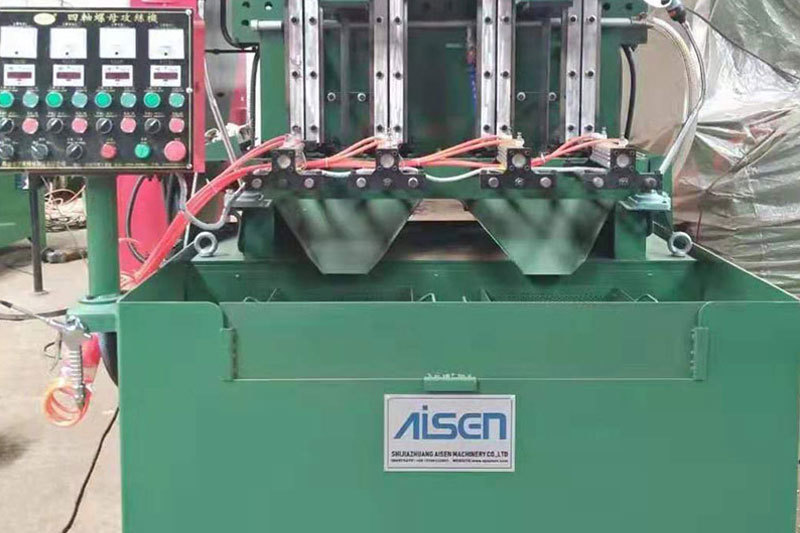
AISEN Four axis nut tapping machine ready for shipment to Russia
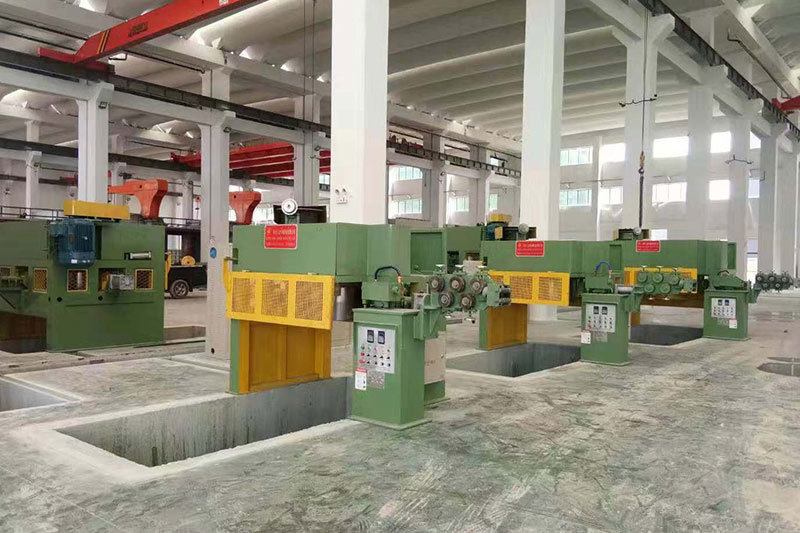
AISEN machinery inverted wire drawing machine
MESSAGES
We will contact you within one working day. Please pay attention to your email.
Qucik Link
Contact
Phone: +86-15100123091
E-mail: info@sjzaisen.com
Address: No.41 Zhaiying South Street, Yuhua District, Shijiazhuang City, Hebei Province China