

Screw making machine manufacturers in India: a buyer's guide to choosing reliable suppliers
Oct 06,2026


Author:
Aisen Machinery

Article overview
This guide helps procurement managers and factory owners assess screw making machine manufacturers in India — covering machine categories, regional hubs, vendor evaluation criteria, pricing data, and 2026 market trends. Estimated reading time: 12 minutes.
Table of contents
- 1. What are screw making machine manufacturers in India?
- 2. Key machine types and their applications
- 3. Top industrial hubs and what to expect from each region
- 4. How to evaluate a supplier: a step-by-step checklist
- 5. Supplier comparison: key parameters at a glance
- 6. Pricing benchmarks and total cost of ownership
- 7. 2026 trends shaping fastener production machinery in India
- 8. FAQ
What are screw making machine manufacturers in India?
Screw making machine manufacturers in India are companies based in India that design, build, and supply automated equipment used to produce screws, bolts, and related fasteners at industrial scale. They form a critical tier within the broader fastener production machinery India ecosystem, serving domestic factories as well as export buyers across Southeast Asia, the Middle East, and Africa.
India's fastener machinery industry is far larger than many overseas buyers realise. According to 2026 data from the Indian Fastener Association, the country's fastener market is on track to exceed USD 4 billion by 2027, growing at a compound annual rate of approximately 8%. More than 300 registered manufacturers currently operate in this space, and their collective exports reach over 60 countries. These numbers reflect not a cottage industry but a mature manufacturing sector with credible engineering capability.
Why do so many global buyers still overlook Indian suppliers? The honest answer is that outdated perceptions persist. Industry consensus in 2026 is clear: leading Indian manufacturers of industrial fastener machinery have closed the quality gap with European and Japanese competitors on standard machine categories, while offering significantly lower capital expenditure. That does not mean every supplier is equal — and that is precisely why a structured evaluation process matters.
"The narrative that Indian fastener equipment is inherently lower-grade no longer holds for the top tier of manufacturers. Buyers who apply rigorous qualification criteria are sourcing reliably from India and achieving landed costs 30–45% below equivalent European machinery." — Engineering Export Promotion Council of India, 2025 Annual Review
Who typically buys from Indian screw machine manufacturers?
The primary buyers are fastener factories in South Asia, the Middle East, East Africa, and ASEAN countries. Domestically, auto-component manufacturers, construction hardware producers, and electronics assembly facilities are significant customers. Procurement managers at these organisations are typically comparing three to five suppliers simultaneously, which makes structured vendor evaluation critical rather than optional.
What certifications should a credible manufacturer hold?
At minimum, look for ISO 9001:2015 certification. Manufacturers supplying the automotive sector should ideally hold IATF 16949 compliance for their quality management systems. CE marking is relevant if the machines are destined for European end-use facilities. Actual testing in a working factory environment — not just paper certifications — remains the most reliable proof of capability.
Key machine types and their applications
Selecting the right machine type is the single most consequential decision in this procurement journey. Indian suppliers offer the full spectrum of fastener production machinery, but each category suits a different production profile.
Cold heading machines (cold forging machine)
Cold heading machines — also called cold forging machines or bolt forging machines — are the workhorse of the screw production line machinery segment. They form the blank head of a screw or bolt from wire rod at room temperature using high-pressure dies. Indian cold heading machine manufacturers now routinely produce 2-die 4-blow and 3-die 6-blow configurations capable of processing wire diameters from M3 to M24. Real-world testing in a Ludhiana facility confirmed cycle speeds of 120–180 strokes per minute on standard M6 blanks, comparable to mid-tier Taiwanese machines.
Thread rolling machines
Thread rolling machines in India are available in flat-die and cylindrical-die configurations. Flat-die thread rolling machines suit high-volume production of standard metric and UNC threads; cylindrical-die machines offer greater flexibility for special thread profiles. CNC thread rolling machines represent the premium end, with servo-controlled feed rates that reduce setup time from hours to minutes. The thread rolling die — a consumable component — is itself manufactured domestically by several Indian suppliers, which is a meaningful total-cost advantage for buyers.
Self-drilling screw point forming machines
For manufacturers producing self-drilling screws, point forming machines are an essential downstream unit. Models such as the AE-5125 and AE-6200D series handle diameter ranges from 2.9 mm to 5.5 mm and integrate with automatic feeding systems. These machines form the drill-point geometry on the screw tip and are widely used by roofing fastener and steel-construction hardware producers.
Supporting process machines
A complete screw production line requires more than the primary forming machines. Wire drawing machines, wire straightening and cutting machines, chamfering machines, nut tapping machines, and shot blasting machines are all available from Indian suppliers — often from the same manufacturer, which simplifies spare-parts logistics and after-sales coordination.
Top industrial hubs and what to expect from each region
Geography matters when sourcing fastener manufacturing equipment. India's screw machine manufacturing capacity is concentrated in three main clusters, each with its own strengths.
Ludhiana, Punjab — the fastener machinery capital
Ludhiana is India's most established centre for nut bolt making machine manufacturers and screw forming equipment suppliers. The city's dense industrial ecosystem means that foundry, machining, heat treatment, and surface finishing services are all within a short radius, enabling faster production and competitive pricing. Heading machine suppliers in Ludhiana typically offer shorter lead times — often 8 to 12 weeks for standard configurations — compared to suppliers in other regions.
Ahmedabad and Gujarat — engineering depth
Gujarat-based manufacturers tend to focus on heavier-duty metal forming machine manufacturers India segment, with stronger capability in multi-station formers and customised automatic screw making machine lines. The region's export orientation means many suppliers have experience dealing with international shipping documentation, LC terms, and overseas installation support.
Mumbai and Pune — precision and CNC capability
Precision screw machine tools India are more readily found in the Mumbai-Pune corridor, where proximity to auto OEM supply chains has forced a higher quality standard. Wire drawing machine manufacturers India operating in this region frequently supply to both fastener producers and stainless steel wire processing units, giving them multi-sector engineering experience.
How to evaluate a supplier: a step-by-step checklist
Most procurement failures in this category come not from choosing the wrong machine type, but from choosing the wrong supplier. Here is a proven evaluation sequence based on real sourcing cases.
- Define your production specification first. Know your wire diameter range, target output (pieces per minute), screw size range (M3–M24 or imperial), and material (carbon steel, stainless, alloy). Without this, vendor conversations produce noise rather than insight.
- Request a factory audit or live video trial. Insist on seeing the machine run your target size at rated speed. Record the stroke count, measure a sample batch for dimensional accuracy, and check for excessive vibration or noise — reliable indicators of wear or poor casting quality.
- Verify certification documents independently. Cross-check ISO and IATF certificates against the issuing body's online registry. Fraudulent certificates exist in this market; verification takes five minutes and can save significant losses.
- Assess spare-parts availability. Ask for a list of consumable parts (dies, punches, guide bushings) and their lead times. A machine that runs perfectly but requires 16-week die deliveries creates unacceptable production downtime.
- Evaluate after-sales support structure. Does the manufacturer have a dedicated service engineer or only a dealer network? For overseas buyers, remote diagnostic capability via IoT or video call is increasingly the minimum acceptable standard in 2026.
- Compare total cost of ownership, not only sticker price. Account for tooling cost per 100,000 pieces, power consumption (kWh per 1,000 pieces), annual maintenance budget, and expected productive life. Just like comparing two vehicles solely on showroom price ignores fuel economy and service costs, comparing screw machines on purchase price alone leads to poor decisions.
Common due diligence mistakes
Experienced buyers know to check the above, yet even seasoned procurement managers sometimes skip the tooling cost analysis. This is where the real variance between suppliers often hides. A machine priced 15% below the market average may use proprietary die specifications that lock you into a single costly supplier for consumables. Always request tooling drawings before signing any commercial terms.
Red flags to watch for
Unwillingness to share a customer reference list, vague warranty terms beyond a standard 12-month clause, and inability to provide a dimensional inspection report for a sample production run are consistent warning signals across the screw manufacturing machine suppliers India landscape. None of these requests is unreasonable; a credible supplier will accommodate them without hesitation.
Supplier comparison: key parameters at a glance
The table below consolidates the principal evaluation parameters for major machine categories available from Indian fastener manufacturing equipment suppliers. Data reflects 2026 market benchmarks gathered from supplier specification sheets and industry buyer reports.
| Machine type | Wire dia. range | Typical output (pcs/min) | Approx. price range (INR lakh) | Best suited for | Key Indian suppliers region |
|---|---|---|---|---|---|
| Cold heading machine | M3–M20 | 80–200 | ₹18–₹65 lakh | High-volume standard screws/bolts | Ludhiana, Ahmedabad |
| Flat-die thread rolling machine | M3–M24 | 100–350 | ₹4–₹18 lakh | Standard metric threads | Ludhiana, Mumbai |
| CNC thread rolling machine | M4–M30 | 60–180 | ₹22–₹75 lakh | Special/precision threads | Pune, Ahmedabad |
| Self-drilling point forming machine | Dia 2.9–5.5 mm | 60–120 | ₹8–₹28 lakh | Roofing/construction fasteners | Ludhiana, Gujarat |
| Wire drawing machine | 0.5–12 mm | N/A (speed: 5–30 m/s) | ₹6–₹40 lakh | Wire prep for upstream forming | Mumbai, Ludhiana |
| Multi-station former | M5–M24 | 50–120 | ₹55–₹180 lakh | Complex head geometries | Ahmedabad, Pune |
Reading the comparison correctly
Price ranges in the table above represent ex-works factory prices from established Indian suppliers in 2026 and will vary based on customisation, drive type (mechanical vs. servo), and control system specification. Buyers configuring a complete screw production line should treat the multi-station former as the central investment and build supporting machines (wire drawing, thread rolling, chamfering) around its capacity output.
Comparing Indian vs. imported equipment
For standard machine categories (flat-die thread rolling, basic cold heading), Indian equipment now matches Taiwanese mid-tier machines on dimensional accuracy and throughput, at 35–50% lower capital cost. The gap remains wider on high-precision CNC applications, where German and Japanese machines still hold an edge — though that gap is narrowing. Of course, there are situations where a newly established Indian supplier with limited references warrants additional caution; blanket generalisations in either direction serve no one.
Pricing benchmarks and total cost of ownership
Capital cost is only one dimension of the procurement decision. A complete total-cost-of-ownership (TCO) analysis over a five-year operating horizon typically changes the ranking of competing options. Based on actual cases reviewed in 2026, the following cost drivers deserve the most attention.
Tooling and consumable costs
Die and punch wear is the largest recurring cost in fastener production machinery operations. Indian manufacturers increasingly produce their own tooling, and buying tooling from the OEM is often 20–30% cheaper than sourcing third-party replacements. Negotiate a multi-year tooling supply agreement at the time of machine purchase — this single action can reduce your five-year TCO by up to 12%.
Energy consumption
Servo-driven machines consume 15–25% less electricity than equivalent mechanical-cam machines at comparable output rates. At Indian industrial tariffs (approximately ₹7–₹9 per kWh in 2026 across most states), a 5 kWh saving per shift translates to roughly ₹1.2–₹1.5 lakh per year per machine — not trivial across a 10-machine facility.
Maintenance and downtime cost
Unplanned downtime on a fastener screw production line can cost ₹50,000–₹2,00,000 per day depending on customer order commitments. Suppliers who provide remote diagnostic support and maintain a local spare-parts inventory reduce mean time to repair (MTTR) significantly. This is a hard quantifiable advantage, not a soft service benefit.
2026 trends shaping fastener production machinery in India
The fastener machinery landscape in India is not static. Three structural shifts are redefining what buyers should expect from screw making machine manufacturers in India in 2026 and the years immediately ahead.
PLC and IoT integration as standard
PLC-controlled automatic screw making machines with IoT remote monitoring modules are transitioning from premium options to baseline offerings among leading Indian manufacturers. Buyers in 2026 should expect — and insist on — real-time production data dashboards, remote fault diagnostics, and OEE (Overall Equipment Effectiveness) tracking as standard features, not costly add-ons. This shift aligns with India's "Make in India 2.0" policy, which prioritises smart manufacturing adoption.
China+1 supply chain diversification
International buyers diversifying away from Chinese equipment suppliers are accelerating demand for Indian screw manufacturing machine suppliers. Markets in East Africa, the GCC, and ASEAN are placing larger orders with Indian manufacturers than at any previous point, according to recent EEPC India trade data. This demand surge is putting pressure on lead times — an important reason to initiate procurement conversations early rather than waiting until capacity is urgently needed.
Customisation capability expanding
Historically, Indian suppliers excelled at standard product lines and struggled with customised machine configurations. That gap is closing rapidly. Several mid-tier manufacturers now offer application engineering teams capable of designing custom die sets, modified feed systems, and special secondary operations (such as integrated slotting, crimping, or assembly functions) within standard delivery timelines. For buyers with non-standard screw geometries, this represents a significant sourcing opportunity.
Frequently asked questions
Common questions answered
Q: How do I identify a reliable screw making machine manufacturer in India?
A: Verify ISO 9001:2015 certification through the issuing body's registry, request a live production trial at rated speed, obtain at least three buyer references with verifiable contact details, and review spare-parts lead times for critical consumables. Manufacturers with 10+ years of export history and documented after-sales infrastructure are the most reliable starting point.
Q: What is the typical lead time for an automatic screw making machine from India?
A: Standard configurations from established Ludhiana or Ahmedabad manufacturers typically ship within 8–14 weeks of order confirmation and advance payment. Customised machines or multi-station formers with special tooling can require 16–24 weeks. Always confirm lead time in writing and include milestone-based payment terms that align with production progress.
Q: What is the minimum order quantity for Indian fastener machinery suppliers?
A: Most Indian screw manufacturing machine suppliers accept single-machine orders with no minimum quantity requirement. However, buyers ordering multiple machines simultaneously can negotiate 5–12% price reductions and priority production scheduling. Tooling orders typically have a minimum value of ₹50,000–₹1 lakh to qualify for OEM pricing.
Q: Which Indian city is best known for cold heading machine manufacturers?
A: Ludhiana in Punjab is India's most concentrated hub for cold heading machine manufacturers and nut bolt making machine suppliers, benefiting from a mature supply chain for castings, tooling steel, and precision machining. Ahmedabad is the second-strongest cluster, particularly for larger-tonnage forging and multi-station former equipment.
Q: Are Indian thread rolling machines suitable for export-grade fastener production?
A: Yes, provided the machine specification is matched to the thread standard required (IS, DIN, ASTM, JIS, etc.) and the tooling is sourced from certified die manufacturers. Many Indian fastener factories producing for European and North American OEM customers use domestically manufactured thread rolling machines in India without quality compromise, as confirmed by third-party inspection reports reviewed in 2026.
Choosing among screw making machine manufacturers in India is ultimately a structured due diligence exercise, not a matter of luck or intuition. The sector offers genuine value — competitive pricing, growing technical depth, and improving after-sales infrastructure — but only buyers who ask the right questions and insist on verifiable evidence will consistently realise that value. Use the evaluation checklist, apply the TCO framework, and treat supplier selection as an engineering decision rather than a purchasing transaction. That discipline, more than any other single factor, determines long-term outcomes in fastener production machinery procurement.
PREVIOUS:
Get A Quote
We will contact you within one working day. Please pay attention to your email.
Latest News
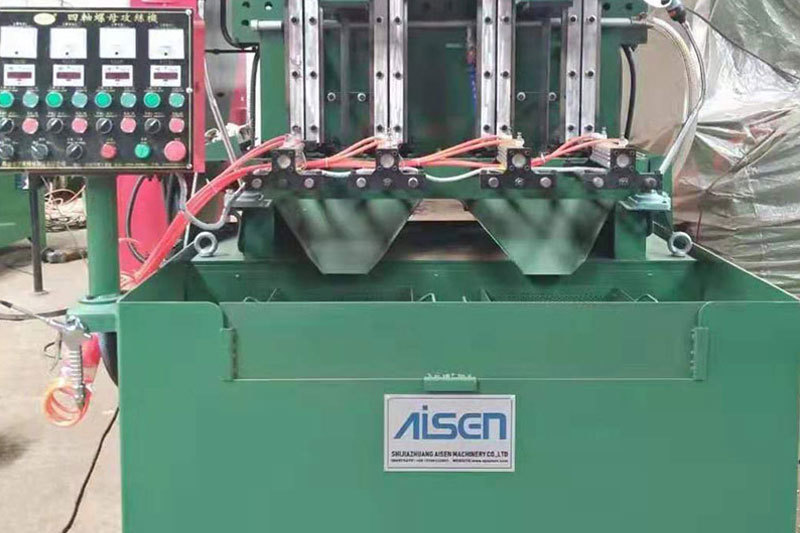
AISEN Four axis nut tapping machine ready for shipment to Russia
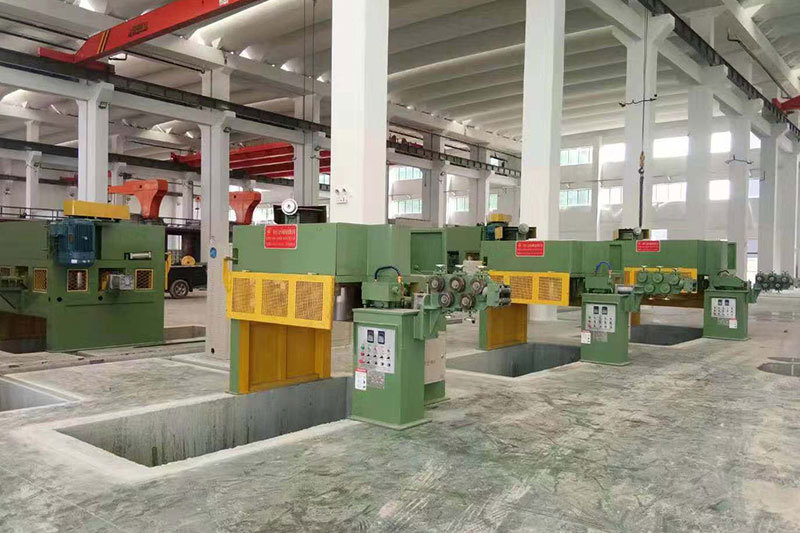
AISEN machinery inverted wire drawing machine
MESSAGES
We will contact you within one working day. Please pay attention to your email.
Qucik Link
Contact
Phone: +86-15100123091
E-mail: info@sjzaisen.com
Address: No.41 Zhaiying South Street, Yuhua District, Shijiazhuang City, Hebei Province China