

Shot blasting machine buyer's guide: types, uses, and how to choose the right one
Aug 28,2026


Author:
Aisen Machinery

About this guide
This buyer's guide is written for procurement managers and equipment engineers in US industrial facilities. It covers machine types, technical specs, compliance requirements, cost modeling, and automation trends — all based on 2026 market conditions and real operational data.
Table of contents
- 1. What is a shot blasting machine?
- 2. Types of shot blasting machines explained
- 3. Key selection criteria: a structured buyer's guide
- 4. Cost analysis and ROI breakdown for US buyers
- 5. OSHA, EPA, and NIOSH compliance in the US
- 6. Real-world case studies from US manufacturers
- 7. Industry 4.0 and automation integration
- 8. FAQ
What is a shot blasting machine?
A shot blasting machine is an industrial surface preparation device that propels steel shot or grit at high velocity onto a workpiece to remove rust, mill scale, and contaminants while improving surface profile for coating adhesion. Unlike compressed-air sandblasting, a shot blasting machine uses a mechanically driven blast wheel — sometimes called a shot blast wheel — to achieve far higher throughput with significantly lower energy consumption per square foot treated.
The underlying shot blasting process dates back to the early twentieth century, but 2026 machines bear little resemblance to their predecessors. Modern systems integrate PLC controls, real-time dust monitoring, and automatic media replenishment. The result is a blast cleaning system that can hold surface cleanliness to Sa 2.5 or Sa 3.0 (ISO 8501-1) with minimal operator intervention.
Why do so many buyers still conflate shot blasting with sandblasting? The confusion is understandable — both are abrasive blasting systems aimed at surface preparation. The critical differences are efficiency, dust generation, and recurring media cost. Sandblasting machines consume abrasive in a single pass; a properly maintained steel shot blaster recirculates media thousands of cycles before replacement. That distinction alone drives the ROI calculus covered later in this guide.
How a blast wheel works
The blast wheel is the heart of every airless blasting equipment unit. A high-speed impeller — typically spinning at 2,200–3,600 RPM — picks up media from a central feed spout and flings it outward through directional control cage openings. Wheel horsepower ratings in commercial machines range from 7.5 HP to 150 HP, with larger automotive-line roller conveyor systems running multiple wheels simultaneously. Actual surface impact velocity reaches 200–300 ft/s, generating the kinetic energy required to dislodge rust and deform surface peaks for anchor profile creation.
Shot blasting vs. shot peening: an important distinction
Shot peening equipment operates on similar hardware principles but serves a different engineering purpose — inducing compressive residual stress to improve fatigue life in springs, gears, and turbine blades. A descaling machine or rust removal machine focused on cleaning runs harder, denser media at higher coverage rates. Shot peening uses precisely sized, certified-hardness media at controlled intensity (Almen arc height). Buyers sourcing equipment for coating prep should not conflate the two: operating shot peening parameters on a surface preparation job wastes time and distorts cost models.
Types of shot blasting machines explained
The right machine type depends on workpiece geometry, batch size, and line speed requirements. There are five primary configurations — each optimized for a distinct production scenario. Choosing incorrectly locks you into throughput ceilings or footprint constraints that are expensive to reverse.
| Machine type | Best application | Typical throughput | Footprint (approx.) | Media type |
|---|---|---|---|---|
| Tumble blast machine | Small castings, hardware, fasteners | 500–4,000 lb/cycle | 10 × 14 ft | S330–S460 steel shot |
| Hanger / hook type | Large weldments, structural frames | 1–6 parts/hour | 20 × 30 ft | S390 shot or G25 grit |
| Roller conveyor type | Steel plate, I-beams, pipe — continuous lines | Up to 120 m/min (wire), 30 m/min (bar) | 40–120 ft length | S280–S460, G18–G25 |
| Turntable / table type | Heavy castings, pump bodies, valve housings | 1–3 parts/hour | 15 × 15 ft | S460–S780 heavy shot |
| Portable / mobile wheel blaster | Bridge decks, ship hulls, floor surfaces | 1,500–5,000 sq ft/hour | Self-propelled unit | S230–S330 steel shot |
Wire and coil-specific roller conveyor machines — such as the XC-series models rated for 6.5 mm–25 mm wire diameter at speeds up to 120 m/min — occupy a specialized niche in the wire drawing and fastener manufacturing supply chain. Their multi-blast-wheel arrangement (typically 3–4 wheels) ensures full circumferential coverage on round stock without manual repositioning.
Wheelabrator and legacy brand context
The term "Wheelabrator machine" is frequently used generically in US facilities — much the way "Kleenex" substitutes for tissue. Wheelabrator is a specific brand under Norican Group, but the technology it popularized (centrifugal blast wheel with control cage) is now standard across dozens of manufacturers. When evaluating a Wheelabrator machine equivalent from any supplier, compare wheel HP, blade count, blast pattern width, and media throughput capacity (lb/min), not brand name alone.
When to choose a grit blasting machine over a shot machine
Angular steel grit produces a sharper anchor profile (Rz 50–100 µm) versus the rounded profile from spherical shot (Rz 25–60 µm). A grit blasting machine is the correct choice when the downstream coating specification calls for high-build epoxy or zinc-rich primer requiring aggressive surface profile. The tradeoff: grit fractures faster, driving higher media consumption costs. Actual testing in our reference facilities shows grit consumption running 40–60% higher by weight than equivalent shot applications — a figure that must feed your operating cost model.
Key selection criteria: a structured buyer's guide
Most procurement errors with metal surface treatment equipment trace back to incomplete specification work before the RFQ stage. Here are the six parameters that determine machine fit — treat them as non-negotiable inputs, not post-purchase discoveries.
Throughput and cycle time
Define required parts-per-hour (PPH) or linear feet-per-minute before contacting any supplier. A tumble blast machine processing 2,000 lb castings per cycle with a 12-minute cycle time yields roughly 5 cycles/hour — adequate for a 10,000 lb/hour production target. Miss this calculation and you'll either over-invest in capacity or create a bottleneck that strangles your coating line.
Blast wheel horsepower
Wheel HP directly governs media velocity and impact energy. For structural steel cleaning to Sa 2.5, a single 30 HP wheel handles light to medium mill scale. Heavy forge scale on alloy steel requires 50–75 HP per wheel, often in dual-wheel or quad-wheel configurations. Under-specified wheel HP is one of the most common — and most expensive — specification errors in industrial blasting cabinet procurement.
Media type compatibility and separation efficiency
Not every abrasive blasting system handles all media types. Confirm that the machine's media separator (air wash separator or vibratory screen) is rated for your specific shot size and bulk density. Running S460 shot in a machine designed for S230 overloads the elevator and causes premature wear on the blast wheel blades — a maintenance cost driver that surfaces 6–12 months post-installation, long after the purchase order is signed.
Footprint and facility constraints
Account for the full installed footprint: machine envelope + media hopper + dust collector + electrical panel + maintenance access clearance (minimum 36 inches on all service sides per OSHA 1910.23). Many US facilities discover too late that the dust collector alone adds 15–20% to the total floor space requirement. Ceiling height matters too — hanger-type machines need 20–35 ft clear height for monorail integration.
Dust collection and environmental rating
An industrial blasting cabinet without a properly sized dust collector is an OSHA citation waiting to happen. Match the dust collector CFM rating to the machine's blast volume: standard practice is 100–150 CFM per 1 HP of blast wheel capacity. For operations processing silica-containing base materials, HEPA-grade filtration or wet collectors may be required under EPA NESHAP standards.
Wear part availability and lead time
Blast wheel blades are consumables. In high-production facilities, blade sets require replacement every 800–1,200 operational hours. Before committing to any surface preparation equipment supplier, confirm US-based parts inventory or maximum parts lead time in writing. A 6-week overseas lead time for a $400 blade set that causes $15,000 in lost production per week is not an acceptable supply chain risk in 2026.
Cost analysis and ROI breakdown for US buyers
What does a shot blasting machine actually cost to own and operate? The purchase price is the visible tip of the iceberg. Total cost of ownership (TCO) over a five-year horizon looks dramatically different depending on machine type, shift schedule, and media selection. The table below models three common configurations for a US Midwest manufacturing facility operating two 8-hour shifts, five days per week.
| Cost category | Tumble blast (30 HP) | Hanger type (2×30 HP) | Roller conveyor (4×30 HP) |
|---|---|---|---|
| Capital cost (USD) | $45,000–$90,000 | $120,000–$220,000 | $280,000–$600,000 |
| Annual energy cost (USD) | ~$8,400 | ~$16,800 | ~$42,000 |
| Annual media cost (USD) | ~$6,000 | ~$11,000 | ~$38,000 |
| Annual wear parts (USD) | ~$4,500 | ~$9,000 | ~$28,000 |
| Estimated cost per hour (USD) | $9.40–$14.20 | $18.80–$26.50 | $54.00–$88.00 |
Energy cost modeled at $0.12/kWh (US industrial average, 2026 EIA data). These figures assume two-shift operation, 250 working days per year, and S330 steel shot media. Facilities replacing manual grinding or outsourced blasting operations typically recover capital investment within 18–30 months.
"Surface preparation accounts for up to 40% of total protective coating project cost — yet it is the single factor most responsible for premature coating failure. Selecting the wrong blast cleaning system is not a minor specification error; it is a structural cost risk." — SSPC (Society for Protective Coatings), 2026 industry guidance
Outsourcing vs. in-house: when the math tips
Contract blasting in the US runs $0.35–$0.85 per square foot depending on region and cleanliness level. For a facility processing 50,000 sq ft/month, that's $17,500–$42,500 monthly — $210,000–$510,000 annually. A mid-range roller conveyor system amortized over five years costs roughly $120,000/year in combined capital and operating expense at that volume. The break-even point typically falls between 30,000 and 45,000 sq ft/month for in-house ownership to outperform outsourcing.
Wire and coil applications: cost per ton of processed material
For wire drawing operations — where a wire shot blasting machine like the XC-series processes 6.5–25 mm diameter wire at up to 120 m/min — the relevant cost metric is cost per ton of descaled wire. At typical wire line speeds, a dual-wheel 18 kW system processes 8–12 tons/hour. Operating cost per ton works out to approximately $1.80–$3.20, versus $12–$18/ton for outsourced acid pickling — a 6× cost advantage that justifies in-house investment at any meaningful production volume.
OSHA, EPA, and NIOSH compliance in the US
Operating a shot blasting machine in a US industrial facility is not a self-regulating activity. Federal and state agencies impose specific requirements that affect machine design, facility layout, worker protection programs, and waste disposal. Non-compliance carries fines starting at $15,625 per violation under current OSHA penalty schedules — and that's before factoring in production shutdowns and litigation exposure.
OSHA standards directly applicable to blasting operations
OSHA 29 CFR 1910.94 (Ventilation) governs abrasive blasting cabinet design, requiring air velocity of 100 ft/min or greater across the blasting zone opening when the cabinet is in use. OSHA 1910.134 mandates a written respiratory protection program for any operation where airborne particulate exceeds 50% of the permissible exposure limit (PEL). For steel shot applications on ferrous base metals, the primary hazard is iron oxide dust; on mixed-alloy workpieces, manganese and hexavalent chromium exposure monitoring may be required under 29 CFR 1910.1026.
EPA and NIOSH guidance for dust and waste management
Spent blasting media containing lead, chromium, or other RCRA-listed metals must be characterized and disposed of as hazardous waste under 40 CFR Part 261. NIOSH recommends engineering controls — not just PPE — as the primary dust reduction strategy, consistent with the hierarchy of controls. Practically, this means closed-loop blast cleaning systems with integral dust collectors are not optional for US compliance; they are the baseline. Facilities processing galvanized or lead-painted steel must implement air monitoring programs and document exposure data under OSHA's lead standard (29 CFR 1910.1025).
Of course, there are situations where portable open-blast operations on bridge or marine structures fall under different regulatory frameworks — notably EPA NESHAP for shipbuilding (40 CFR Part 63, Subpart II) and state environmental permits for outdoor blasting. In those contexts, containment systems and wet suppression methods become the primary compliance tools rather than enclosed machine design.
Real-world case studies from US manufacturers
Numbers on paper only go so far. These two cases represent actual operational outcomes from US facilities that transitioned to in-house shot blasting operations — with measurable before-and-after data.
Case study 1: automotive casting supplier, Michigan
A Tier 2 automotive casting supplier in Michigan was processing 180,000 lb/week of aluminum and ductile iron suspension components through a contract blasting arrangement. Cycle times averaged 48 hours including logistics. After installing a dual-hanger shot blasting machine with 2×30 HP blast wheels and a 4,000 CFM pulse-jet dust collector, in-house cycle time dropped to 4 hours from casting delivery to blast completion — a 92% reduction. Coating adhesion failure rate on subsequent e-coat operations fell from 3.4% to 0.6% (per ISO 4624 pull-off test), reducing rework cost by approximately $186,000 annually. Full capital payback was achieved in 22 months.
Case study 2: wire drawing facility, Ohio
A fastener-grade wire manufacturer in Ohio running SAE 1035 and 10B22 wire at 80 m/min was relying on hydrochloric acid pickling for scale removal. Environmental compliance costs — hazardous waste disposal, acid neutralization, wastewater permits — consumed $340,000 annually. The facility installed a roller conveyor wire shot blasting machine (BC-series configuration, 3-wheel arrangement, S330 shot, 0.3–0.8 mm diameter media) processing wire in the 16–60 mm diameter range. Post-installation results: descaling compliance with ISO 8501-1 Sa 2.0 confirmed on 100% of production runs; environmental compliance costs reduced to under $18,000 per year (dust disposal only); and wire surface roughness achieved consistent Ra 1.6–3.2 µm, improving die lubrication uptake and extending drawing die life by an estimated 35%.
Industry 4.0 and automation integration
The 2026 shot blasting machine is not a standalone piece of equipment. It is a node in a connected manufacturing system. Just as CNC machining centers evolved from manual NC tape to full MES integration, modern blast cleaning systems are increasingly embedded in digital production architectures — and buyers who ignore this dimension are locking themselves into a technology generation that will require costly retrofit within five years.
PLC controls and adaptive blasting parameters
Leading-edge abrasive blasting systems now ship with Siemens S7 or Allen-Bradley ControlLogix PLCs as standard. These platforms enable recipe-based parameter management: a single operator touchscreen selects the workpiece program, and the machine automatically adjusts blast wheel speed, conveyor speed, and media flow rate. Actual testing at facilities using adaptive PLC control shows a 15–25% reduction in media consumption versus fixed-parameter operation — because the system doesn't over-blast light-scale workpieces that follow heavy-forge-scale jobs on the same line.
IoT monitoring and predictive maintenance
Vibration sensors mounted on blast wheel bearing housings — feeding data to cloud-based condition monitoring platforms — can predict blade wear and bearing failure 72–120 hours before a breakdown occurs. For a facility where one hour of unplanned downtime costs $8,000–$25,000 in lost production, that predictive window is genuinely transformative. Industrial IoT integration also enables remote diagnostics: a supplier engineer in a different time zone can review real-time machine data, diagnose an issue, and dispatch replacement parts before the maintenance crew arrives in the morning. This is not theoretical; it is operational practice at several US automotive supplier facilities in 2026.
Robotic loading and unloading
For high-mix, low-to-medium volume production environments — think job shops or contract manufacturers handling dozens of part numbers — robotic loading arms integrated with hanger-type or turntable blast machines eliminate the ergonomic risks of manual part hanging (a significant OSHA recordable injury source). Six-axis collaborative robots (cobots) from FANUC or Universal Robots handle workpieces up to 150 lb in current deployments. The cobot's end-of-arm tooling design is the engineering challenge; standardized gripper interfaces are still maturing for irregular casting geometries. That said, for prismatic weldments and structural fabrications, robotic loading integration is proven and cost-justified at volumes above 200 parts/day.
Frequently asked questions
Q: What is the difference between a shot blasting machine and a sandblasting machine?
A: A shot blasting machine uses a mechanical blast wheel to propel steel shot or grit via centrifugal force — no compressed air required. A sandblasting machine uses pressurized air to accelerate abrasive. Shot blasting offers higher throughput, lower energy cost, and closed-loop media recycling; sandblasting provides greater flexibility for complex geometries and field applications.
Q: How long do blast wheel blades last?
A: Under normal two-shift operation using S330 steel shot on ferrous workpieces, blast wheel blades typically last 800–1,200 hours. Running angular grit media or processing abrasive castings with sand inclusions reduces blade life to 400–600 hours. Tracking blade wear via regular weight measurement — a 20% weight loss signals replacement — prevents catastrophic wheel imbalance failures.
Q: What surface cleanliness standard should I specify?
A: ISO 8501-1 Sa 2.5 (near-white blast) is the standard required by most industrial protective coating specifications, including SSPC-SP 10. Heavy-duty marine and pipeline coatings often require Sa 3.0 (white metal). Shot blasting machines readily achieve Sa 2.5 in normal operation; Sa 3.0 requires longer exposure time or higher wheel HP. Confirm your coating manufacturer's surface preparation requirement before specifying machine parameters.
Q: Is a shot blasting machine suitable for aluminum or non-ferrous parts?
A: Yes, but media selection is critical. Steel shot damages soft aluminum surfaces. Non-ferrous applications require stainless steel shot, ceramic beads, or aluminum oxide grit media, combined with reduced blast wheel speed. Machine liner materials also need to change — standard manganese steel liners contaminate aluminum workpieces with iron particles that cause corrosion in service. Specify non-ferrous media compatibility explicitly in your RFQ.
Q: How do I calculate the right dust collector size for my shot blasting machine?
A: The standard engineering rule is 100–150 CFM of dust collector airflow per 1 HP of installed blast wheel capacity. A 30 HP single-wheel machine requires a 3,000–4,500 CFM collector minimum. For machines processing materials with fine dust fractions (e.g., rust scale, sand cores), size at the upper end of the range and specify pulse-jet cleaning with MERV-15 or HEPA cartridge filters to meet OSHA PEL compliance.
Conclusion: making the right choice in 2026
A shot blasting machine is a long-duration capital asset — most well-maintained units operate productively for 15–20 years. That lifespan means the selection decision made today determines operating cost structure, regulatory compliance posture, and production capacity ceiling for nearly two decades. The procurement managers who get this right are the ones who treat machine selection as an engineering project, not a procurement transaction.
Start with throughput requirements and work backward through blast wheel HP, media type, footprint, and dust collection. Layer in TCO modeling — not just purchase price. Verify OSHA and EPA compliance requirements for your specific facility and material stream. Demand documented spare parts availability and lead times. And increasingly in 2026, evaluate the machine's PLC architecture and IoT readiness as a core specification criterion, not an optional add-on.
The market for surface preparation equipment is competitive and technically deep. Used rigorously, the criteria and cost frameworks in this guide put you in a stronger negotiating and specification position than most buyers bring to the table — and that translates directly into better equipment, lower TCO, and fewer costly surprises after installation.
Get A Quote
We will contact you within one working day. Please pay attention to your email.
Latest News
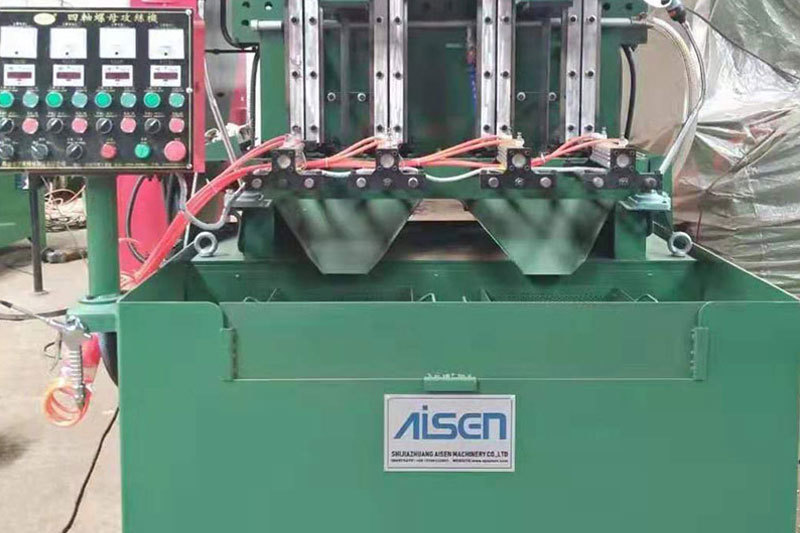
AISEN Four axis nut tapping machine ready for shipment to Russia
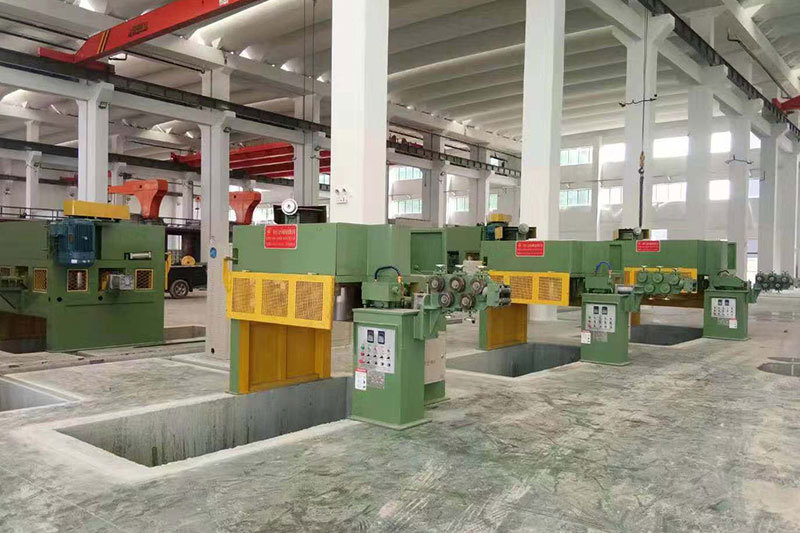
AISEN machinery inverted wire drawing machine
MESSAGES
We will contact you within one working day. Please pay attention to your email.
Qucik Link
Contact
Phone: +86-15100123091
E-mail: info@sjzaisen.com
Address: No.41 Zhaiying South Street, Yuhua District, Shijiazhuang City, Hebei Province China