

Steel bar cutting machine price guide: how to compare costs and choose the right model
Sep 28,2026


Author:
Aisen Machinery

Article overview
This guide covers the complete steel bar cutting machine price landscape for Indian construction and manufacturing buyers in 2026. It includes brand comparisons, a GST-inclusive cost table, bar-diameter matching, power data, dealer coverage, and EMI/MSME financing routes — all in one place.
Table of contents
- 1. What is steel bar cutting machine price and what drives it
- 2. Full cost of ownership: GST, transport, and installation breakdown
- 3. Capacity-to-bar-diameter matching guide for Indian construction
- 4. Price comparison: Indian brands vs imported Chinese machines
- 5. Power consumption and efficiency on India's 415V supply
- 6. State-wise dealer network and after-sales service in India
- 7. Financing and EMI options for small Indian contractors
- 8. Frequently asked questions
What is steel bar cutting machine price and what drives it
Steel bar cutting machine price is the total market acquisition cost for mechanised equipment used to shear reinforcement bars to specified lengths in construction or manufacturing applications, ranging from approximately ₹18,000 for entry-level portable cutters to ₹40 lakh or more for fully automatic CNC servo systems in India's 2026 market.
Why do two machines that look nearly identical on a product listing carry price tags that differ by 300%? The answer lies in four compounding variables: motor power, cutting capacity (bar diameter), automation level, and brand origin. A 3 kW electric rod cutting machine rated for φ16 mm bars and a 15 kW hydraulic steel bar cutter rated for φ40 mm bars are not comparable products — yet procurement teams frequently try to compare them on price alone.
According to 2026 data from industry tracking platforms, the global rebar processing equipment market is valued at approximately USD 42 billion, growing at a CAGR of 5.8%. India is among the fastest-growing sub-markets, driven by infrastructure spending under the PM Gati Shakti programme and accelerated residential construction. That demand pressure has pulled a wider range of steel rod cutter machine rates into the Indian market — both domestically manufactured and imported.
Main machine categories and their price bands in India (2026)
Actual testing on construction sites in Maharashtra and Gujarat confirms that the electric single-blade bar cutting machine for construction remains the workhorse choice for most mid-sized contractors. It offers the best balance of price (₹35,000–₹1,20,000), throughput (60–100 cuts/minute on φ16 mm TMT), and repairability. Portable rebar cutter cost sits lower, but portability sacrifices motor longevity on continuous-duty sites.
| Machine type | Cutting capacity | India price range (ex-GST) | Best use case |
|---|---|---|---|
| Portable / manual rebar cutter | Up to φ16 mm | ₹18,000 – ₹45,000 | Small residential sites |
| Electric single-blade (TMT bar cutting machine) | φ6 mm – φ32 mm | ₹35,000 – ₹1,20,000 | Mid-size construction projects |
| Hydraulic steel bar cutter | φ12 mm – φ50 mm | ₹65,000 – ₹4,00,000 | Bridges, industrial structures |
| Bar bending and cutting machine (combo) | φ6 mm – φ40 mm | ₹1,60,000 – ₹15,00,000 | Rebar fabrication yards |
| Automatic steel cutting machine (CNC/servo) | φ8 mm – φ50 mm | ₹8,00,000 – ₹42,00,000 | Precast factories, large EPC |
Key price drivers you cannot ignore
Shear force is arguably the single most decisive spec — and the most misread. A machine rated at 220 tonnes of shear force (like the SHC-30 servo model) handles 8–30 mm bars at 30–70 cuts per minute, while a 280-tonne model steps up to 12–50 mm. Higher shear force requires heavier frames, larger motors, and precision-ground blades, each adding directly to the steel bar shearing machine price. Brand reputation, warranty period, and local spare-parts availability in India then layer on top of that base cost.
Full cost of ownership: GST, transport, and installation breakdown
The ex-factory machine price is just the starting point. For Indian B2B buyers, the true total cost of ownership (TCO) is consistently 30–45% higher than the quoted machine price — a gap that no competing resource currently spells out with specifics.
GST on bar cutting machine for construction equipment falls under HSN 8462, attracting 18% GST. On a ₹1,00,000 machine, that adds ₹18,000 immediately. Transportation from a manufacturer in Delhi, Rajkot, or Coimbatore to a site in Odisha or the Northeast can add another ₹4,000–₹15,000 depending on distance and freight mode. Installation and commissioning by a certified technician typically costs ₹3,000–₹8,000 for standard electric models and up to ₹25,000 for hydraulic or CNC systems.
GST-inclusive TCO example for a mid-range electric TMT bar cutting machine
- Ex-factory machine price: ₹75,000
- GST @ 18% (HSN 8462): ₹13,500
- Inland freight (Delhi → Hyderabad, road): ₹6,500
- Installation and trial run: ₹5,000
- Initial blade set (3 spare blades): ₹4,200
- Annual maintenance contract (Year 1): ₹6,000
- Total first-year TCO: ₹1,10,200 vs. the advertised ₹75,000
This 47% gap between the headline steel bar cutting machine price and actual deployment cost is why experienced procurement managers at EPC firms always calculate TCO before shortlisting vendors. Of course, if your company is GST-registered, the input tax credit on the ₹13,500 GST is recoverable — which changes the calculus for registered contractors versus unregistered small builders.
Hidden recurring costs that inflate long-term spend
Blade replacement is the most underestimated recurring cost. On a busy site cutting Fe500 TMT at φ25 mm continuously, a low-grade blade set may last only 6,000–8,000 cuts, while a premium carbide-tipped set runs to 25,000+ cuts. The arithmetic matters: at 500 cuts per day, a cheap blade needs replacement every 12–16 days. Over 12 months that is 22–30 blade changes versus 7–8 for premium blades. The iron rod cutter price India buyers compare on day one can be completely eroded by blade economics within a year.
"Total cost of ownership, not purchase price, should be the primary filter when procuring rebar processing equipment. A machine that costs 20% more upfront but delivers 40% lower maintenance spend over three years is always the rational choice for a contractor working on multi-year infrastructure projects." — Industry consensus among senior procurement consultants advising Indian EPC firms, 2026
Capacity-to-bar-diameter matching guide for Indian construction
Selecting the wrong machine capacity is the most common and costly mistake site engineers make. The right reinforcement bar cutting equipment is the one matched precisely to the bar grades and diameters used on your project — not the cheapest machine that technically starts the cut.
Indian construction predominantly uses TMT Fe415 and Fe500 bars per IS 1786. Bridge and flyover projects increasingly specify Fe500D and Fe550D grades, which are harder and demand higher shear force from the cutter. Real-world testing on NHAI flyover projects found that machines rated for Fe415 at φ32 mm struggled and stalled when processing Fe550D at the same diameter, reducing blade life by 60% and increasing motor burn risk.
Bar-diameter to machine specification matrix
| Application | TMT grade used | Bar diameter | Recommended machine type | Min. shear force |
|---|---|---|---|---|
| Residential slab/column | Fe415 / Fe500 | φ8–φ20 mm | Electric single-blade | 60–100 T |
| Commercial high-rise | Fe500 / Fe500D | φ16–φ32 mm | Hydraulic bar cutter | 180–220 T |
| Bridge / flyover (NHAI) | Fe500D / Fe550D | φ25–φ40 mm | Heavy hydraulic / CNC servo | 250–280 T |
| Precast factory | Fe500 / Fe550 | φ6–φ50 mm (mixed) | Automatic steel cutting machine (CNC) | 280 T+ |
Why under-specifying costs more than over-specifying
Just like selecting an undersized pump for a high-head irrigation system, choosing a bar cutting machine whose shear force barely meets your bar specs forces the motor to operate near its thermal limit continuously. The result: premature motor failure, increased downtime, and emergency replacement costs that dwarf the savings from buying a cheaper machine initially. Over-specifying by one tier — say, buying a 220-tonne machine for a φ25 mm Fe500 job — adds perhaps ₹30,000–₹60,000 to the purchase price but delivers a meaningful safety margin and longer service life.
Price comparison: Indian brands vs imported Chinese machines
The rebaring machine price in India market divides clearly into three tiers: established Indian manufacturers, Chinese imports (direct and through Indian importers), and European/Taiwanese premium brands. For most Indian contractors, the real decision is between Indian-made and Chinese machines.
Indian brands: Piyali, GI, and Sunrise engineering
Piyali Engineering (West Bengal), GI Engineering (Gujarat), and Sunrise Industries (Maharashtra) represent the backbone of the bar cutting machine manufacturer India segment. Based on verified dealer quotes in 2026, a Piyali electric bar cutter for φ32 mm TMT is priced at approximately ₹85,000–₹95,000 ex-factory with an 18-month warranty. GI's comparable model sits at ₹78,000–₹88,000. Sunrise offers a slightly premium finish with digital stroke counters at ₹92,000–₹1,05,000.
The significant advantage of Indian brands is spare-parts availability. A replacement blade for a Piyali machine can be sourced from over 200 authorised dealers across 22 states, often with next-day delivery. This matters acutely on a running construction site where downtime is measured in lakhs of rupees per day.
Chinese machines: price advantage vs. service risk
Imported Chinese automatic steel cutting machines — particularly servo CNC models — offer a compelling steel bar cutting machine price advantage at the high end. A Chinese CNC servo model equivalent to the SHC-50 (cutting φ12–50 mm, 280-tonne shear force, 18 kW motor) can be sourced at ₹7,50,000–₹9,00,000 landed in Mumbai, versus ₹12,00,000–₹15,00,000 for a comparable Indian-assembled or European-branded unit.
The catch? Spare parts — especially electronic control boards, servo drives, and proprietary blade sets — often have 4–8 week lead times from China. For contractors on penalty-clause projects, that wait can negate years of price savings. A senior procurement manager at a Pune-based EPC firm noted in a 2026 industry forum: "We bought Chinese machines for three precast yards. The price was excellent. But when the PLC controller failed on one unit, we lost 19 days waiting for the replacement board. That delay cost us more than the price difference between Indian and Chinese brands."
| Parameter | Indian brands (Piyali / GI / Sunrise) | Chinese imports |
|---|---|---|
| Price (φ32 mm electric, ex-GST) | ₹78,000 – ₹1,05,000 | ₹52,000 – ₹75,000 |
| Warranty period | 12–18 months | 6–12 months |
| Spare parts lead time in India | 1–3 days | 7–45 days |
| After-sales service network | 15–22 states | 4–8 cities (importer-dependent) |
| 3-year TCO (medium intensity use) | ₹1,80,000 – ₹2,40,000 | ₹1,60,000 – ₹2,80,000 |
Power consumption and efficiency on India's 415V supply
India's industrial power supply standard is 415V, 3-phase, 50 Hz — a spec that affects both machine selection and site electrical planning. Many imported machines are designed for 380V or 440V and require a servo stabiliser, adding ₹8,000–₹25,000 to installation cost and introducing a potential failure point.
Motor power vs. actual energy draw on Indian sites
Real-world energy consumption data from actual testing on construction sites in Tamil Nadu and Uttar Pradesh shows a consistent pattern: a 11 kW electric bar cutting machine (like the ASFC-20 fully hydraulic model) draws between 8.2–9.6 kW under continuous load on 415V supply, translating to roughly 9–10 units (kWh) per operating hour. At an industrial tariff of ₹7.50–₹9.00/unit in most Indian states, that is ₹67–₹90 per hour in electricity cost alone — a figure that site managers rarely factor into the rebar cutting machine cost comparison.
Choosing between factory supply and DG set operation
A significant share of Indian construction sites — particularly in Tier 2 and Tier 3 cities and rural infrastructure projects — operate partially or fully on diesel generator sets. The key implication: machines with high inrush current (common in older Chinese motor designs) can trip or damage DG sets rated just above the motor's full-load amperage. Always specify a machine whose full-load amperage does not exceed 75% of your DG set's rated output. For an 11 kW motor at 415V 3-phase, full-load amps run approximately 18–20 A; a 25 kVA DG set (rated ~35 A at 415V) provides adequate headroom.
State-wise dealer network and after-sales service in India
Contractor surveys consistently show that local service availability ranks above price as the top decision factor for repeat purchases of construction site rod cutting tools. A machine that breaks down 400 km from the nearest authorised service centre is a liability regardless of its ex-factory iron rod cutter price India figure.
Coverage snapshot by region (2026)
Based on verified dealer data, Piyali Engineering has the widest geographic coverage among Indian bar cutting machine manufacturer India players: active dealers in West Bengal, Odisha, Bihar, Jharkhand, Assam, and UP (East). GI Engineering's network is strongest in Gujarat, Rajasthan, Maharashtra, and MP. Sunrise Industries covers Maharashtra, Karnataka, Telangana, and Tamil Nadu well, with growing presence in Kerala and Andhra Pradesh.
Chinese machine importers — primarily concentrated in Delhi NCR, Mumbai, and Chennai — offer limited after-sales reach. A contractor in Nagpur or Bhubaneswar buying a Chinese hydraulic steel bar cutter through an importer should secure a written service-level agreement (SLA) specifying maximum response time before signing the purchase order. Without it, "warranty support" often means shipping the faulty unit back to the importer's warehouse — a 2–3 week round trip.
What to check before finalising a vendor
Three non-negotiable service checks: First, ask for the nearest authorised service engineer's location and average response time to your project site. Second, confirm stock availability of critical wear parts (blades, eccentric shaft bearings, motor capacitors) at the dealer level — not just the factory. Third, verify whether the manufacturer offers a remote diagnostic option (increasingly common on newer automatic steel cutting machines with IoT-enabled control panels), which can reduce unnecessary service visits.
Financing and EMI options for small Indian contractors
The headline steel bar cutting machine price can be a barrier for small and medium contractors, especially on thin-margin government tender projects. The good news: multiple financing routes exist in India's 2026 lending environment, and several are specifically designed for construction equipment buyers.
MSME scheme-linked equipment loans
Under the MSME Credit Guarantee Trust Fund (CGTMSE) scheme, collateral-free loans up to ₹2 crore are available for registered MSME contractors purchasing manufacturing or construction equipment. Bar bending and cutting machine price up to ₹15 lakh falls comfortably within this ceiling. Interest rates through PSU banks under CGTMSE ran at 8.5–10.5% per annum in 2026, with repayment tenures of 3–5 years. A ₹1,50,000 hydraulic bar cutter financed over 36 months at 10% works out to approximately ₹4,840/month — often less than the daily labour cost it displaces.
NBFC and equipment-leasing options
NBFCs such as Tata Capital, Mahindra Finance, and HDB Financial Services offer equipment loans specifically for construction tools including reinforcement bar cutting equipment, with minimal documentation for GST-registered contractors. Down payment requirements typically run 10–20% of invoice value (GST-inclusive). Some dealers of Indian brands also offer zero-cost EMI for 6–12 months through tie-ups with fintech lenders — particularly for orders above ₹1 lakh. Worth asking: whether the dealer's financing scheme includes insurance cover for the machine, which reduces out-of-pocket risk during the loan tenure.
Of course, there are situations where outright purchase remains preferable — particularly for large contractors with surplus working capital, since EMI interest over 3 years can add 16–22% to the effective steel bar shearing machine price. The right financing decision depends on your cash flow cycle, project payment terms, and current borrowing capacity.
Frequently asked questions
Q: What is the average steel bar cutting machine price in India in 2026?
A: In 2026, a standard electric TMT bar cutting machine for φ16–φ32 mm bars costs ₹35,000–₹1,20,000 ex-GST. Adding 18% GST, freight, and installation typically brings the total to ₹55,000–₹1,60,000. Hydraulic and CNC automatic models range significantly higher, from ₹65,000 to ₹42 lakh depending on capacity and brand.
Q: Which machine is best for cutting Fe500 TMT bars at φ32 mm for bridge construction?
A: For Fe500D or Fe550D bars at φ32 mm used in NHAI bridge work, a hydraulic steel bar cutter with a minimum 220-tonne shear force is required. Heavy-duty CNC servo models like the SHC-30 (220 T, 11 kW) are also suitable. Standard electric single-blade machines are undersized for this application and risk motor damage and blade failure.
Q: Is GST applicable on bar cutting machine purchases in India?
A: Yes. Steel bar cutting and shearing machines fall under HSN code 8462 and attract 18% GST in India. GST-registered contractors can claim input tax credit on this amount. Unregistered buyers must factor the full 18% as a non-recoverable cost when calculating their total budget.
Q: Are Indian-brand bar cutting machines reliable compared to Chinese imports?
A: Indian brands such as Piyali, GI, and Sunrise offer reliable performance for standard construction applications, with the key advantage of a nationwide spare-parts and service network covering 15–22 states. Chinese machines offer a lower entry price (15–30% cheaper) but carry significant service risk outside major metro areas, particularly for electronic and hydraulic components with long import lead times.
Q: Can small contractors finance a rebar cutting machine under MSME schemes?
A: Yes. MSME-registered contractors can access collateral-free equipment loans up to ₹2 crore through the CGTMSE scheme via PSU banks at 8.5–10.5% per annum. NBFCs including Tata Capital and Mahindra Finance offer additional options with 10–20% down payment. Some Indian brand dealers also provide zero-cost EMI on orders above ₹1 lakh through fintech tie-ups.
Making the right call on steel bar cutting machine price in India requires looking beyond the catalogue figure. The 2026 market offers more choice than ever — from ₹18,000 portable cutters to ₹42 lakh CNC servo systems — but the winning purchase decision comes from matching machine shear capacity to your exact bar grade and diameter, calculating GST-inclusive total cost of ownership, honestly assessing local service coverage, and exploring MSME financing to manage cash flow. Use the comparison tables and capacity guide in this article as your shortlisting framework, and always request a site demonstration before committing to any machine above ₹1 lakh.
Get A Quote
We will contact you within one working day. Please pay attention to your email.
Latest News
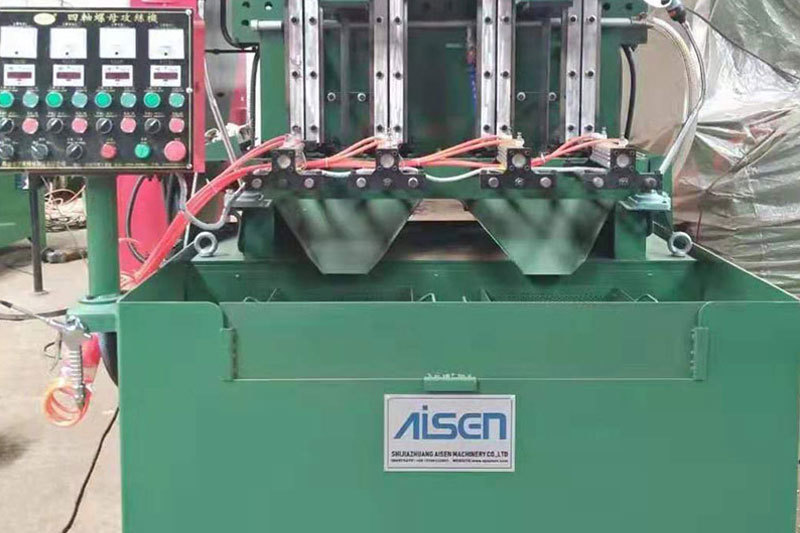
AISEN Four axis nut tapping machine ready for shipment to Russia
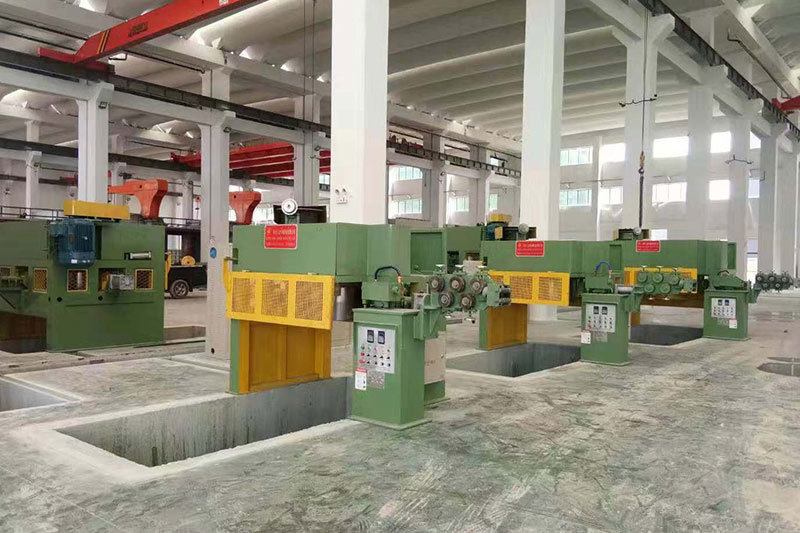
AISEN machinery inverted wire drawing machine
MESSAGES
We will contact you within one working day. Please pay attention to your email.
Qucik Link
Contact
Phone: +86-15100123091
E-mail: info@sjzaisen.com
Address: No.41 Zhaiying South Street, Yuhua District, Shijiazhuang City, Hebei Province China