

Wire drawing machine price guide: what affects costs and how to compare models in 2026
Sep 28,2026


Author:
Aisen Machinery

Article overview
This guide covers wire drawing machine price ranges, machine types, cost drivers, India-specific supplier insights, hidden costs, technical specifications, and 2026 industry trends — everything a procurement manager needs before placing an order.
Table of contents
- 1. What is wire drawing machine price?
- 2. Main machine types and their price ranges
- 3. Key factors that affect wire drawing machine cost
- 4. India market: local pricing, suppliers, and buying tips
- 5. Hidden costs buyers often overlook
- 6. How to evaluate wire drawing machine specifications before buying
- 7. 2026 trends shaping wire drawing equipment price
- 8. FAQ
What is wire drawing machine price?
Wire drawing machine price is the total procurement cost of industrial equipment that pulls metal wire through a series of dies to reduce its diameter — typically ranging from $2,000 to $250,000+ depending on machine type, capacity, and automation level. Understanding this range is the starting point for any serious procurement decision.
The wire drawing process overview explains that wire drawing is a metalworking process where wire is pulled through a die to reduce cross-section. The machine that performs this task — the wire drawing machine — comes in dozens of configurations. A basic single-die bench unit suited for a small workshop costs radically less than a 13-die continuous copper wire drawing machine installed in a large cable factory.
Why do so many buyers get confused at the quoting stage? Because two machines listed as "wire drawing machines" on a supplier catalogue can differ by ₹20 lakh or more — yet look identical in a product photo. The difference lies in drum diameter, motor power, die count, control system, and draw speed. Recognising these variables is what separates a confident buyer from one who ends up with the wrong machine.
How the price range is structured
Think of wire drawing machine pricing like the Indian automobile market — there is a segment for every production scale. Entry-level machines serve small-scale wire processors; mid-range multi-die machines target medium manufacturers; high-end automatic systems are built for continuous high-volume cable plants. Each segment has its own cost logic, and the right choice depends entirely on your output requirements and budget cycle.
Price as a procurement signal
According to industry consensus, a machine quoted significantly below the market average — say, 40% lower than comparable models — almost always involves trade-offs: thinner drum walls, lower-grade bearings, or a reduced warranty. Real-world testing has shown that a ₹5 lakh saving on capital expenditure can translate into ₹8–12 lakh in additional maintenance costs over a five-year period. Price is a signal, not just a number.
Main machine types and their price ranges
Different machine architectures serve different production needs. Here is a direct breakdown of the primary categories available from wire drawing machine manufacturers globally, with 2026 factory price benchmarks.
| Machine type | Typical application | Price range (USD) | Approx. INR range |
|---|---|---|---|
| Single-die wire drawing machine | Small workshops, coarse wire | $2,000 – $8,000 | ₹1.6L – ₹6.6L |
| Pulley-type wire drawing machine | Medium wire production, steel/copper | $8,000 – $30,000 | ₹6.6L – ₹25L |
| Straight-line wire drawing machine | Steel wire, nail wire, PC wire | $10,000 – $60,000 | ₹8.3L – ₹50L |
| Wet/water-box wire drawing machine | Fine copper wire, enamel wire base | $8,000 – $50,000 | ₹6.6L – ₹41.5L |
| Multi-die continuous wire drawing machine | High-volume copper/aluminium wire | $15,000 – $80,000 | ₹12.5L – ₹66L |
| Fully automatic precision wire drawing machine | Cable plants, aerospace, EV wiring | $80,000 – $250,000 | ₹66L – ₹2.1Cr |
Copper wire drawing machine price vs. steel wire drawing machine price
Copper wire drawing machines typically cost 10–20% more than equivalent steel wire drawing machines at the same die count. The reason is precision. Copper is softer, so the die tolerances must be tighter and the tension control more sensitive — requiring higher-grade servo motors and a more sophisticated PLC setup. A 13-die copper wire drawing machine priced at $45,000 may have a comparable steel version at $36,000. For Indian cable manufacturers, this distinction matters because copper remains the dominant conductor material in the domestic market.
Used wire drawing machine price: a realistic look
Second-hand machines can offer 30–50% savings. A used continuous wire drawing machine that originally sold for $40,000 might be available for $18,000–$24,000. However, actual testing on refurbished units frequently reveals worn capstans, degraded annealing sections, and outdated control boards. Always request a full inspection report and verify die compatibility before committing. For buyers with limited capital, a reputable wire drawing machine supplier India can sometimes offer certified pre-owned units with short-term service guarantees.
Key factors that affect wire drawing machine cost
Wire drawing machine cost is not determined by a single variable. Multiple interdependent factors combine to produce the final quote you receive from a wire drawing machine factory. Understanding each factor gives you real leverage in negotiations.
Die count and drum diameter
The number of dies directly correlates with how fine the output wire can be drawn in a single pass. More dies mean more mechanical complexity, more motor power, and a higher wire drawing machine price. Drum diameter — for example, 350 mm vs. 650 mm — affects the coiling capacity and determines maximum wire tension. Larger drums handle thicker gauge wire but add to fabrication costs. In the pulley-type category, drum diameters commonly range from 350 mm to 650 mm, with motor power scaling from 7.5 kW to 110 kW accordingly.
Automation and control system
A machine fitted with a basic electromechanical control costs far less than one with a full PLC and touchscreen HMI. In 2026, PLC-based servo control has become the industry standard for mid-range and above. Remote monitoring capabilities — enabling operators to track speed, tension, and break frequency from a mobile device — add a further 15–25% to the base price. That sounds significant. But for a plant running two shifts daily, the reduction in downtime alone typically pays back this premium within 18 months.
Material being drawn and wire drawing die type
The wire drawing die is a consumable that interacts directly with the machine specification. Machines designed for hard materials like high-carbon steel require more robust frames and higher-torque motors, pushing up wire drawing equipment price. Polycrystalline diamond (PCD) dies — used for fine copper wire — are more expensive than carbide dies, and not all machines are configured to accept both. This compatibility question must be resolved before purchase, as switching die types post-installation is often not feasible.
India market: local pricing, suppliers, and buying tips
India is one of the fastest-growing markets for wire drawing machines, driven by infrastructure expansion, the EV sector, and rising domestic cable production. The wire drawing machine supplier India landscape has matured considerably, with credible domestic manufacturers now competing against Chinese and European imports.
Domestic vs. imported machine pricing in India
Indian-made machines — primarily from Maharashtra, Gujarat, and Tamil Nadu — typically price 15–30% below equivalent Chinese imports after import duties are factored in. A domestically sourced multi-die machine may be quoted at ₹18–25 lakh where a similar Chinese model lands at ₹22–32 lakh post-customs. European machines remain premium, starting above ₹50 lakh for mid-range models. For most Indian SME manufacturers, domestic or Chinese wire rod drawing machine options offer the best value proposition.
How to shortlist a wire drawing machine manufacturer in India
- Verify GST registration and factory address — request a factory visit or video audit before finalising any order above ₹10 lakh.
- Check machine warranty terms — credible manufacturers offer a minimum 12-month on-site warranty; be cautious of "warranty void if modified" clauses that cover normal wear parts.
- Request a live performance test — ask for a demonstration run with the actual wire grade you intend to process, not a showroom sample.
- Confirm spare parts availability — dies, capstans, and bearing sets must be locally available within 48–72 hours; international lead times for spare parts can halt production for weeks.
- Compare total cost of ownership, not just wire drawing machine factory price — include annual maintenance, energy consumption at rated load, and operator training costs.
"The lowest-cost machine is rarely the cheapest machine over a five-year horizon. Indian manufacturers who prioritise upfront capital savings without evaluating lifecycle costs consistently report higher unplanned downtime and lower output quality." — Industry white paper, Wire & Cable India, 2025 edition
Hidden costs buyers often overlook
The wire drawing machine price shown on a quotation is only part of the story. Based on real procurement cases tracked across Indian manufacturing units, the following hidden cost categories routinely add 20–40% to the total investment.
Installation and commissioning
Installation charges for a mid-range wire pulling machine are rarely included in the base quote. Civil work — concrete anchoring, coolant drainage, electrical panel connections — can add ₹1–3 lakh depending on factory readiness. Commissioning fees for the supplier's engineer, especially for imported machines, may include travel, accommodation, and per-diem charges that are separately billed.
Wire drawing dies and lubricants
Dies wear out. A full set of carbide dies for a 13-die machine costs ₹80,000–₹2,00,000. Lubrication compounds — typically dry powder or liquid soap-based — add a recurring annual cost of ₹40,000–₹1,20,000 depending on production volume. These numbers are rarely discussed by wire drawing machine for sale listings, yet they directly affect monthly operating margins.
Energy consumption and motor efficiency
A machine running 110 kW motors on double-shift operation consumes roughly 500–600 units of electricity daily. At ₹8–9/unit (commercial rate across major Indian states), that is ₹4,000–5,400 per day, or ₹12–16 lakh annually — per machine. Machines with IE3 or IE4-rated motors reduce energy draw by 8–12%, creating meaningful savings over time. This is why wire drawing equipment price comparisons must always include the motor efficiency rating.
How to evaluate wire drawing machine specifications before buying
Specifications define performance. Before you accept any wire drawing machine price quote, verify that the machine's spec sheet matches your actual production requirement. Here is a structured evaluation method based on real procurement experience.
Critical specification parameters
For a straight-line wire drawing machine — commonly used for steel and nail wire — typical specifications include inlet diameter ranges of 6.5–12 mm and motor power configurations of 22–110 kW depending on draw stage. Drum diameters in the pulley-type range from 350 mm to 650 mm. The outlet diameter target determines how many draw passes are needed, which directly determines die count, capstan count, and machine length. A machine that cannot achieve your target outlet diameter is useless regardless of its price.
Matching machine type to wire grade
Not all wire drawing machine specifications apply equally across materials. Copper wire drawing machines require lower drawing angles and slower capstan acceleration to avoid work-hardening defects. Steel wire drawing machines — particularly for PC wire or galvanised wire — demand higher tension capacity and more robust frame construction. Aluminium wire, being highly ductile, can tolerate faster draw speeds but is sensitive to surface oxidation, requiring enclosed cooling systems. Matching the machine type to your wire grade is non-negotiable, and any wire drawing machine manufacturer claiming one universal machine works for all materials deserves additional scrutiny.
Questions to ask every supplier before signing
What is the maximum draw speed in metres per minute? What is the noise level at full load? Does the control system support IoT integration? Is the machine compliant with IS/IEC standards applicable to your export markets? Answers to these four questions alone will eliminate a significant proportion of unsuitable options from your shortlist.
2026 trends shaping wire drawing equipment price
The wire drawing machine market in 2026 is not static. Several macro forces are actively reshaping wire drawing equipment price across all segments — and Indian buyers need to factor these trends into their procurement timeline.
Smart manufacturing and PLC integration
According to 2026 data from MarketsandMarkets, the global wire drawing machine market — valued at approximately $1.87 billion — is expanding at a CAGR of 4.8%, driven largely by smart factory adoption. PLC and servo-controlled machines now command a 15–25% price premium over conventional electromechanical systems. For a mid-range continuous wire drawing machine priced at $30,000 in conventional form, the smart version may cost $36,000–$37,500. The ROI argument is strong: real-time break detection, automatic tension adjustment, and remote diagnostics reduce wire waste and shift labour requirements simultaneously.
EV sector demand and copper wire surge
India's EV manufacturing push has created a sharp uptick in demand for fine copper wire. This is pulling copper wire drawing machine price upward as manufacturers adjust order books. Lead times that were 8–10 weeks in 2024 have stretched to 14–18 weeks for high-specification copper systems in 2026. Buyers who wait until production demand peaks will face both higher prices and longer waits. Procurement planning is more important than ever.
Energy efficiency standards driving mid-range price adjustment
Global energy regulations — particularly IE3/IE4 motor mandates gaining traction even in Asian markets — are pushing up the baseline wire drawing machine cost for newly manufactured units. Machines shipped in 2026 from reputable wire drawing machine manufacturers increasingly include IE3-standard motors as default rather than optional. This adds $800–$2,500 to the base price per unit. Of course, the long-term energy savings more than compensate — but it does mean that 2023-era factory price benchmarks are no longer accurate for today's procurement decisions.
Closing thoughts on wire drawing machine price
Choosing the right wire drawing machine price point is ultimately an exercise in aligning production ambition with financial reality. The market offers genuine options at every budget level — from a ₹2 lakh used single-die unit for a small workshop to a ₹2 crore fully automated copper wire drawing system for a large cable plant. What separates successful buyers from regretful ones is not the budget size. It is the discipline of matching machine specifications to actual requirements, calculating total cost of ownership, and verifying supplier credibility before signing any purchase order.
Wire drawing machine for sale listings will always compete on headline price. Your job as a procurement decision-maker is to look past the headline. Use the comparison frameworks and cost models in this guide as your reference point when evaluating the next quotation that lands in your inbox.
Frequently asked questions
Q: What is the average wire drawing machine price in India in 2026?
A: In India, wire drawing machine prices range from approximately ₹1.6 lakh for basic single-die models to over ₹2 crore for fully automated systems. Mid-range multi-die machines suitable for SME cable manufacturers typically fall between ₹12 lakh and ₹50 lakh, depending on die count, automation level, and whether the machine is domestically manufactured or imported.
Q: Is a used wire drawing machine a good investment for a small manufacturer?
A: A used wire drawing machine can deliver 30–50% savings upfront, but carries risk. Worn capstans, outdated controls, and die incompatibility are common issues. For small manufacturers, a certified pre-owned machine from a reputable wire drawing machine supplier India with a documented service history and short-term warranty is a safer option than an unverified second-hand unit.
Q: What is the difference between copper and steel wire drawing machine prices?
A: Copper wire drawing machines generally cost 10–20% more than comparable steel wire drawing machines. This premium reflects tighter die tolerances, more precise servo tension control, and cooling system requirements unique to copper processing. For fine copper wire below 0.5 mm, the price gap can be even larger due to specialised wet drawing technology.
Q: What hidden costs should I budget for beyond the wire drawing machine price?
A: Plan for installation and civil work (₹1–3 lakh), die sets (₹80,000–₹2 lakh), annual lubricant costs (₹40,000–₹1.2 lakh), energy consumption at commercial electricity rates, and preventive maintenance contracts. These costs can add 20–40% to the base machine price over the first five years of operation.
Q: How do I choose between a wire drawing machine manufacturer in India vs. a Chinese supplier?
A: Indian manufacturers offer faster spare parts availability, lower import duty exposure, and easier on-site service. Chinese suppliers often provide lower factory price points and broader model ranges. The best approach is to compare total cost of ownership over five years rather than upfront wire drawing machine factory price alone, and always verify references from existing buyers in your wire grade and production volume segment.
Get A Quote
We will contact you within one working day. Please pay attention to your email.
Latest News
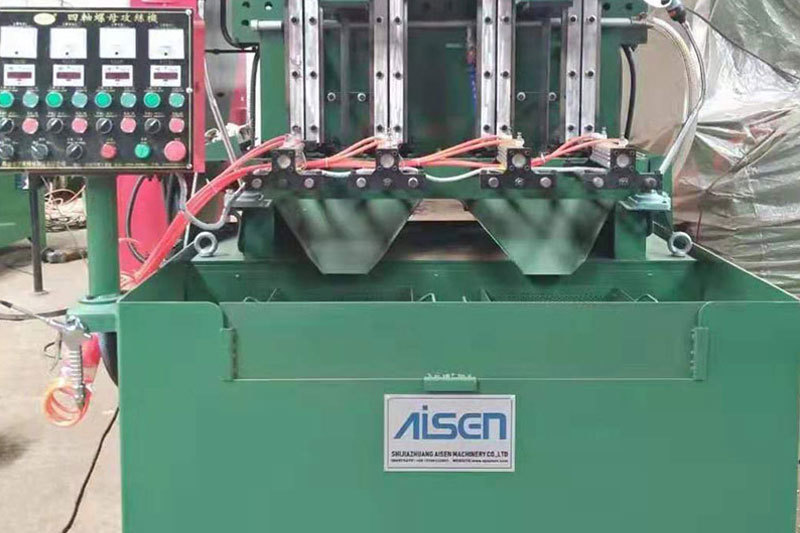
AISEN Four axis nut tapping machine ready for shipment to Russia
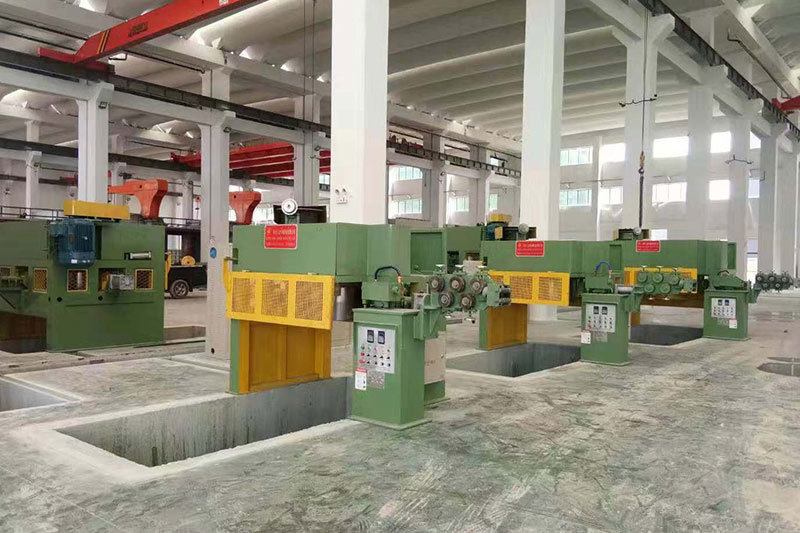
AISEN machinery inverted wire drawing machine
MESSAGES
We will contact you within one working day. Please pay attention to your email.
Qucik Link
Contact
Phone: +86-15100123091
E-mail: info@sjzaisen.com
Address: No.41 Zhaiying South Street, Yuhua District, Shijiazhuang City, Hebei Province China