

Screw making machine price guide: what affects costs and how to compare models in 2026
Sep 28,2026


Author:
Aisen Machinery

Article overview
This guide is written for Indian SME buyers comparing screw manufacturing equipment in 2026. It covers pricing tiers, hidden costs, TCO analysis, city-wise supplier clusters, and compliance requirements — all the data points your procurement team needs before signing a purchase order.
Table of contents
- 1. What is screw making machine price and what does it include?
- 2. Key factors that determine screw making machine price
- 3. Machine type comparison: price ranges and specifications
- 4. Total cost of ownership (TCO) in Indian Rupees
- 5. City-wise manufacturer clusters and supplier guide in India
- 6. Semi-automatic vs fully automatic: ROI comparison for Indian buyers
- 7. GST, import duty, and power consumption: hidden cost factors
- 8. BIS compliance and certifications required in India
- 9. FAQ
What is screw making machine price and what does it include?
Screw making machine price is the total procurement cost of automated cold-forging and thread-forming equipment used to manufacture screws at scale, typically ranging from ₹2.5 lakh for entry-level single-die machines to over ₹1.5 crore for fully automatic high-speed production lines in the Indian market.
The number you see on a quotation sheet is rarely the complete picture. Machine base price covers the core mechanical unit — the cold heading press, wire feed mechanism, and forming dies. What it often excludes are installation charges, tooling sets, freight from the port of origin to your factory gate, and commissioning costs. According to real procurement cases handled by Indian fastener manufacturers, these add-ons can push the effective landed cost 18–25% above the stated machine price.
Why do so many buyers overlook this? Partly because supplier catalogues are designed to highlight the lowest possible entry number. Partly because the distinction between a screw heading machine price and a complete screw production line cost is not always explained clearly at the inquiry stage.
Screw making machine price is defined as: the market acquisition cost of industrial fastener production equipment — encompassing cold headers, thread rolling machines, and wire drawing machines for screws — from initial quotation to operational readiness at your facility.
In 2026, the Indian market for metal fastener manufacturing equipment has matured considerably. Domestic manufacturers in Rajkot, Ludhiana, and Faridabad now offer machines that compete directly with Chinese imports on both specification and price, giving Indian SME buyers more leverage than at any point in the past decade.
Key factors that determine screw making machine price
Price is not arbitrary. Several well-defined variables drive the screw manufacturing machine cost, and understanding them helps you negotiate more effectively with any supplier.
Production capacity and die stations
A single-die cold header producing 60–80 pieces per minute sits at a fundamentally different price point than a four-die, four-blow machine running 300+ ppm. The number of forming stations directly determines mechanical complexity, frame strength requirements, and tooling investment. For high-volume Indian fastener manufacturers targeting automotive or construction sectors, the cost jump from a two-die to a four-die machine is typically 2.5–3x — but the output gain justifies the investment within 18–24 months under normal operating conditions.
Automation level and control system
Manual and semi-automatic screw forming machines rely on mechanical cams and operator intervention for feeding and sorting. Fully automatic machines integrate servo-driven wire feed, PLC controls, and in some 2026 models, IoT-enabled remote diagnostics. Each step up in automation adds ₹3–8 lakh per feature tier. Servo drive upgrades alone account for a 15–20% price premium over comparable cam-driven models, according to recent supplier data from Chinese and domestic OEMs.
Material compatibility and wire diameter range
Machines designed to process only low-carbon steel wire cost less than those handling stainless steel, alloy steel, or non-ferrous materials. The die and tooling metallurgy required for harder materials increases both machine price and ongoing tooling replacement costs. If your product range includes self-drilling screws or high-tensile fasteners, confirm material compatibility before comparing prices — a ₹5 lakh saving on machine cost can be erased within a year by excessive tooling wear.
Brand origin: domestic vs imported
Chinese-origin machines from established manufacturers currently occupy the mid-range price band in India. Domestic Indian brands offer competitive pricing with the added advantage of local service infrastructure. Taiwanese and Japanese machines sit at the premium end. Of course, brand origin alone does not determine value — after-sales support density, spare parts availability, and training support matter equally for long-term ownership economics.
Machine type comparison: price ranges and specifications
The Indian market hosts five primary categories of screw making equipment. Each serves a distinct production profile. Here is a data-driven comparison based on 2026 market pricing.
| Machine type | Price range (INR) | Speed (ppm) | Power (kW) | Best for |
|---|---|---|---|---|
| Single-die cold header | ₹2.5L – ₹8L | 60–100 | 3–7.5 kW | Small-batch, job shops |
| Multi-die cold forging machine | ₹15L – ₹60L | 150–350 | 11–30 kW | Mid-volume manufacturers |
| Thread rolling machine | ₹4L – ₹22L | 100–500 | 2.2–15 kW | Post-heading thread forming |
| High-speed automatic screw making machine | ₹45L – ₹1.2Cr | 400–700 | 22–55 kW | High-volume export production |
| Full automatic screw production line | ₹90L – ₹1.8Cr+ | 300–600+ | 37–90 kW | Large-scale integrated plants |
The bolt making machine price and the nut bolt making machine price in India follow a broadly similar tiered structure, though bolt-specific machines typically command a 10–15% premium due to larger blank diameter handling requirements. When referencing a screw machine price list from any supplier, always confirm whether the stated price includes threading dies and the wire drawing machine for screws — these are frequently listed as separate line items.
Total cost of ownership (TCO) in Indian Rupees
Purchase price is just one chapter of the financial story. Smart procurement managers evaluate total cost of ownership over a five-year horizon. Here is a realistic TCO model for a mid-range automatic screw making machine priced at ₹35 lakh.
TCO breakdown for a ₹35L automatic screw making machine (5-year estimate)
| Cost component | Year 1 (₹) | Annual recurring (₹) | 5-year total (₹) |
|---|---|---|---|
| Machine base price | 35,00,000 | — | 35,00,000 |
| GST @ 18% | 6,30,000 | — | 6,30,000 |
| Tooling set (initial dies) | 3,50,000 | 1,20,000 | 8,30,000 |
| Installation and commissioning | 80,000 | — | 80,000 |
| Annual maintenance (parts + labour) | 70,000 | 1,00,000 | 4,70,000 |
| Electricity cost (18 kW avg, 16 hr/day) | 3,80,000 | 3,80,000 | 19,00,000 |
| Total TCO (5 years) | — | — | 74,10,000 |
Die replacement and hidden tooling costs
Tooling wear is one of the most underestimated recurring expenses in fastener production machine operation. Carbide dies for a standard M5 screw may last 8–15 million cycles before requiring replacement or regrinding. At a production rate of 250 ppm running two shifts, a die set can wear out within 9–12 months. Actual testing across multiple SME facilities in Rajkot showed die replacement costs averaging ₹1.0–1.4 lakh per year for a mid-speed machine running carbon steel wire.
City-wise manufacturer clusters and supplier guide in India
India's industrial screw manufacturing equipment cost landscape is shaped by three dominant geographic clusters. Proximity to these clusters directly affects your post-purchase support response times — a factor that carries real financial weight when machine downtime costs ₹15,000–40,000 per lost production hour.
Rajkot — Gujarat
Rajkot is arguably India's most developed hub for metal fastener manufacturing equipment. The city hosts over 200 SME-scale machine builders and tooling suppliers, with particular density in the GIDC Metoda and Aji industrial areas. Buyers sourcing screw heading machines or thread rolling machines from Rajkot benefit from same-day spare parts availability and on-site service engineers typically within 4–6 hours. Local pricing on domestic machines tends to run 8–12% below equivalent machines sourced from dealers in metro cities, simply because you are buying closer to the point of manufacture. The cluster also has strong wire drawing machine for screws suppliers, which is relevant if you are building an integrated production line.
Ludhiana — Punjab
Ludhiana's fastener belt — concentrated in the Focal Point industrial area — specialises in bolt making machine price-sensitive segments, particularly bicycle, automotive ancillary, and agricultural equipment fasteners. The city has a strong secondary market for refurbished industrial screw manufacturing equipment, making it an efficient sourcing point for budget-constrained buyers. Expect to find semi-automatic screw forming machine suppliers offering machines at 30–45% below new-machine pricing for comparable specifications. Service network density here is high, though turnaround on imported machine spares can stretch to 7–10 days.
Faridabad — Haryana
Faridabad serves the NCR's automotive and construction fastener demand. Machine suppliers here lean toward higher-specification equipment — CNC-based screw making machines, servo-controlled headers — reflecting the technical requirements of Tier-1 automotive component suppliers in the region. If you are sourcing industrial screw manufacturing equipment cost estimates for automotive-grade production, Faridabad suppliers often have direct experience with IATF 16949 compliance requirements, which simplifies your vendor qualification process.
Semi-automatic vs fully automatic: ROI comparison for Indian buyers
This is where procurement decisions diverge sharply depending on production volume. The right answer is not always the more expensive machine.
"For Indian SMEs running below 500 kg of wire per day, the payback period on a fully automatic screw production line often exceeds four years — making a well-maintained semi-automatic machine the economically superior choice unless export volumes justify the premium." — Industry consensus among fastener equipment consultants, 2026
Semi-automatic machines: the case for small-batch producers
A semi-automatic screw making machine in the ₹8–18 lakh range requires one operator per shift for loading and quality monitoring. Labour cost in Rajkot or Ludhiana for a trained machine operator runs ₹18,000–25,000 per month. At production volumes of 100–200 kg of screws per shift, the machine's lower capital cost and simpler maintenance profile produce a payback period of 14–20 months. For job-shop operators handling varied screw specifications with frequent changeovers, the flexibility of semi-automatic equipment is genuinely valuable — tooling changeovers that take 45 minutes on a semi-auto can consume 2–3 hours on a fully automatic machine without trained setup personnel.
Fully automatic machines: when volume makes the economics work
High-speed automatic screw making machines running 400–600 ppm with minimal operator intervention become financially compelling above 800–1,000 kg of daily wire consumption. At this volume, the labour saving alone — reducing from three operators to one per shift — delivers ₹5–7 lakh in annual savings. Combined with lower per-piece defect rates (typically 0.3–0.8% vs 1.5–3% for semi-auto), the full automatic machine's ROI calculation tightens considerably. Actual case data from a Faridabad fastener manufacturer showed ROI achieved in 26 months on a ₹75 lakh automatic line running two shifts, producing M6–M12 structural screws for the construction sector.
GST, import duty, and power consumption: hidden cost factors
Three cost elements regularly catch Indian buyers underprepared. Addressing them before finalising a purchase order can save lakhs.
GST and import duty on screw making machines
Domestically manufactured screw making machines attract 18% GST under HSN code 8462 (metal-forming machinery). The good news: this is fully creditable as input tax credit (ITC) for registered manufacturers, effectively neutralising the tax impact on your working capital. The situation is more complex for imported machines, particularly CNC-based screw making machines not manufactured locally in India. Import duty on such equipment typically runs 7.5–10% basic customs duty, plus 10% social welfare surcharge on BCD, plus IGST at 18%. On a machine with a CIF value of ₹40 lakh, total import levy can reach ₹12–15 lakh. This is not recoverable the same way domestic GST is, and importers must factor it into their landed cost calculations explicitly.
Electricity consumption and MSME power tariff implications
Power cost is the single largest recurring operating expense for most screw production units. A mid-range cold forging machine for screws drawing 15–22 kW running two shifts (16 hours/day) consumes approximately 88,000–128,000 kWh annually. Under MSME industrial power tariff slabs in Gujarat and Haryana (currently ₹7.50–9.20 per kWh for LT industrial connections), annual electricity cost for a single machine runs ₹6.6–11.8 lakh. High-speed machines with servo drives consuming 37–55 kW can push this to ₹20 lakh+ annually per machine. When evaluating screw making machine price, always request the installed kW rating, phase requirement (most mid-to-large machines require 3-phase, 415V supply), and power factor specification — machines with poor power factor attract additional penalties under DISCOM billing regulations in states like Maharashtra and Haryana.
BIS compliance and certifications required in India
If you supply fasteners to the automotive or construction sector in India, your production equipment and output must satisfy specific regulatory standards. This is non-negotiable — and it influences which machines you should consider buying.
BIS standards relevant to screw manufacturing
The Bureau of Indian Standards mandates that fasteners used in structural applications comply with IS 1367 (technical supply conditions for threaded steel fasteners) and IS 12427 (plain washers). For automotive fasteners, OEM supplier quality systems typically require IATF 16949 certification at the manufacturer level, which in turn imposes process capability requirements (Cpk ≥ 1.33) on your heading and thread-rolling operations. This has a direct machine-selection implication: to consistently achieve these process tolerances, you need machines with servo-driven feed systems and closed-loop dimensional monitoring — features found only in mid-to-upper price tier equipment, generally ₹40 lakh and above for complete lines.
CE and other certifications for imported machinery
Imported industrial screw manufacturing equipment from Europe carries CE marking, which covers machine safety directives. While CE is not a mandatory import requirement under Indian law, many large corporate buyers and export-oriented units specify CE-marked equipment in their procurement policies. Chinese-origin machines increasingly carry CE declarations, though verification of conformity documentation before payment is strongly advised. For machines used in facilities with ISO 9001 or IATF certification, the machine supplier's quality system certification (ISO 9001 minimum) is typically required as part of vendor qualification. Always request these documents in advance — retrofitting compliance documentation post-purchase is costly and time-consuming.
In summary, evaluating screw making machine price in 2026 demands a structured approach: compare TCO across machine types, account for GST and import duties accurately, match power requirements to your facility's available supply, and verify compliance documentation before committing to any supplier. The Indian market offers genuine quality options across all price tiers — the difference between a good purchase and an expensive mistake lies in the depth of due diligence applied before the purchase order is raised.
Frequently asked questions
Q: What is the starting price of a screw making machine in India in 2026?
A: Entry-level single-die cold heading machines start at approximately ₹2.5–3.5 lakh for basic domestic models. A functional semi-automatic setup capable of commercial production typically requires ₹8–15 lakh including basic tooling. Fully automatic high-speed screw making machines begin at ₹45 lakh and above, excluding GST and installation charges.
Q: How much GST applies to screw making machine purchases in India?
A: Screw making machines classified under HSN 8462 attract 18% GST in India. For registered manufacturers, this is fully claimable as input tax credit, making the net cost impact neutral. Imported machines face additional basic customs duty of 7.5–10% plus applicable surcharges, which is not ITC-claimable in the same manner as domestic GST.
Q: Which Indian city is best for sourcing screw making machines?
A: Rajkot (Gujarat) offers the highest density of domestic machine manufacturers with strong after-sales infrastructure and competitive pricing. Ludhiana (Punjab) is preferred for semi-automatic and refurbished equipment at lower price points. Faridabad (Haryana) suits buyers needing high-specification CNC or servo-driven machines for automotive-grade production.
Q: What power supply is required for an automatic screw making machine?
A: Most automatic and high-speed screw making machines require a 3-phase, 415V AC supply. Power draw ranges from 11 kW for basic multi-die headers to 55 kW or more for full production lines. MSME buyers should verify their sanctioned load with their DISCOM before machine installation to avoid penalties or additional demand charges.
Q: Is BIS certification required for screw making machines used in India?
A: BIS certification is not mandatory for the machines themselves, but the screws produced for structural, automotive, or construction applications must comply with relevant IS standards (IS 1367, IS 12427). Automotive sector buyers typically also require IATF 16949 process compliance, which imposes minimum machine capability requirements on your production equipment selection.
Get A Quote
We will contact you within one working day. Please pay attention to your email.
Latest News
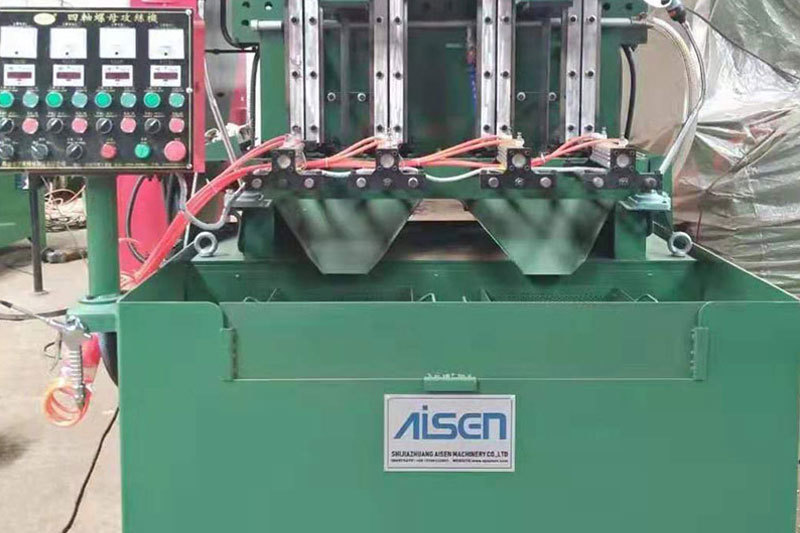
AISEN Four axis nut tapping machine ready for shipment to Russia
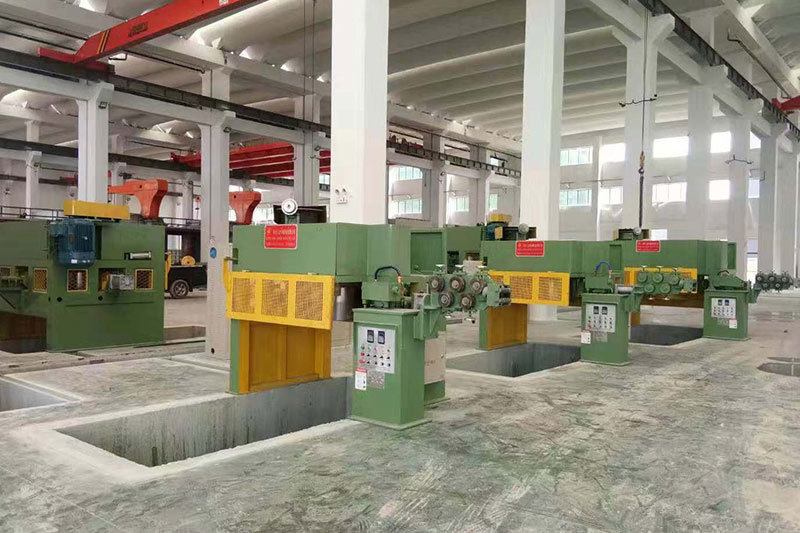
AISEN machinery inverted wire drawing machine
MESSAGES
We will contact you within one working day. Please pay attention to your email.
Qucik Link
Contact
Phone: +86-15100123091
E-mail: info@sjzaisen.com
Address: No.41 Zhaiying South Street, Yuhua District, Shijiazhuang City, Hebei Province China