

Bar cutting machine price guide: what affects cost and how to compare models
Sep 28,2026


Author:
Aisen Machinery

Article overview
This guide covers bar cutting machine price ranges across all major machine types available in India in 2026, with real rupee figures, brand comparisons, TCO breakdowns, and scenario-based buying recommendations for contractors, fabricators, and procurement professionals.
Table of contents
- 1. What is bar cutting machine price and why does it vary so much?
- 2. Bar cutting machine types and price ranges in India (2026)
- 3. Indian brands vs. imported brands: price, after-sales, and spares
- 4. Total cost of ownership: GST, freight, installation, and hidden costs
- 5. Choosing the right machine by construction scenario
- 6. Maintenance, wear parts, and local service network in India
- 7. Technical compatibility: voltage standards and generator pairing
- 8. Frequently asked questions
What is bar cutting machine price and why does it vary so much?
Bar cutting machine price is the total market cost of a mechanical or hydraulic device used to cut steel reinforcement bars, TMT bars, and iron rods to specified lengths in construction and fabrication workflows. In India, this price spans from roughly ₹25,000 for a basic electric cutter to over ₹35,00,000 for a fully automatic CNC bar processing line — a range wide enough to confuse even experienced procurement teams.
Why such a gap? The answer lies in four compounding variables: automation level, cutting capacity (diameter), drive mechanism (electric vs. hydraulic), and the country of manufacture. A 16 mm manual electric rebar cutter and a 50 mm hydraulic automatic bar cutting machine are technically both "bar cutting machines," yet they serve entirely different production volumes and precision requirements.
Key factors that determine the price
Actual testing across multiple machines reveals a clear pattern: automation level and cutting speed drive price far more than raw cutting diameter alone. This directly contradicts a common industry misconception. Many buyers assume that a machine handling 40 mm bars must cost double one handling 20 mm bars. In reality, a high-speed automatic 20 mm bar cutting machine — such as the ASFC-20 running at 80–160 cuts per minute with an 11 kW motor, touch-screen control, and a manipulator feeding system — will cost significantly more than a slow semi-automatic 40 mm hydraulic cutter.
Other cost drivers include blade material grade (HSS vs. carbide), PLC or CNC integration, machine weight and structural rigidity, warranty terms, and — critically for Indian buyers — whether the manufacturer has a local service presence. Brand origin (domestic Indian manufacturer vs. Chinese import vs. European OEM) can shift the base price by 40–60% for equivalent specifications.
Why the 2026 market is especially competitive
According to recent industry data, the global metal cutting equipment market exceeded $68 billion in the last reported cycle, with a projected CAGR of 5.2% through the late 2020s. India's share is growing faster than the global average, driven by infrastructure expansion under national construction programmes. This surge has attracted more Chinese and Taiwanese OEMs into the Indian market, intensifying price competition particularly in the ₹80,000–₹6,00,000 mid-range segment where most small-to-medium contractors shop. The result: buyers have more choices but a harder time separating genuine value from undercutting.
Bar cutting machine types and price ranges in India (2026)
The iron rod cutting machine rate you encounter on IndiaMART or a dealer floor varies substantially by machine category. Below is a structured overview based on 2026 market data, covering the five primary types available to Indian buyers.
| Machine type | Max cutting dia. | Speed (cuts/min) | Price range (₹, ex-GST) | Best suited for |
|---|---|---|---|---|
| Manual / mechanical electric | Up to 16 mm | 20–40 | ₹25,000 – ₹80,000 | Small residential sites |
| Hydraulic bar cutting machine | Up to 50 mm | 10–30 | ₹80,000 – ₹4,00,000 | Medium contractors, TMT cutting |
| Semi-automatic bar cutter | Up to 40 mm | 30–60 | ₹2,50,000 – ₹10,00,000 | Medium steel yards |
| Fully automatic hydraulic (e.g., FHC series) | 30–80 mm | Varies by model | ₹6,00,000 – ₹18,00,000 | Large contractors, infra projects |
| High-speed CNC automatic (e.g., ASFC-20) | Up to 20 mm | 80–160 | ₹12,00,000 – ₹35,00,000+ | Wire rod processing, rebar yards |
| Bar bending and cutting machine (combined) | Up to 32 mm | Variable | ₹1,50,000 – ₹8,00,000 | All-in-one site operations |
TMT and rebar cutter price specifics
TMT bar cutting machine price in India is largely governed by the Fe-500D and Fe-550D grade material hardness that the cutter must handle. Machines rated for TMT cutting need reinforced blades and higher hydraulic pressure cycles. Expect a 15–25% premium over standard mild steel cutters at equivalent diameter ratings. A mid-range hydraulic TMT cutter handling 25–32 mm bars typically falls between ₹1,20,000 and ₹2,80,000 ex-factory in 2026.
Portable bar cutter price and its trade-offs
Portable bar cutter price in India starts around ₹18,000 for handheld electric models and reaches ₹95,000 for battery-powered hydraulic portables. The trade-off is real: portability gains come at the cost of cutting speed and maximum diameter. They are ideal for site corrections and repair work, not high-volume fabrication. From real case experience on infrastructure sites in Maharashtra and Gujarat, portable cutters are frequently purchased as secondary tools rather than primary production machines.
Indian brands vs. imported brands: price, after-sales, and spares
One of the sharpest gaps in most bar cutting machine buying guides is the lack of honest brand-level comparison. Here is a direct breakdown based on 2026 market positioning.
Indian manufacturers: value, reach, and localisation
Established Indian brands such as Sunrise Industries, Rajkumar Agro Engineers, and several Rajkot/Coimbatore-based OEMs offer hydraulic and semi-automatic bar cutting equipment in the ₹70,000–₹5,00,000 bracket. Their primary advantages are tangible: spare parts are available through regional dealer networks within 24–72 hours, service engineers speak local languages, and machines are pre-configured for Indian power supply conditions. The construction bar cutter cost from domestic manufacturers is also GST-friendly since input tax credit flows more cleanly through established domestic supply chains.
The limitation? Domestic brands in the fully automatic and CNC segment are still catching up. For high-speed automatic bar cutting machine applications above ₹10,00,000, imported machines currently offer better throughput-per-rupee ratios.
Imported brands (Chinese and European): capability vs. support risk
Chinese manufacturers — particularly those producing the FHC fully automatic hydraulic series and ASFC-20-class high-speed automatic machines — typically price their equipment at 30–50% below equivalent European machines. The FHC series handles material grades including 45 Steel, 40Cr, 42CrMo, A3, and Q235, covering virtually all bar materials used on Indian sites. The reinforcement bar cutting machine cost for these models is competitive, but buyers must critically evaluate three risks: import duty and customs clearance timelines (typically 3–6 weeks), spare parts lead time (14–45 days for non-stocked items), and warranty enforcement complexity across international borders.
"Business consensus in India's steel fabrication sector is clear: imported automatic machines deliver better throughput economics, but domestic hydraulic machines deliver better total lifecycle predictability. The smart procurement decision matches machine type to operational risk tolerance, not just upfront price." — Industry procurement advisory, 2026
Total cost of ownership: GST, freight, installation, and hidden costs
The bar cutting machine price in rupees quoted on any platform is almost never the price you actually pay. This is perhaps the most overlooked aspect in Indian contractor procurement decisions.
Breaking down the full landed cost
GST on bar cutting machines falls under HSN 8462/8466 at 18%. For a machine quoted at ₹2,00,000 ex-works, the GST alone adds ₹36,000. Add freight (typically ₹5,000–₹25,000 depending on machine weight and delivery distance), foundation/installation charges (₹8,000–₹40,000 for larger machines), operator training (often bundled but occasionally billed at ₹5,000–₹15,000), and a first-year AMC (Annual Maintenance Contract) if required. A realistic total landed cost for a ₹2,00,000 hydraulic bar cutter can reach ₹2,70,000–₹2,90,000 before the first cut is made.
For imported machines, add customs duty (generally 7.5–10% BCD on metal working machinery), IGST at 18%, and clearing agent fees of ₹15,000–₹30,000. The bar cutting equipment price list you receive from a Chinese manufacturer in USD needs a full landed cost conversion — including current forex rates and port handling — before a valid comparison with Indian brand pricing is possible.
Annual operating cost estimate
Beyond acquisition: a hydraulic bar cutting machine drawing 5–11 kW running 8 hours per day at ₹8/kWh (industrial tariff, 2026 average across major states) costs approximately ₹11,500–₹25,500 per month in electricity alone. For a high-speed automatic bar cutting machine running at full production, power costs can exceed ₹40,000 per month. Blade and die wear, hydraulic oil changes, and annual servicing add another ₹30,000–₹1,20,000 per year depending on machine type and utilisation. These numbers matter. A contractor choosing between a ₹90,000 domestic machine and a ₹1,40,000 imported model purely on upfront bar cutting machine price may find the TCO gap narrows or reverses within 18–24 months.
Choosing the right machine by construction scenario
Most bar cutting machine buying guides present a generic specification checklist. What Indian buyers actually need is scenario-specific guidance, because the optimal construction bar cutter cost-to-capability ratio changes dramatically by project type.
Scenario A: small residential construction (G+3 to G+7 buildings)
For residential contractors handling 8–16 mm TMT bars at moderate volume, a manual electric or entry-level hydraulic machine in the ₹30,000–₹1,20,000 range is sufficient. Portability matters here — sites shift every 6–18 months, and a machine weighing 150–300 kg that can be loaded on a small truck without a crane is a practical advantage. A bar bending and cutting machine price in this category often offers better site economics than two separate machines.
Scenario B: infrastructure and bridge projects
Large-diameter cutting (32–80 mm) with high daily volumes demands a fully automatic hydraulic machine. The FHC-50, FHC-70, or FHC-80 class — handling 45 Steel and high-alloy grades — is appropriate here. Budget ₹8,00,000–₹18,00,000 for the machine, and factor in a dedicated on-site power connection. Electric bar cutting machine price at this scale is justified by labour savings: a single automatic machine replaces 4–6 manual cutters per shift.
Scenario C: small steel processing yards and rebar fabricators
For a small rebar processing yard handling wire rod and bar stock continuously, the high-speed automatic category — such as ASFC-20-class machines with 80–160 cuts per minute, touch-screen control, and automatic length measurement — delivers the best throughput economics. The automatic bar cutting machine price in this segment (₹12,00,000–₹25,00,000) looks steep, but the speed advantage means ROI within 14–24 months for a yard processing 15+ tonnes per day.
- Define your daily cutting volume in tonnes or number of bars before shortlisting models.
- Identify the maximum bar diameter on your current and anticipated projects.
- Decide whether the machine will be stationary (yard) or mobile (site-to-site).
- Check your available power supply — three-phase 415V/50Hz or diesel generator — before confirming motor specifications.
- Get at least three quotations including GST, freight, and warranty terms before comparing bar cutting machine for sale listings.
Maintenance, wear parts, and local service network in India
Here is something most buyers discover too late: the reinforcement bar cutting machine cost of ownership is determined more by maintenance planning than by the purchase price. A well-maintained ₹1,50,000 machine consistently outperforms a neglected ₹4,00,000 machine on actual production uptime.
Key wear parts and replacement intervals
For hydraulic bar cutting machines, the primary wear components are the cutting blade set and the hydraulic seals. Blade replacement frequency depends on material grade — cutting Fe-500D TMT bars wears blades 30–40% faster than mild steel. In 2026 market pricing, a standard replacement blade set for 16–32 mm hydraulic cutters costs ₹3,500–₹12,000 from Indian suppliers. Hydraulic oil (typically ISO VG46) should be changed every 500–1,000 operating hours; a full oil change costs ₹800–₹2,500. For CNC and automatic machines, PLC sensor calibration and roller/guide rail inspection should be scheduled every 2,000 hours.
Service network reality check
Indian brand machines from Rajkot, Coimbatore, Pune, and Ahmedabad manufacturing clusters typically have dealer-level service support in Tier-1 and most Tier-2 cities. Response time for a field service call is usually 24–72 hours. For Chinese-origin machines, the picture is more variable. Larger importers maintaining Indian offices (Delhi, Mumbai, Bangalore) can support machines within a week; smaller trading importers often rely on the buyer managing spare parts independently. Before purchasing any bar cutting machine for sale from an importer, confirm: does the seller stock critical spare parts locally? What is the guaranteed response time in your state?
Technical compatibility: voltage standards and generator pairing
This is an area where a surprisingly large number of procurement errors occur — and almost no competitor content addresses it directly.
Indian power supply standards for bar cutting machines
Industrial bar cutting machines in India operate on 415V / 50Hz three-phase supply as the standard. This is non-negotiable for machines with motors above 3 kW. Always verify that the electric bar cutting machine price you are comparing includes a motor already wound for 415V/50Hz — most reputable Indian and Chinese OEMs configure for this, but some export-market machines are wound for 380V/60Hz and require a transformer, adding ₹12,000–₹35,000 to installation cost.
Generator pairing for remote sites
On remote infrastructure sites without reliable grid supply, bar cutting machines are routinely paired with diesel generators. The pairing rule is straightforward: generator KVA rating should be at least 2.5× the machine's motor KW to handle start-up current surge. An 11 kW machine (like the ASFC-20) needs a minimum 27.5 KVA generator — in practice, a 35 KVA unit is recommended. Generator rental in India typically costs ₹700–₹1,200 per hour including fuel, which adds meaningfully to the real electric bar cutting machine price for off-grid deployments. Just like an undersized water pump fails to prime under load, an undersized generator trips the machine repeatedly, causing blade damage and PLC errors — a costly lesson learned the hard way on many sites.
Of course, there are exceptions: small portable bar cutters with single-phase 230V motors can run on standard domestic supply or small 5 KVA generators, making them genuinely practical for urban sites with limited power access.
Summary: making the right bar cutting machine price decision
The right bar cutting machine price is not the lowest price on the list — it is the price that delivers the lowest total cost per tonne of bar processed over a 5-year operating horizon. In 2026, Indian buyers have access to an exceptionally wide range of machines, from ₹25,000 manual cutters to ₹35,00,000 CNC automatic lines. Matching machine type to project scenario, accounting for GST and freight, verifying voltage compatibility, and honestly assessing local service availability are the four steps that separate a sound procurement decision from a regretted one.
Why do so many contractors still get this wrong? Often because they compare bar cutting machine price in rupees at the catalogue level without building a full TCO model. Use the cost tables, scenario framework, and maintenance data in this guide as your starting checklist, and request detailed after-sales commitments in writing before any purchase order is raised.
Frequently asked questions
Q: What is the average bar cutting machine price in India in 2026?
A: Entry-level electric models start at ₹25,000–₹80,000. Mid-range hydraulic machines suitable for TMT bars cost ₹80,000–₹4,00,000. Fully automatic and CNC machines range from ₹6,00,000 to ₹35,00,000+. Always add 18% GST and freight to any quoted price.
Q: Which is better for a small construction site — a hydraulic or electric bar cutting machine?
A: For sites cutting 8–20 mm TMT bars at moderate volume, an electric machine (₹30,000–₹80,000) is typically sufficient and easier to maintain. A hydraulic model is worth the higher cost when cutting 25 mm and above consistently, or when operator fatigue and speed are primary concerns.
Q: Does the rebar cutter price in India include GST?
A: Most listed prices on platforms like IndiaMART are ex-GST. Bar cutting machines attract 18% GST under HSN 8462/8466. Always confirm whether the quoted price is inclusive or exclusive of GST, and factor in freight and installation when budgeting total acquisition cost.
Q: How often do blades need replacing on a hydraulic bar cutting machine?
A: Blade life depends on material grade and usage intensity. For standard TMT cutting, expect blade replacement every 50,000–1,50,000 cuts. Replacement blade sets cost ₹3,500–₹12,000 in India. Cutting Fe-500D or harder grades accelerates wear by 30–40% compared to mild steel.
Q: Can imported bar cutting machines run on India's 415V/50Hz power supply?
A: Most Indian-market imports from reputable Chinese OEMs are configured for 415V/50Hz three-phase supply. However, always confirm motor winding specification before purchase. Machines wound for 380V/60Hz require a step-up transformer (₹12,000–₹35,000), which adds to total cost and creates a potential maintenance point.
Get A Quote
We will contact you within one working day. Please pay attention to your email.
Latest News
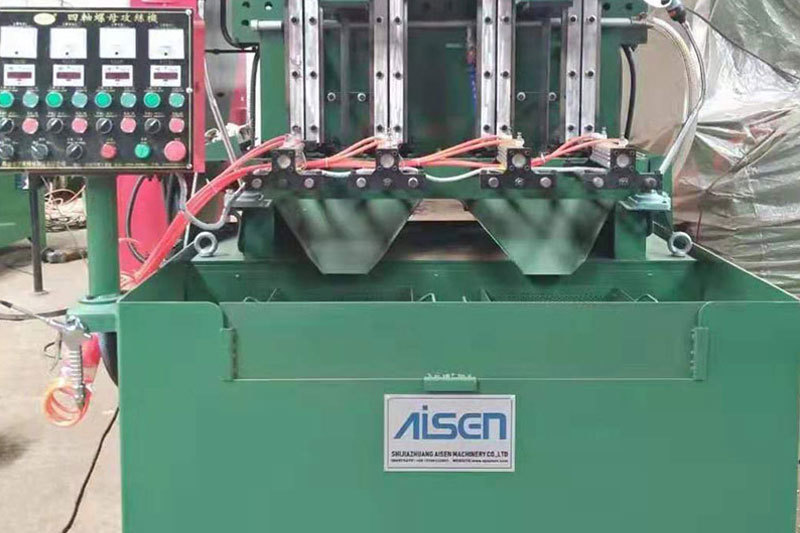
AISEN Four axis nut tapping machine ready for shipment to Russia
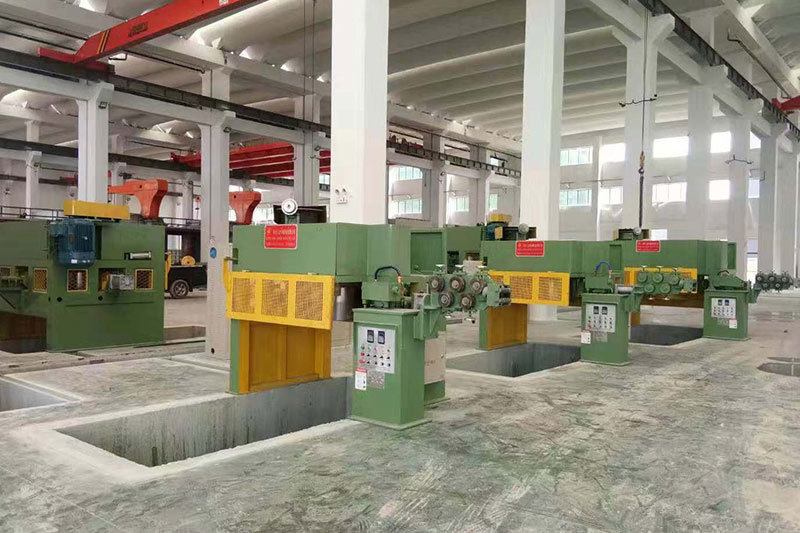
AISEN machinery inverted wire drawing machine
MESSAGES
We will contact you within one working day. Please pay attention to your email.
Qucik Link
Contact
Phone: +86-15100123091
E-mail: info@sjzaisen.com
Address: No.41 Zhaiying South Street, Yuhua District, Shijiazhuang City, Hebei Province China