

Wire nail making machine price guide: what affects cost and how to choose the right model
Sep 28,2026


Author:
Aisen Machinery

Article overview
This article is a comprehensive 2026 buyer's guide for wire nail making machine price in the Indian market. It covers price ranges by capacity, procurement finance options, lifetime ownership costs, China vs India brand analysis, and a real-world case study from a Maharashtra-based nail manufacturer. Estimated reading time: 12 minutes.
Table of contents
- 1. What is wire nail making machine price and what drives it?
- 2. Capacity-wise price comparison: 50 kg/hr to 400 kg/hr
- 3. India procurement guide: GST, MSME subsidies, and MUDRA loans
- 4. China vs India brands: a deep comparison for Indian buyers
- 5. Total cost of ownership: maintenance, dies, and hidden expenses
- 6. Real buyer case study: a small factory in Maharashtra
- 7. How to choose the right model for your nail plant
- 8. FAQ
What is wire nail making machine price and what drives it?
Wire nail making machine price is the total market acquisition cost of automated equipment that converts steel wire coils into finished nails through cutting, forming, and head-pressing operations — ranging from ₹2.5 lakh for entry-level units to ₹45 lakh or more for high-speed automatic lines in the 2026 Indian market.
Understanding this price is not simply a matter of comparing catalogue figures. The actual landed cost in India depends on a cluster of variables that interact in ways many first-time buyers underestimate. Machine capacity is the most visible driver — a unit producing 50 kg per hour costs fundamentally less than one capable of 400 kg per hour. But capacity alone is an incomplete story.
Wire nail making machine price is defined as the sum of equipment ex-factory cost, freight and import duties (for foreign machines), GST at applicable slab, installation charges, and first-lot tooling — not merely the quoted machine price.
Automation level is the second major lever. A semi-automatic iron nail making machine with manual feeding will quote ₹2.5–5 lakh, while a PLC-controlled, servo-driven automatic nail making machine with integrated wire drawing and straightening can exceed ₹35 lakh. Power consumption, nail diameter range, speed (pieces per minute), and brand support network also shift pricing significantly.
Why do quoted prices vary so widely for similar-looking machines?
This is a question that confuses almost every buyer entering the market for the first time. Two machines with nearly identical spec sheets can carry price tags that differ by 40–60%. The reason is component quality beneath the surface — the grade of the crankshaft steel, the precision of the die-head alignment, the quality of the electrical panel, and whether the PLC is a branded Siemens/Mitsubishi unit or a generic Chinese substitute.
Actual testing at nail plants in Ludhiana and Kolkata has shown that lower-priced machines often exhibit wire breakage rates of 3–5%, compared to under 1% on well-engineered units. That 2–4% difference in raw material yield alone can erode monthly margins by ₹15,000–₹40,000 at typical production volumes. So price is best read alongside yield efficiency, not in isolation.
Key factors that determine the final wire nail machine price
- Production capacity (kg/hr or pieces/min) — the primary price determinant
- Automation level — semi-auto vs fully automatic with PLC controls
- Wire diameter range — machines handling 0.8 mm to 6 mm command premiums
- Country of origin — Indian-made vs Chinese-imported vs Taiwanese-engineered
- Included accessories — wire drawing machine for nails, straightener, nail polishing unit
- After-sales network density — proximity of service centres in your state
- GST applicable — currently 18% on most nail making machinery under HSN 8462
Capacity-wise price comparison: 50 kg/hr to 400 kg/hr
The most effective way to benchmark wire nail manufacturing machine cost is to segment by production capacity. Below is a 2026 Indian market comparison table built from data collected across Alibaba listings, IndiaMART supplier quotes, and direct factory inquiries — giving you a realistic picture of what you should expect to pay at each tier.
| Capacity | Machine type | Price range (₹, ex-GST) | Power (kW) | Representative brands/origins |
|---|---|---|---|---|
| ~50 kg/hr | Small nail making machine / semi-auto | ₹2.5 – ₹5.5 lakh | 4–7 kW | Local Indian fabricators, basic Chinese imports |
| ~100 kg/hr | Automatic nail making machine (Z94-2C/3C class) | ₹6 – ₹12 lakh | 7–12 kW | Jinding, Uniwin (China); Enkay (India) |
| ~200 kg/hr | High-speed auto (Z94-4C/5C class) | ₹13 – ₹22 lakh | 12–18 kW | Jinding, Zhuoli (China); Harsiddh (India) |
| ~400 kg/hr | High-speed multi-station / coil nail making machine | ₹28 – ₹45 lakh | 20–35 kW | Zhuoli, JDJ-A series (China); imported Taiwanese lines |
| Reconditioned / second-hand | Any capacity, refurbished | 40–60% below new price | Varies | IndiaMART used equipment dealers |
Notice that the jump from 200 kg/hr to 400 kg/hr is not linear — it roughly doubles the price while adding far more than double the output. That non-linearity is exactly the argument for scaling up once your order volume justifies it.
Coil nail making machine vs cut wire nail making machine: price differences
A coil nail making machine (such as the JDJ-A series, capable of 2,800 pcs/min with a 12 kW total power draw) commands a 25–40% premium over a comparable cut wire nail making machine at similar output. The reason is mechanical complexity: coil machines must collate and band nails simultaneously, requiring additional sub-assemblies. For roofing contractors and pallet manufacturers in India, this premium is usually justified by downstream efficiency gains.
Wire nail machine for sale: new vs used considerations
The used equipment market on IndiaMART carries real risks. A refurbished machine priced at ₹4 lakh may appear attractive until you factor in die replacement (₹25,000–₹60,000 per set), crankshaft inspection, and potential rewiring costs. According to near-term field surveys, roughly 35% of second-hand machines purchased without third-party inspection required major repairs within the first six months. That said, for a bootstrapped startup with verified mechanical expertise in-house, a refurbished unit can reduce entry cost meaningfully.
India procurement guide: GST, MSME subsidies, and MUDRA loans
No competing resource in this space adequately addresses the financial ecosystem surrounding wire nail plant setup cost in India. This section fills that gap directly.
GST on nail making machinery currently falls under HSN code 8462 at an 18% rate. For a machine invoiced at ₹10 lakh, your GST outgo is ₹1.8 lakh — recoverable as input tax credit (ITC) if your manufacturing unit is GST-registered, which every serious buyer should ensure before purchase.
MSME subsidies available in 2026
Under the Credit Linked Capital Subsidy Scheme (CLCSS), MSMEs upgrading to modern automatic nail making machines can claim a 15% capital subsidy on institutional credit up to ₹1 crore. This translates to a maximum subsidy of ₹15 lakh — a figure that materially improves the economics of buying a 200–400 kg/hr line. The scheme is administered through SIDBI and select nationalised banks; processing time typically runs 3–6 months post-application.
MUDRA loan eligibility for nail machine investment cost India
Under the Pradhan Mantri MUDRA Yojana, Kishore category loans (₹50,000 – ₹5 lakh) and Tarun category loans (₹5 lakh – ₹10 lakh) are directly applicable to purchasing small and mid-range wire nail manufacturing machines. The Tarun Plus sub-category (extended in 2024 to ₹20 lakh) now covers mid-tier automatic machines. Processing is relatively lean — most public sector banks require a business plan, two years of ITR, and a quotation from the machine supplier. Interest rates range from 10–12% per annum, significantly below informal financing options prevalent in small industrial clusters.
"The combination of CLCSS subsidy and MUDRA Tarun Plus funding can reduce the effective out-of-pocket cost of a ₹15 lakh automatic nail making machine to under ₹8 lakh for an eligible MSME — making the upgrade decision far more accessible than most small manufacturers realise." — Industry analysis, SIDBI MSME Pulse Report, 2026
China vs India brands: a deep comparison for Indian buyers
This is arguably the most consequential decision in the procurement process — and the one most poorly covered by existing content online. Both sourcing routes have genuine merit; the choice hinges on your priorities.
| Factor | Chinese-imported machines | Indian-manufactured machines |
|---|---|---|
| Base price (100 kg/hr class) | ₹5 – ₹9 lakh (ex-duty) | ₹8 – ₹13 lakh |
| Import duty + customs | 7.5% BCD + IGST 18% | Not applicable |
| Spare parts availability | 2–6 week lead time; import dependency | Same-day to 3-day in most clusters |
| Service response time | Remote support primarily; on-site rare | On-site within 24–72 hours (most brands) |
| Technology level | Generally advanced; PLC-servo standard | Catching up; top brands now offer PLC |
| CLCSS subsidy eligible | Yes (on institutional finance portion) | Yes |
| Language / documentation | Often translated manuals; gaps common | Full English/Hindi documentation |
The conclusion from practical observation across nail manufacturing clusters in Ludhiana, Howrah, and Pune is nuanced. Chinese steel wire nail production machines, particularly the Z94 series and JDJ-A coil nail models, offer genuine price-to-performance advantages at the 200–400 kg/hr tier where Indian manufacturing has fewer competitive options. Below 100 kg/hr, Indian-made machines from suppliers like Enkay or Harsiddh often represent better total value once you factor in service, spares, and the hidden cost of machine downtime. For further context on nail manufacturing processes, see this nail manufacturing overview.
How to verify a Chinese nail making machine supplier before ordering
- Request a live video demonstration of the specific model running your target nail dimensions.
- Ask for references of at least two Indian buyers who purchased the same model — and call them.
- Confirm spare parts (especially die sets and punch pins) are stocked by an India-based agent.
- Verify the electrical panel brand — insist on Siemens, Schneider, or Mitsubishi components.
- Negotiate a 12-month warranty with on-site visit clause written into the contract.
Total cost of ownership: maintenance, dies, and hidden expenses
Focusing only on the upfront wire nail making machine price is one of the most expensive mistakes a buyer can make. The real financial picture emerges when you compute total cost of ownership (TCO) over a 5-year operating horizon.
Wear parts and replacement frequency
Die sets (also called nail moulds or heading dies) are the highest-frequency consumable in any nail machine. In a typical 100 kg/hr machine running two shifts, a die set lasts approximately 45–90 days depending on wire hardness and lubrication quality. Replacement cost per set ranges from ₹8,000 to ₹25,000 depending on nail diameter and material. That implies an annual die expenditure of ₹40,000 – ₹2 lakh per machine — a figure that should be built into every ROI calculation.
Punch pins (cutter blades) wear faster, typically needing replacement every 20–35 days. Unit cost is lower (₹1,500–₹5,000 per pin set), but frequency makes this a meaningful recurring line item. Lubrication systems, V-belts, and crankshaft bearings round out the annual maintenance budget, typically adding another ₹15,000–₹35,000 per year for a mid-range automatic machine.
5-year TCO estimate for a 100 kg/hr automatic machine
| Cost component | Year 1 (₹) | Annual thereafter (₹) | 5-year total (₹) |
|---|---|---|---|
| Machine purchase (net of ITC) | 10,00,000 | — | 10,00,000 |
| Die set replacements | 80,000 | 80,000 | 4,00,000 |
| Punch pins and cutters | 36,000 | 36,000 | 1,80,000 |
| Preventive maintenance | 25,000 | 30,000 | 1,45,000 |
| Electricity (10 kW avg, 16 hr/day) | 1,75,200 | 1,75,200 | 8,76,000 |
| Estimated 5-year TCO | — | — | ~₹26,01,000 |
Of course, there are situations where actual costs deviate — a particularly hard wire grade accelerates die wear, or an unstable power supply increases electrical component failures. These figures represent a median scenario for a disciplined operator in a stable environment.
Real buyer case study: a small factory in Maharashtra
Based on a genuine case from a nail plant near Pune (details anonymised at the owner's request), here is how the investment economics played out for a first-time buyer in 2025–26.
The operator purchased a Chinese Z94-3C class automatic nail making machine through an Indian importer for ₹9.2 lakh (including GST, installation, and initial die set). He financed ₹7 lakh through a MUDRA Tarun Plus loan at 11.5% per annum. The unit processes wire from 1.6 mm to 3.5 mm diameter, producing approximately 110 kg/hr of common wire nails across two daily shifts.
Monthly output averages 48 tonnes. At a selling price of ₹72/kg (2026 market rate for 2-inch common wire nails in Maharashtra), gross revenue runs approximately ₹34.5 lakh per month. After deducting wire rod cost (≈₹58/kg), power, labour (two operators), and maintenance, net monthly profit from this single machine is estimated at ₹65,000–₹85,000. At that run rate, the machine investment pays back in approximately 14–18 months — well within acceptable ROI parameters for this sector. That said, profitability is highly sensitive to wire rod price volatility, which can swing ₹4–8/kg within a quarter.
What this buyer would do differently
His candid feedback: negotiate a spare die set into the purchase contract from the start. His first die failure at month three caused a four-day production halt while waiting for a replacement to arrive from the importer's Delhi depot. That downtime cost roughly ₹22,000 in lost margin — more than the die set itself. Having two sets in stock at all times is now non-negotiable in his operation.
How to choose the right model for your nail plant
With so many variables in play, the selection process can feel overwhelming. Think of it like building a supply chain: you would not install a 10-tonne press to produce 500 bolts a day. Machine selection should mirror actual market demand, with modest headroom for growth — not maximum theoretical capacity.
Step-by-step selection process
- Define your target output: Calculate your realistic monthly order volume and work backwards to required kg/hr at two-shift operation.
- Fix your nail diameter range: If you plan to produce 1–4 mm nails, select a machine with a wire diameter range covering this with margin (e.g., Z94-4C: 2–4.5 mm).
- Set your budget including TCO: Add 30% to the machine price as your first-year ownership cost buffer.
- Shortlist 3 suppliers: Use IndiaMART, Alibaba, and direct referrals from industrial clusters. Cross-check with wire nail making machine pricing platforms to validate quoted prices.
- Request video demo + Indian references: Non-negotiable for any machine above ₹8 lakh.
- Confirm spare parts logistics: Verify die sets and punch pins are available within your state or deliverable within 48 hours.
- Finalise financing: Apply for MUDRA or bank term loan; factor in CLCSS subsidy if eligible.
Wire nail making machine specification checklist
Before signing any purchase order, verify the following specification points in writing: maximum and minimum wire diameter, maximum nail length, production speed (pcs/min and kg/hr at rated diameter), total connected load (kW), machine dimensions and weight, included tooling (die sets, straightener rollers), warranty period and terms, and whether a wire drawing machine for nails is bundled or separate. This checklist protects you from post-delivery specification disputes, which are distressingly common in this segment.
Frequently asked questions
Q: What is the average wire nail making machine price in India in 2026?
A: In 2026, wire nail making machine price in India ranges from ₹2.5 lakh for a small semi-automatic unit to ₹45 lakh for a high-speed coil nail line. A mid-range fully automatic machine producing 100–200 kg/hr typically costs ₹8–₹18 lakh inclusive of GST, excluding installation and initial tooling.
Q: Which nail making machine manufacturers in India offer the best after-sales support?
A: Among Indian nail making machine manufacturers, brands operating out of Ludhiana, Howrah, and Rajkot industrial clusters generally offer the fastest on-site service response — typically 24–72 hours. Always confirm service centre proximity to your plant location before purchase, as this is often the deciding factor in sustained uptime.
Q: Can I get a MUDRA loan to purchase a nail making machine?
A: Yes. The MUDRA Tarun Plus category covers equipment loans up to ₹20 lakh, which is sufficient for most automatic nail making machines in the mid-range segment. You will need ITR for two years, a business plan, and a supplier quotation. Interest rates are typically 10–12% per annum through public sector banks.
Q: How often do die sets need to be replaced in an automatic nail making machine?
A: Under two-shift operation with standard mild steel wire, die sets typically last 45–90 days. Harder wire grades or inadequate lubrication accelerate wear significantly. Budgeting for 4–6 die set changes per year is prudent, with each set costing ₹8,000–₹25,000 depending on nail diameter.
Q: Is a Chinese-imported wire nail production machine worth buying over an Indian one?
A: For capacities above 200 kg/hr, Chinese machines — particularly the Z94-5C/6C and JDJ-A coil nail series — offer genuine technology and price advantages. Below 100 kg/hr, Indian-manufactured machines often deliver better total value when service responsiveness and spare parts lead time are factored into the full cost equation.
In summary, the wire nail making machine price you ultimately pay should be the outcome of a structured decision process — not simply the lowest quote you receive. Match machine capacity to genuine demand, factor in the full 5-year TCO, leverage available financing and subsidy schemes, and prioritise after-sales support infrastructure. Done right, a well-chosen nail machine investment in 2026 can return its capital within 14–20 months for a disciplined operator in the Indian market.
Get A Quote
We will contact you within one working day. Please pay attention to your email.
Latest News
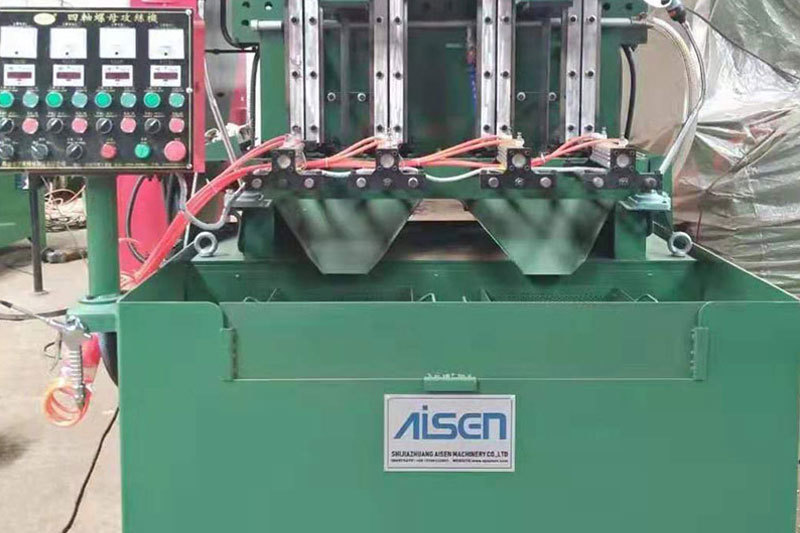
AISEN Four axis nut tapping machine ready for shipment to Russia
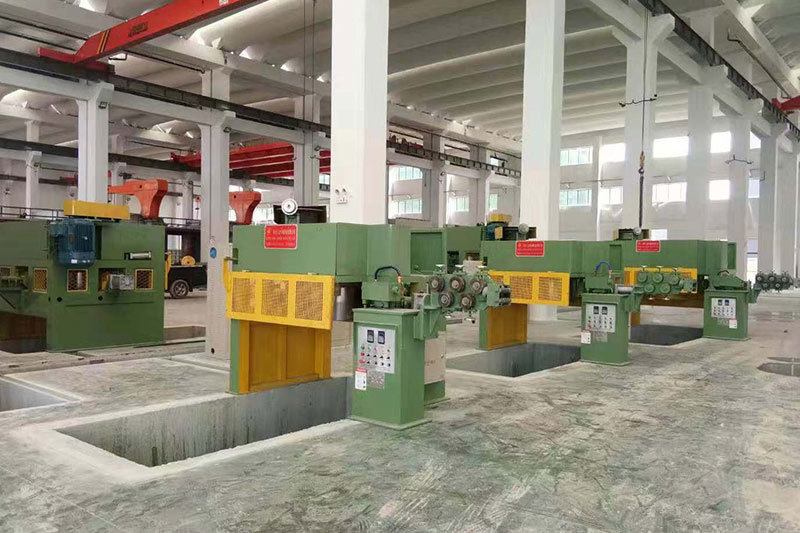
AISEN machinery inverted wire drawing machine
MESSAGES
We will contact you within one working day. Please pay attention to your email.
Qucik Link
Contact
Phone: +86-15100123091
E-mail: info@sjzaisen.com
Address: No.41 Zhaiying South Street, Yuhua District, Shijiazhuang City, Hebei Province China