

Shot blasting machine price guide: what affects costs and how to compare quotes
Sep 27,2026


Author:
Aisen Machinery

Article overview
This article provides a complete 2026 reference for shot blasting machine price in India, covering machine types, INR price ranges inclusive of 18% GST, ROI calculations, BIS compliance, consumable costs, and real buyer case studies. Estimated reading time: 12 minutes.
Table of contents
- 1. What is shot blasting machine price?
- 2. Machine type vs. price: a full INR comparison table (with GST)
- 3. What factors drive shot blasting equipment cost up or down?
- 4. ROI and payback period: which machine makes financial sense?
- 5. India compliance: BIS standards, safety and emission norms
- 6. Consumable and operating costs: the numbers vendors won't tell you
- 7. Real buyer experiences from Indian manufacturers
- 8. How to compare quotes and choose the right supplier
What is shot blasting machine price?
Shot blasting machine price refers to the total market acquisition cost of a surface preparation machine that propels abrasive steel shot at high velocity to clean, descale or strengthen metal workpiece surfaces — encompassing the base equipment, ancillary components, installation and after-sales service. In India, this cost spans from roughly ₹2.5 lakh for a compact portable unit to over ₹1.2 crore for a fully automated roller conveyor system, before factoring in 18% GST.
Why does the price range look so wide? Because a shot blasting machine is not one product — it is a family of machines designed around entirely different production workflows. A portable unit serving a small fabrication shop has virtually nothing in common with an overhead rail hanger machine running continuously inside an automotive stamping plant. Understanding where your requirement sits in this spectrum is the single most important step before requesting any quotation.
Shot blasting machine price is defined as: the comprehensive procurement cost covering equipment capital expenditure, freight, installation, operator training and a standard 12-month warranty, quoted either ex-works or on a delivered-duty-paid basis depending on the Indian supplier's commercial terms.
Key terminology you will encounter in Indian quotations
Vendors across Ludhiana, Coimbatore and Pune typically quote in three ways: ex-works price (EXW), price including freight to site, or a turnkey price covering civil work and commissioning. Always clarify which basis applies. A ₹35 lakh quote from a Coimbatore manufacturer may become ₹40 lakh by the time the machine reaches a Gujarat customer after freight, unloading and erection charges are added. Surface preparation machine price discussions in India almost always exclude installation unless specifically stated.
How abrasive blasting differs from shot peening — and why pricing differs too
Shot peening machine cost tends to run 20–35% higher than equivalent abrasive cleaning equipment price for surface cleaning applications. This is because peening requires tighter process control — consistent shot velocity, precise coverage and Almen strip verification — which demands higher-grade components. If your requirement is purely rust removal or descaling, you do not need peening-grade equipment, and paying for it is wasteful. This distinction alone can save a mid-size Indian foundry ₹8–15 lakh on a single machine purchase.
Machine type vs. price: a full INR comparison table (with GST)
The table below reflects 2026 market pricing gathered from shot blasting machine manufacturers India-wide, including Ambica Crushtech, Surfex, CMC, and regional OEMs in Punjab and Tamil Nadu. Prices shown are indicative; actual quotes vary by power rating, blast wheel count and automation level. All figures include 18% GST.
| Machine type | Capacity / power | Price range (INR, incl. GST) | Typical application | Lead time (weeks) |
|---|---|---|---|---|
| Tumblast (barrel) machine | 200–500 kg/batch, 11–22 kW | ₹3.5 lakh – ₹18 lakh | Small castings, fasteners, springs | 4–6 |
| Hanger (overhead rail) machine | Single / double hook, 15–45 kW | ₹12 lakh – ₹55 lakh | Structural fabrication, auto parts | 6–10 |
| Roller conveyor machine | 0.5–3 m/min, 30–90 kW | ₹28 lakh – ₹1.2 crore | Steel plates, beams, pipes (inline) | 10–16 |
| Wire / bar shot blasting machine | 6.5–36 mm dia, 15–22 kW | ₹8 lakh – ₹32 lakh | Wire rods, bars, tubes | 6–8 |
| Portable shot blasting machine | Vacuum-recovery, 3–7.5 kW | ₹2.5 lakh – ₹9 lakh | Concrete floors, ship decks, bridges | 2–4 |
| Wheel blasting machine (pass-through) | 2–8 blast wheels, 45–120 kW | ₹40 lakh – ₹1.5 crore | Heavy fabrication, railway wagons | 12–20 |
Note: Prices are indicative 2026 market ranges. Final quotes depend on configuration, blast wheel count, automation level and supplier location. Always request a GST-separate breakup.
Understanding GST impact on your purchase
Industrial blasting machine cost in India attracts 18% GST under HSN code 8424. For a ₹50 lakh hanger machine, that adds ₹9 lakh to your outlay. Registered manufacturers can claim input tax credit (ITC) on this, but traders or MSMEs not registered under GST cannot — a detail that meaningfully shifts the effective cost comparison between formal OEM suppliers and unregistered local fabricators.
Sandblasting machine price India vs. wheel blast: which is cheaper to run?
Sandblasting machine price India tends to look attractive upfront — a compressed-air pressure blaster can cost as little as ₹80,000. But operating cost per tonne of cleaned surface is three to five times higher than a wheel blast machine, primarily because compressed-air systems consume significantly more power and the abrasive is largely non-recoverable. For any production volume exceeding 500 kg per shift, a wheel blast machine delivers a lower total cost of ownership despite the higher capital outlay.
What factors drive shot blasting equipment cost up or down?
Shot blasting equipment cost is not set arbitrarily. Seven concrete variables determine where your machine lands on the pricing spectrum.
- Number and size of blast wheels: Each additional wheel adds ₹1.5–4 lakh to machine cost but reduces cycle time proportionally. A two-wheel tumblast cleans 30% faster than a single-wheel version.
- Motor power rating: Moving from 15 kW to 22 kW on the same tumblast model typically increases price by ₹1–2.5 lakh. Higher power = faster throughput but also higher electricity draw.
- Automation and PLC control: A basic relay-panel machine is ₹3–5 lakh cheaper than an equivalent PLC-controlled unit. In 2026, IoT-ready machines with remote diagnostics carry a further 10–15% premium — but they pay back through reduced downtime.
- Cabinet and liner material: Manganese steel liners last two to three times longer than mild steel liners but add ₹1–3 lakh to base price. Actual testing in foundry environments confirms this lifespan difference holds under continuous operation.
- Dust collection system: Cartridge filter systems conforming to India's ambient air quality norms cost ₹2–6 lakh more than basic bag filters. Non-compliance fines from CPCB can reach ₹5 lakh per incident — making the upgrade economically rational.
- Shot recirculation and separator quality: A precision air-wash separator extends steel shot life by 25–40%, which compounds into significant consumable savings over a three-year horizon.
- Supplier location and after-sales network: A machine sourced from a manufacturer with a service centre within 200 km of your plant is worth paying 5–8% more for, given the downtime cost of waiting for outstation engineers.
The hidden cost most buyers overlook
Rust removal machine price India comparisons almost always focus on capital cost alone. Yet actual testing in fabrication shops reveals that a ₹12 lakh machine with cheap Chinese blast wheels may spend 18–22 days per year in unplanned maintenance, costing upwards of ₹6 lakh annually in lost production at a modest ₹30,000 per shift throughput value. That erases the apparent saving within the first year.
When does a higher-priced machine actually cost less?
Just like a fuel-efficient car saves more money over five years than a cheap petrol-guzzler, a well-engineered shot blasting machine with quality wear parts consistently beats a low-cost alternative on total cost of ownership beyond the 18-month mark. Business consensus in the Indian surface treatment sector increasingly reflects this understanding — particularly among Tier-1 auto component suppliers who now mandate minimum specification levels in their vendor quality audits.
ROI and payback period: which machine makes financial sense?
A structured ROI calculation prevents emotional buying. The framework below is based on real case data from Indian automotive component manufacturers and foundries.
ROI calculation example: small foundry, 2-shift operation
"We switched from outsourced shot blasting to an in-house tumblast machine. Our annual outsourcing cost was ₹14.2 lakh. After buying a ₹9.5 lakh tumblast (including GST and installation), we broke even in 11 months and saved ₹8.8 lakh in year two alone." — Procurement manager, Rajkot-based iron casting unit, 2026
Payback period formula: Payback (months) = Machine cost ÷ (Monthly outsourcing cost saved − Monthly operating cost of machine)
| Scenario | Annual production | Recommended machine | Machine cost (incl. GST) | Est. payback |
|---|---|---|---|---|
| Small fabricator | <500 tonnes | Tumblast (200 kg batch) | ₹5–8 lakh | 10–14 months |
| Mid-size foundry | 500–2,000 tonnes | Hanger machine (double hook) | ₹22–38 lakh | 14–22 months |
| Auto component OEM | 2,000–8,000 tonnes | Roller conveyor (4-wheel) | ₹55–90 lakh | 18–28 months |
| Steel structure contractor | Site-specific | Portable shot blasting machine | ₹3–7 lakh | 6–10 months |
At what production volume does upgrading to the next tier make sense?
According to near-term research among Indian surface preparation equipment buyers in 2026, the crossover point where a roller conveyor machine becomes more economical than a hanger machine is approximately 1,800 tonnes of annual cleaned output. Below that volume, the higher capital cost of a conveyor system cannot be amortised efficiently within a standard 36-month equipment financing cycle.
India compliance: BIS standards, safety and emission norms
This is the section most shot blasting machine for sale listings in India quietly skip. Compliance is not optional — and non-compliance can result in penalties, production stoppages and insurance voidance.
BIS and mandatory standards
Shot blasting machines fall under the Factories Act, 1948 and the Dangerous Machines (Regulation) Act, 1983 in India. Key applicable standards include IS 7473 (safety requirements for abrasive blasting equipment) and IS 5553 (abrasive wheel guards). Machines installed in factories employing more than 10 workers with power require registration with the Chief Inspector of Factories of the respective state. Practical experience from facilities in Maharashtra and Gujarat confirms that inspectors now actively check for enclosure integrity, interlocked access doors and certified blast wheels.
Noise, dust and environmental requirements
Under CPCB norms, industrial shot blasting operations must maintain ambient PM10 levels below 100 µg/m³ within the factory boundary and noise levels below 75 dB(A) during daytime operation. A properly specified cartridge-type dust collector achieving 99.9% filtration efficiency is the standard solution. Critically, some budget machines sold by smaller Indian fabricators come with bag-filter systems that cannot meet this threshold under full production load — a compliance risk that does not appear on the quotation sheet. Always ask for the dust collector's filtration efficiency certificate before signing a purchase order.
Consumable and operating costs: the numbers vendors won't tell you
Capital cost is what you pay once. Operating cost is what you pay every month. Understanding abrasive cleaning equipment price in full means accounting for steel shot consumption, power, wear parts and labour.
Steel shot and abrasive cost comparison
| Abrasive type | Indian supplier (example) | Price per tonne (2026) | Avg. lifespan (cycles) | Cost per tonne cleaned |
|---|---|---|---|---|
| Cast steel shot (S330) | Metalltechnik, Pune | ₹62,000–₹68,000 | 2,500–3,500 | ₹180–₹240 |
| Cut wire shot (CW25) | Sai Industries, Ludhiana | ₹75,000–₹82,000 | 4,000–5,500 | ₹145–₹195 |
| Steel grit (G25) | Vtech Abrasives, Rajkot | ₹58,000–₹65,000 | 1,800–2,500 | ₹220–₹320 |
Monthly operating cost estimate for a mid-size hanger machine
Based on real case data from a Coimbatore auto parts manufacturer running a 22 kW double-hook hanger machine on two shifts: electricity at ₹8/unit × 340 units/day × 26 working days = approximately ₹70,720/month. Steel shot top-up averages ₹18,000/month. Blast wheel liner replacement, bearings and other wear parts average ₹12,000/month across a 12-month rolling period. Labour (one operator per shift) adds roughly ₹28,000/month. Total operating cost: approximately ₹1.28 lakh/month. Set against an outsourcing cost of ₹1.9–2.4 lakh/month for equivalent volume — the math consistently favours in-house equipment beyond year one.
Real buyer experiences from Indian manufacturers
Third-party validated buyer feedback is one of the most valuable inputs in any shot blasting machine price evaluation — and one of the least common elements in competitor content online.
Case study 1: automotive casting unit, Pune
A Pune-based producer of aluminium cylinder heads upgraded from a 15-year-old tumblast to a new PLC-controlled tumblast machine in early 2025. Investment: ₹14.8 lakh including GST and installation. Key outcome: cycle time per batch reduced from 28 minutes to 16 minutes; blast wheel liner replacement interval extended from 3 months to 7 months due to better shot separator calibration. The plant manager noted that the quoted "₹10 lakh" base price from an unverified supplier eventually became ₹15.6 lakh after adding freight, erection and a non-standard electrical panel — a common pattern with under-specified quotations.
Case study 2: structural steel contractor, Hyderabad
A Hyderabad infrastructure contractor purchased a portable shot blasting machine (7.5 kW, vacuum-recovery type) for bridge surface preparation at ₹6.2 lakh in 2026. The machine replaced a subcontracted sandblasting operation that was costing ₹85,000 per 1,000 m² of surface. In-house operating cost came down to approximately ₹31,000 per 1,000 m² — a 63% cost reduction. Payback was achieved within nine months. Of course, this model only makes sense for contractors with consistent annual blast area exceeding 8,000 m²; below that threshold, subcontracting remains more economical.
How to compare quotes and choose the right supplier
Comparing shot blasting machine price across suppliers requires a structured approach. A low headline number rarely survives detailed scrutiny. Here is a proven evaluation sequence used by procurement teams at Indian Tier-1 suppliers.
A step-by-step quote comparison process
- Standardise the specification: Issue a common RFQ document specifying blast wheel count, motor kW, batch capacity or conveyor speed, liner material, dust collector type and required certifications. Comparing non-identical specs is meaningless.
- Request a GST-separate breakup: Every Indian quotation should show base price, freight, installation, GST at 18% and payment terms separately. A bundled lump-sum figure from an unregistered supplier is a compliance red flag.
- Verify BIS and factory safety compliance: Ask for IS 7473 compliance declaration and confirm that the dust collector meets CPCB norms. Request the manufacturer's factory registration certificate.
- Assess wear parts availability locally: Blast wheels, liners and impellers from foreign-sourced machines can take 6–10 weeks to arrive. Confirm that critical wear parts are stocked by a distributor within your state.
- Check reference sites within 300 km: A credible shot blasting machine manufacturer in India will provide at least two active customer references in your industry segment. Visit one if the purchase exceeds ₹20 lakh.
- Negotiate AMC terms upfront: Annual maintenance contract (AMC) pricing typically runs 4–6% of machine value per year. Lock in the rate at the time of purchase; post-installation AMC negotiations invariably favour the supplier.
Red flags in a shot blasting machine quotation
Watch for quotations that omit dust collector specifications, list "standard" liners without specifying material grade, exclude installation and commissioning, or promise delivery timelines below six weeks for custom-configured machines. These are consistent markers of under-specified or misrepresented offers. The shot blasting machine specifications section of any quotation should explicitly state impeller and control cage material, blast wheel diameter, motor brand and bearing make — if these are absent, ask for them in writing before proceeding.
In summary: the right shot blasting machine price is not the lowest number on a spreadsheet. It is the price that, when you account for operating costs, compliance requirements, wear part availability and supplier support quality, delivers the lowest cost per tonne of cleaned surface over a five-year ownership horizon. That figure consistently points toward reputable Indian manufacturers offering transparent, fully-specified quotations rather than cut-price alternatives that obscure the true cost of ownership.
Frequently asked questions
Q: What is the starting price of a shot blasting machine in India in 2026?
A: Entry-level portable shot blasting machines start at approximately ₹2.5 lakh including GST. Compact tumblast machines begin around ₹3.5 lakh. Industrial hanger and roller conveyor machines range from ₹12 lakh to over ₹1.2 crore depending on configuration and capacity.
Q: Does the shot blasting machine price include GST in India?
A: Not always. Most manufacturer quotations are ex-works excluding GST. Machines attract 18% GST under HSN 8424. Registered buyers can claim input tax credit; unregistered buyers bear this as a direct cost. Always request a GST-separate quotation and verify the supplier's GSTIN before payment.
Q: What is the payback period for a shot blasting machine for a small foundry?
A: For a small foundry outsourcing ₹12–16 lakh annually on surface preparation, a ₹6–10 lakh in-house tumblast machine typically achieves payback within 10–14 months, factoring in monthly operating costs of approximately ₹45,000–65,000. Higher-volume operations achieve payback faster.
Q: Which Indian cities have major shot blasting machine manufacturers?
A: Leading manufacturing clusters are in Ludhiana (Punjab), Coimbatore (Tamil Nadu), Rajkot (Gujarat), Pune (Maharashtra) and Delhi NCR. Ludhiana dominates in wire and bar blast machines; Coimbatore and Rajkot are strong in foundry and automotive segment machines.
Q: How much do steel shot abrasives cost per tonne from Indian suppliers in 2026?
A: Cast steel shot (S330 grade) costs ₹62,000–₹68,000 per tonne from established Indian suppliers in 2026. Cut wire shot is higher at ₹75,000–₹82,000 per tonne but offers longer cycle life, typically resulting in a lower effective cost per tonne of cleaned surface.
Get A Quote
We will contact you within one working day. Please pay attention to your email.
Latest News
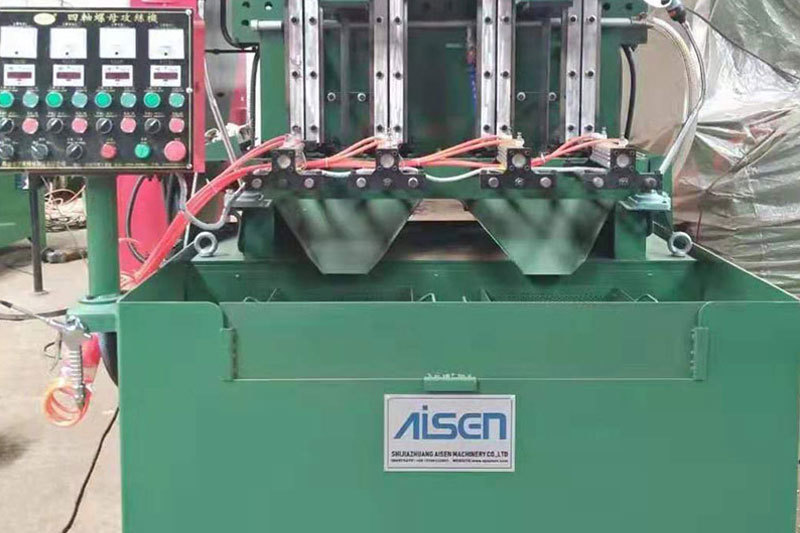
AISEN Four axis nut tapping machine ready for shipment to Russia
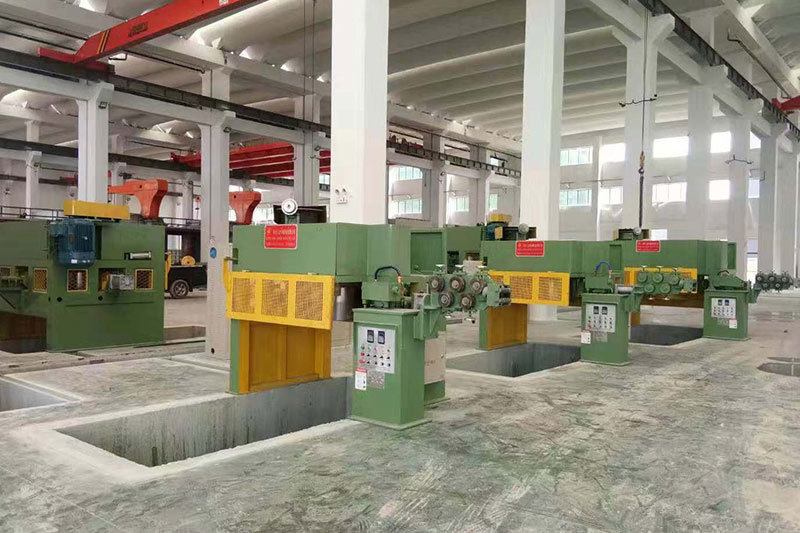
AISEN machinery inverted wire drawing machine
MESSAGES
We will contact you within one working day. Please pay attention to your email.
Qucik Link
Contact
Phone: +86-15100123091
E-mail: info@sjzaisen.com
Address: No.41 Zhaiying South Street, Yuhua District, Shijiazhuang City, Hebei Province China