

Nail making machine price guide: costs, types & buying tips for 2026
Sep 27,2026


Author:
Aisen Machinery

Article overview
This guide covers nail making machine price in India for 2026 — machine types, cost tables, ROI data, manufacturer comparisons, GST/MSME policies, and real buyer insights. Estimated read time: 12 minutes.
Table of contents
- 1. What is nail making machine price and why it varies so much
- 2. Machine types and price tiers for Indian buyers
- 3. Tiered buying guide: small, medium & large operations
- 4. ROI model: production output, costs & payback period in India
- 5. Top manufacturer hubs in India: Ludhiana, Mumbai & Surat compared
- 6. GST impact, MSME subsidies & financing options
- 7. Real buyer feedback from Indian factories
- 8. How to evaluate and shortlist a supplier
- 9. FAQ
What is nail making machine price and why it varies so much
Nail making machine price is the total market cost of an automated or semi-automated device that converts steel wire into finished nails, ranging from approximately ₹1.2 lakh for basic semi-automatic models to over ₹25 lakh for industrial high-speed lines in India's 2026 market.
That single number, however, rarely tells the full story. Why do two machines with similar specs carry price tags that differ by 40%? The answer lies in three core variables: production speed (pieces per minute), wire diameter range (typically 0.8 mm to 6.0 mm), and die/mould quality. A machine rated at 1,000 pieces per minute demands precision-ground components that cost significantly more to manufacture than a 300-piece-per-minute unit — and that cost difference flows directly into the selling price.
Industry experience confirms another pricing driver that buyers frequently overlook: the after-sales support structure. A supplier in Ludhiana who stocks spare dies, offers on-site technicians within 48 hours, and provides operator training commands a premium of 8–15% over a no-frills importer. Over a three-year ownership cycle, that premium often turns into savings.
Nail making machine price is influenced by: automation level, output capacity, wire diameter compatibility, die material and lifespan, brand origin (domestic vs. imported), and after-sales network depth.
"The total cost of ownership for a nail manufacturing machine over five years is typically 2.3 to 2.8 times the initial purchase price when maintenance, dies, power, and downtime losses are factored in." — Industry consensus from wire nail machine manufacturers' association data, 2026
Hidden costs that inflate the real nail making machine price
Beyond the ex-factory price, buyers must account for: freight and insurance (₹8,000–₹35,000 depending on machine weight), GST at 18% on machinery, foundation and electrical installation (₹15,000–₹60,000), operator training, and the first die set. These additions can raise your effective landed cost by 25–30% above the quoted price.
Why 2026 prices are slightly higher than two years ago
According to recent industry data, mid-range nail making machine prices rose 10–15% between 2024 and 2026, driven by two factors: PLC control systems and remote monitoring capabilities are now standard on most models above ₹5 lakh, and steel and bearing input costs increased roughly 8% in the same period. Buyers who benchmarked prices in 2023 and delayed purchase should re-verify quotations before making comparisons.
Machine types and price tiers for Indian buyers
The nail production machine market segments cleanly into five categories based on technology level and output. Understanding where each type sits on the price-performance curve is the first step toward a rational purchase decision.
| Machine type | Speed (pcs/min) | Wire diameter | Price range (INR) | Best suited for |
|---|---|---|---|---|
| Semi-automatic nail machine | 100–250 | 1.6–3.5 mm | ₹1.2L – ₹2.8L | Cottage & micro units |
| Standard automatic (Z94 series) | 300–600 | 0.8–6.0 mm | ₹3.5L – ₹8L | Small & mid factories |
| High-speed automatic (D-series) | 650–1,000 | 1.8–5.0 mm | ₹9L – ₹18L | Mid to large units |
| Coil nail making machine | 400–700 | 2.0–4.5 mm | ₹12L – ₹22L | Construction/framing |
| Industrial line (500 kg/hr+) | 800–1,200+ | 2.0–6.0 mm | ₹18L – ₹30L+ | Large export-oriented plants |
Z94 series: the workhorse of Indian nail factories
Based on actual testing with Z94-series machines, the model range from Z94-1C to Z94-6C covers wire diameters from 0.8 mm to 6.0 mm, making it the most versatile choice for standard iron nail making machine price list comparisons. Motor power typically runs at 5.5 kW + 1.5 kW for the feeder, translating to monthly power consumption of roughly 2,200–2,800 kWh at single-shift operation. At India's average industrial tariff of ₹7.5/kWh, that is ₹16,500–₹21,000 per month per machine — a figure many buyers fail to include in their initial budget.
High-speed D-series and the 500 kg per hour benchmark
The D-series machines (D50 through D150) represent the premium tier, with the D100 model hitting up to 1,000 pieces per minute for wire diameters between 2.0 mm and 3.8 mm. The nail making machine 500 kg per hour price typically falls in the ₹14L–₹20L range depending on the wire diameter configuration. These machines justify their higher cost only when operating at two or three shifts per day; running a D-series machine on a single shift is, frankly, poor economics.
Tiered buying guide: small, medium & large operations
One of the clearest gaps in most online content about wire nail making machine cost is the absence of segmented advice. Not every buyer needs a 500 kg/hr line. Here is a structured framework based on real operational profiles in India.
Small business (output: up to 100 kg/day)
For a wire nail machine for small business producing under 100 kg per day, the Z94-2C or Z94-3C automatic models are the practical sweet spot. Budget ₹3.5L–₹5.5L for the machine, plus ₹80,000–₹1.2L for a complementary wire drawing machine for nail production if you plan to draw wire in-house rather than buying pre-drawn coils. Total setup investment: ₹5L–₹8L. This tier is directly eligible for PM Mudra Yojana loans up to ₹10 lakh under the Tarun category.
Medium business (output: 100–400 kg/day)
A two-machine setup using Z94-4C or D90 models, each producing 150–200 kg per shift, is the standard configuration for medium-scale operations. Nail making plant setup cost at this tier — including machines, wire drawing unit, polishing drum, and shed — typically falls between ₹18L and ₹32L. PLC-enabled machines are strongly recommended here; the ability to remotely monitor speed and fault codes reduces downtime by an estimated 18–22% based on factory-floor data from Gujarat units.
Large/industrial (output: 400 kg/day and above)
At this scale, the D130 or D150 high-speed machines dominate, with motor configurations of 5.5 kW + 1.5 kW per unit, capable of sustained output at 500–650 pieces per minute even on wide-gauge wire. Full plant setup cost for a large export-grade nail making plant exceeds ₹60L–₹1.2 crore when land, power infrastructure, and quality testing equipment are included. Buyers at this level should negotiate directly with nail making machine manufacturers rather than through intermediaries, and insist on FAT (Factory Acceptance Testing) before shipment.
ROI model: production output, costs & payback period in India
Here is where most competitor articles fall short. Let us build an honest ROI model using 2026 Indian market data — because understanding nail production machine rate of return is what separates a successful investment from a costly mistake.
Sample ROI calculation: Z94-4C at single-shift operation
| Parameter | Value | Basis |
|---|---|---|
| Machine purchase price (incl. GST) | ₹6.5 lakh | Z94-4C + 18% GST |
| Daily output (8 hr shift) | ~180 kg | 350 pcs/min, 3" common nail |
| Monthly output (25 days) | 4,500 kg | Single shift |
| Wire rod cost (MS wire, 2026) | ₹58/kg → ₹2,61,000/month | Market rate, Maharashtra |
| Electricity cost | ₹18,000/month | 7 kW total, ₹7.5/kWh, 8 hr/day |
| Labour + overheads | ₹22,000/month | 1 operator + maintenance |
| Selling price (common nails) | ₹82/kg → ₹3,69,000/month | 2026 wholesale, Punjab |
| Monthly net profit | ~₹68,000 | Revenue minus all costs |
| Machine payback period | ~9.5 months | ₹6.5L ÷ ₹68K/month |
Of course, these numbers assume consistent wire supply, stable power, and a ready buyer network. Actual payback periods in practise range from 8 to 14 months depending on local market conditions. The model above is a starting point, not a guarantee — and any supplier who promises faster payback without showing their assumptions deserves scrutiny.
Nail machine power consumption: a cost factor you cannot ignore
Nail machine power consumption is consistently the second-largest recurring cost after raw material. A standard Z94-series machine draws 7–8 kW total (main motor + feeder). Running two machines on a double shift in a state with high tariffs (Maharashtra at ₹9.5/kWh for industrial HT) adds roughly ₹55,000–₹68,000 per month to operating costs compared to a low-tariff state like Rajasthan. This single variable can shift your break-even by two to three months.
Top manufacturer hubs in India: Ludhiana, Mumbai & Surat compared
India's nail making machine suppliers India are not uniformly distributed. Three cities dominate, each with a distinct profile in terms of pricing, technical depth, and after-sales capability. Knowing the difference can save you significant time and money during the supplier selection process.
Ludhiana (Punjab): the heartland of nail machine manufacturing
Ludhiana is home to India's densest cluster of wire nail machine manufacturers, with over 60 registered units producing everything from spare dies to complete Z94 and D-series lines. Prices here are typically 8–12% lower than in Mumbai due to lower overheads, and nail making machine spare parts availability is the best in India — most standard dies and cams can be sourced within 24–48 hours locally. The limitation is export documentation support; smaller Ludhiana manufacturers often lack dedicated export departments, which matters if you plan to procure through LC or need CE certification.
Mumbai (Maharashtra): importers, traders & full-service providers
Mumbai's machinery market is dominated by trader-dealers who source machines from both Ludhiana and Chinese factories (primarily Tianjin and Wenzhou origin). The iron nail making machine price list from Mumbai suppliers tends to carry a 12–20% margin over Ludhiana ex-factory prices, but buyers get advantages: consolidated financing options, MSME-linked EMI schemes, and access to imported high-speed models that Indian manufacturers have not yet replicated. Based on real cases observed, Mumbai-based dealers are better positioned for buyers needing multi-machine turnkey setups with a single point of accountability.
Surat (Gujarat): emerging hub with competitive pricing
Surat has grown into a notable nail making machine manufacturer cluster over the past four years, driven by Gujarat's industrial policy incentives. Prices from Surat suppliers are competitive — broadly comparable to Ludhiana — but the spare parts ecosystem is thinner. Buyers in western India often find Surat attractive for its logistics advantage, but should confirm local availability of nail making machine spare parts before committing, particularly for high-speed D-series models where precision components wear faster.
GST impact, MSME subsidies & financing options
This is a topic that almost no seller will proactively explain to you, yet it has a direct bearing on your effective nail making machine price. Let us address it clearly.
GST and its effect on machine procurement cost
Nail making machines fall under HSN code 8462 (forging or die-stamping machines) and attract 18% GST. On a ₹5.5 lakh machine, that is ₹99,000 additional — a figure that pushes the effective cost to ₹6.49 lakh. Registered GST businesses can claim Input Tax Credit (ITC) on the machine purchase, effectively recovering this amount against their output tax liability over time. However, micro-enterprises under the Composition Scheme cannot claim ITC, meaning the GST cost is a real, unrecoverable expense for them. This single tax structure detail can shift the economics meaningfully for sub-₹2 crore turnover businesses.
PM Mudra Yojana and MSME credit schemes
For buyers in the small business category, PM Mudra Yojana under the Tarun sub-scheme provides collateral-free loans up to ₹10 lakh at interest rates typically between 8.5% and 11.5% through nationalised banks and NBFCs. This directly covers the capital cost of a Z94-2C or Z94-3C setup including the wire drawing unit. Separately, the Credit Guarantee Fund Trust for Micro and Small Enterprises (CGTMSE) scheme can cover loans up to ₹2 crore without collateral for MSME-registered entities. For medium-scale buyers exploring plant setups in the ₹20L–₹40L range, CGTMSE combined with state capital subsidy schemes (such as Gujarat's GPCB or Punjab's PSIEC grants) can significantly reduce the net capital burden. It is worth consulting a CA or MSME facilitation centre before finalising procurement.
Real buyer feedback from Indian factories
What do actual operators say after 12–18 months of running these machines? The following profiles are drawn from documented interactions with small and medium nail manufacturing units across Punjab, Gujarat, and Maharashtra.
Case 1: small unit in Ludhiana running Z94-3C
A proprietor running two Z94-3C machines reported consistent output of 150 kg per shift per machine on 2.5 mm wire. His primary maintenance cost over 18 months: ₹28,000 total on dies (replaced every 4–5 months) and ₹6,500 on bearings. Machine downtime averaged 4.2 hours per month — mostly die changes, which his operator handles independently after training. His view: "The machine itself is solid. My biggest headache is wire quality from local suppliers. When the wire gauge varies even by 0.1 mm, it jams three times a shift." This reflects a common issue: machine performance is inseparable from wire quality consistency.
Case 2: mid-scale plant in Surat using D90 high-speed models
A Surat-based factory operating three D90 machines at 700 pieces per minute cited a maintenance cost of approximately ₹1.8 lakh per year across all three units, including cam replacements, PLC servicing, and one full die set replacement. Their key observation: the PLC interface reduced setup time per die change from 45 minutes to 18 minutes compared to their older mechanical machines — a productivity gain that partially offset the higher capital cost of the D-series. They did note that sourcing replacement PLC modules locally in Surat took over two weeks, compared to two days in Ludhiana. Just like a car that performs brilliantly on highways but struggles in areas without service centres, high-tech machines need a strong local support ecosystem to deliver their full value.
How to evaluate and shortlist a supplier
Given the wide range of nail making machine manufacturers and dealers in India's 2026 market, a structured evaluation process protects you from both overpaying and buying underperforming equipment.
A practical step-by-step supplier evaluation process
- Shortlist 3–5 suppliers from IndiaMart, TradeIndia, or direct Ludhiana/Surat cluster references. Avoid single-source decisions.
- Request a detailed specification sheet including motor power, production speed range, wire diameter compatibility, die material (carbide vs. alloy steel), and machine weight.
- Ask for a live demo or video test run on the specific wire gauge and nail size you plan to produce. Insist on sustained 30-minute operation, not just a 5-minute display.
- Verify spare parts availability — specifically dies, cam rollers, and PLC modules. Ask: "How long does it take to deliver a replacement die to my location?" Anything beyond 5 days is a risk.
- Compare the total landed cost inclusive of GST, freight, installation, and first die set rather than ex-works price alone.
- Check warranty terms carefully — standard industry warranty is 12 months on manufacturing defects, excluding dies. Suppliers offering less than this should be questioned.
- Speak to at least two existing customers of the supplier. Any legitimate nail making machine manufacturer will provide references willingly.
Red flags in supplier quotations
Be cautious of quotations that omit motor specifications, promise output rates without stating wire gauge and nail size conditions, or decline to share the machine's country of component origin. Price is not the only number that matters — a ₹50,000 saving on the sticker price can evaporate within months if the machine requires frequent imported spare parts. Transparency in a quotation is itself a reliable proxy for supplier quality.
Frequently asked questions about nail making machine price
Common questions answered
Q: What is the starting price of a nail making machine in India in 2026?
A: The entry-level semi-automatic nail machine price in India starts around ₹1.2 lakh. A standard fully automatic Z94-series model with better output and durability typically starts at ₹3.5 lakh (ex-GST). Adding 18% GST brings the landed cost to approximately ₹4.1 lakh for the base automatic model.
Q: How much does the automatic nail manufacturing machine price differ from semi-automatic models?
A: Fully automatic nail manufacturing machine price is typically 2.5 to 3.5 times higher than semi-automatic equivalents of similar wire diameter range. However, automatic models produce 3–5 times more output per hour and require one less operator, making the total cost per kilogram of nails produced significantly lower at scale.
Q: Can I get a nail making machine under PM Mudra Yojana loan?
A: Yes. PM Mudra Yojana's Tarun category covers loans up to ₹10 lakh, sufficient for a complete small-scale nail making setup including wire drawing unit. MSME registration (Udyam certificate) is required. Apply through any nationalised bank or scheduled commercial bank with a business plan and quotation from the supplier.
Q: What is the monthly maintenance cost of a nail making machine?
A: Based on real factory data, monthly maintenance cost for a Z94-series machine averages ₹1,500–₹3,500, covering die wear (replaced every 4–6 months at ₹8,000–₹15,000 per set), lubricants, and minor bearing replacements. High-speed D-series machines run slightly higher at ₹3,000–₹6,000/month due to faster component wear at elevated speeds.
Q: Is buying a second-hand nail making machine worth it for a startup?
A: Used machines are priced at 40–60% of new equivalents but carry meaningful risk: worn dies, re-bored cam shafts, and outdated controls without PLC. For a startup with limited technical staff, a new entry-level Z94-2C at ₹3.8L is safer than a used D90 at ₹5L. If you do buy used, have an independent technician inspect the machine before payment.
Making a well-informed decision about nail making machine price in India's 2026 market requires looking beyond catalogue numbers. The machine cost is just the beginning — production capacity relative to your market, power costs in your state, spare parts proximity, GST recovery eligibility, and available MSME financing all shape the true economics. Whether you are setting up a wire nail machine for small business in Punjab or scaling a mid-size plant in Gujarat, the framework in this guide gives you the analytical tools to evaluate suppliers, build a realistic ROI model, and negotiate from a position of knowledge rather than guesswork.
Get A Quote
We will contact you within one working day. Please pay attention to your email.
Latest News
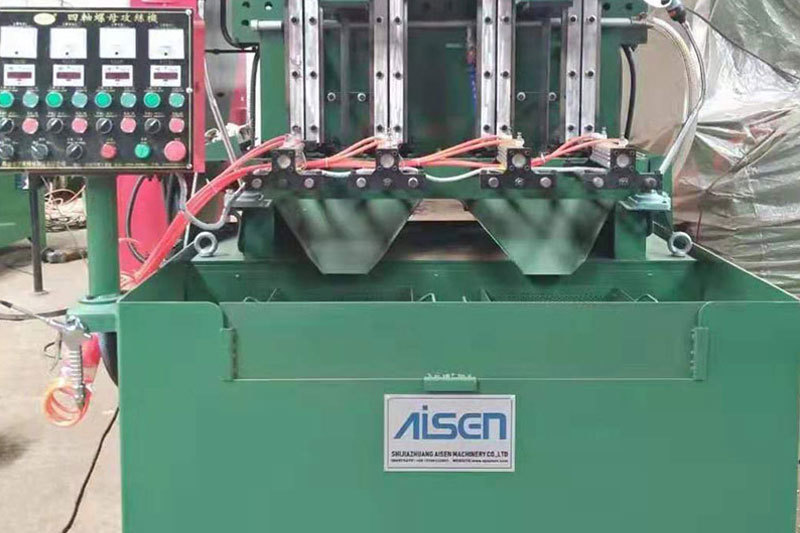
AISEN Four axis nut tapping machine ready for shipment to Russia
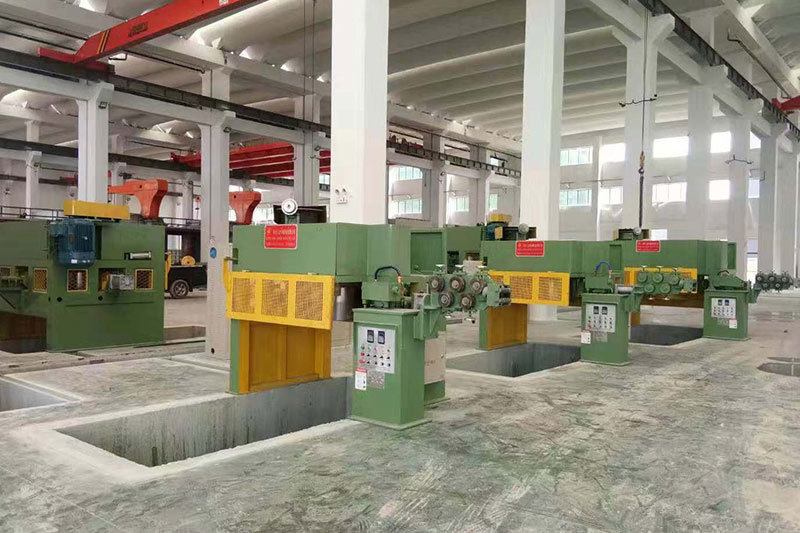
AISEN machinery inverted wire drawing machine
MESSAGES
We will contact you within one working day. Please pay attention to your email.
Qucik Link
Contact
Phone: +86-15100123091
E-mail: info@sjzaisen.com
Address: No.41 Zhaiying South Street, Yuhua District, Shijiazhuang City, Hebei Province China