

Vibratory bowl nut tapper: how to choose and use one effectively
Sep 16,2026


Author:
Aisen Machinery

Article overview
This article is written for procurement engineers and production managers in Vietnam's fastener manufacturing sector. It provides a technical and commercial evaluation framework for selecting a vibratory bowl nut tapper, including 2026 market data, local pricing, ROI benchmarks, and hands-on troubleshooting advice.
Table of contents
- 1. What is a vibratory bowl nut tapper?
- 2. How does a vibratory bowl nut tapper work?
- 3. Machine types and technical specifications compared
- 4. Vietnam supplier comparison and VND pricing (2026)
- 5. ROI and payback period for small-to-mid Vietnamese factories
- 6. Step-by-step setup and operation guide
- 7. Troubleshooting common faults
- 8. FAQ
What is a vibratory bowl nut tapper?
A vibratory bowl nut tapper is an automated industrial machine that uses a vibrating bowl feeder to orient and feed nuts continuously into a tapping spindle, which cuts internal threads at high speed and consistent quality. Unlike manual or semi-automatic methods, it eliminates operator fatigue and reduces defect rates to below 0.3% under normal operating conditions.
Why do so many Vietnamese fastener factories still hesitate to adopt this technology? The answer usually comes down to incomplete information — specifically, unclear pricing and uncertain return on investment. This guide addresses both directly.
Vibratory Bowl Nut Tapper là thiết bị — or in the context of this English-language guide — is a category of automatic nut tapping machine that integrates a vibratory feeding system with a precision threading spindle. It sits within the broader family of threaded fastener manufacturing equipment and is classified as a type of automatic thread tapping equipment. Related terms you will encounter during procurement include bowl feeder tapping system, parts feeding and tapping system, and industrial nut processing machine.
According to recent research, the global automated fastener processing market was valued at approximately USD 4.2 billion in 2023 and is forecast to grow at a CAGR of 5.8% through 2028 (Grand View Research). Vietnam's manufacturing sector, particularly in Bình Dương, Đồng Nai, and Hà Nội industrial zones, represents one of Southeast Asia's fastest-growing demand centers for this category.
How does a vibratory bowl nut tapper work?
The operating principle is straightforward, yet the engineering precision required is significant. A rotary bowl feeder — sometimes called a vibratory parts feeder — uses electromagnetic vibration to move bulk nuts along a spiral track. Precisely engineered ramps and gates inside the bowl reject incorrectly oriented nuts, returning them to the bottom for re-orientation. Only correctly positioned nuts exit the bowl and enter the tapping station.
Core operating sequence
The full cycle from bulk hopper to finished threaded nut involves six distinct stages. Understanding each stage helps engineers diagnose faults and optimize throughput.
- Bulk loading: Unthreaded nuts are loaded into the hopper above the vibratory bowl.
- Orientation: Electromagnetic vibration moves nuts along the spiral track; incorrectly oriented pieces are deflected back.
- Singulation: A linear feeder or escapement delivers one nut at a time to the tapping station.
- Clamping: A pneumatic or servo-driven fixture holds the nut securely in the correct axis.
- Tapping: The spindle advances, engages the tap, cuts the thread to the specified pitch and depth, then reverses.
- Discharge: The finished nut is ejected into a collection bin; the cycle repeats immediately.
Key mechanical variables
Actual testing in production environments reveals that vibration frequency is not simply "higher = faster." Frequencies above the resonance point of a given bowl diameter cause nuts to tumble rather than track, reducing orientation efficiency by up to 40%. The optimal amplitude-frequency combination is specific to nut geometry and mass. This is one of the most commonly misunderstood aspects of the vibratory feeding system — and one of the most expensive mistakes a new operator can make.
Spindle speed selection is equally critical. Carbon steel nuts typically tolerate cutting speeds of 400–600 RPM for M6–M8 sizes, while stainless steel requires a reduction to 150–250 RPM with generous cutting oil application. Aluminum alloy nuts, on the other hand, can be tapped at up to 800 RPM. Mixing parameters across materials is the primary cause of tap breakage — a point confirmed by multiple factory audits in Vietnam's Bình Dương industrial zone.
Machine types and technical specifications compared
Not every automatic nut tapping machine suits every production environment. The table below compares the five main categories available in the Vietnam market as of 2026, including typical throughput, compatible nut sizes, and relative investment level.
| Machine type | Nut size range | Output (pcs/min) | Drive system | Best for | Price range (VND) |
|---|---|---|---|---|---|
| Single-spindle vibratory bowl tapper | M3–M12 | 30–60 | Pneumatic | Small batch, single spec | 45–90 triệu |
| Dual-spindle pneumatic nut tapper | M4–M16 | 60–120 | Pneumatic | Mid-volume, dual spec | 90–160 triệu |
| Vertical vibratory bowl tapper | M3–M12 | 40–80 | Electric/Pneumatic | Limited floor space | 55–110 triệu |
| Multi-spindle high-speed nut tapper | M6–M24 | 100–200 | Electric servo | High-volume production lines | 200–420 triệu |
| Full-servo CNC nut tapper | M3–M30 | 80–150 | Full CNC servo | Multi-spec, precision parts | 350–700 triệu |
Vibratory bowl tapper vs. drill-tap combination machine
A question that regularly comes up among Vietnamese procurement teams: should we buy a dedicated bowl feeder tapping system, or opt for a drill-tap combination (combined drilling and tapping) machine? The answer depends entirely on your product mix. If you process pre-formed nuts with existing pilot holes, a vibratory bowl tapper delivers 3–5× higher throughput per square meter of floor space. Drill-tap combination machines make more sense when blanks require both drilling and threading in the same cycle — a fundamentally different application.
Of course, there are cases where a hybrid approach works. Factories producing both hex nuts and flange nuts sometimes run a drill-tap machine for flanged variants while routing standard hex nuts through the vibratory bowl line. Flexibility, however, comes at a cost in capital and training.
The role of CNC and IoT in 2026
The CNC nut tapper segment is seeing rapid adoption of IoT-connected spindle monitoring. Real-time torque data uploaded to MES platforms enables predictive tap replacement, cutting unplanned downtime by an estimated 35% based on 2026 data from Asian fastener manufacturing benchmarks. AI vision sensors are also beginning to replace mechanical orientation tracks in premium models, allowing a single bowl to handle multiple nut geometries without a physical changeover.
Vietnam supplier comparison and VND pricing (2026)
Sourcing a nut threading machine Vietnam involves three main channels: Chinese OEM imports (the dominant route), Taiwanese-branded machines distributed locally, and a small but growing number of domestic Vietnamese assemblers. Each channel has distinct trade-offs in price, lead time, and after-sales support.
Supplier channel overview
Chinese OEM machines — brands such as Yingxin, Shengkai, and Yongcheng — account for roughly 65% of units sold in Vietnam's fastener sector. Prices for a standard single-spindle pneumatic nut tapper start at approximately 45 triệu VND (roughly USD 1,750 at 2026 exchange rates), making them accessible to small workshops. Lead times from Guangdong to Ho Chi Minh City typically run 15–25 days via sea freight.
Taiwanese brands — distributed through agents in Hà Nội and Bình Dương — command a 30–50% price premium but offer stronger technical documentation, better tap-holder compatibility with Japanese tooling standards, and faster local spare parts availability. A mid-range dual-spindle Taiwanese model typically prices between 160–220 triệu VND.
Domestic Vietnamese assemblers are emerging, primarily in Đồng Nai and Hưng Yên provinces. Their machines are mostly rebranded Chinese subassemblies with local control panels and Vietnamese-language HMI — useful for factories that prioritize local-language support and rapid on-site service. Pricing is competitive: 50–120 triệu VND depending on spindle count.
"Fastener tapping automation investments in Southeast Asia are increasingly driven not by labor cost arbitrage alone, but by quality consistency requirements from Tier-1 automotive and electronics OEMs demanding Cpk ≥ 1.33 on threaded features." — SME Manufacturing Engineering Society, Industry Benchmark Report, 2025
Spare parts and maintenance accessibility
This is where many procurement decisions go wrong. A machine priced at 50 triệu VND can become a liability if tap holders, vibration motor coils, or PLC boards require 6-week import lead times. Based on real case reviews from factories in Bình Dương's VSIP industrial park, the following consumables should be stocked locally before commissioning any automatic thread tapping equipment:
- Tapping collets and tap holders (minimum 3× stock per spindle)
- Vibration bowl motor coil assembly (1× backup per machine)
- Pneumatic cylinder seals kit (matches machine brand)
- PLC I/O expansion module (compatible firmware version)
- Linear feeder track rubber dampers (wear item, replace every 6 months)
Chinese-brand machines sourced through established Ho Chi Minh City distributors — such as those on Lý Thường Kiệt Street's machinery district — typically have 48–72 hour spare parts availability for common items. Taiwanese-brand distributors in Bình Dương generally stock a broader range but charge higher margins on individual components.
ROI and payback period for small-to-mid Vietnamese factories
Let's be direct: what is the actual payback period for a Vietnamese factory investing in a vibratory bowl nut tapper? Based on operational data from fastener workshops in Đồng Nai and Bình Dương, the calculation is more favorable than most engineers expect.
Sample ROI model — M8 hex nut line, single shift
Assumptions: 8-hour shift, M8 carbon steel hex nuts, current manual output of 1,200 pcs/shift per operator at a labor cost of 6 triệu VND/month (including social insurance). A single-spindle vibratory bowl tapper producing 40 pcs/minute replaces approximately 3.3 manual tapping operators per shift.
- Machine investment: 70 triệu VND (mid-range single-spindle model)
- Monthly labor saving: ~19.8 triệu VND (3.3 operators × 6 triệu VND)
- Monthly consumables (taps, oil, power): ~2.5 triệu VND
- Net monthly saving: ~17.3 triệu VND
- Simple payback period: approximately 4.0 months
This is a conservative estimate. It excludes quality-related savings: a reduction in defect rates from a typical manual rate of 2–4% down to below 0.3% translates to fewer rework hours and lower scrap material costs — which in stainless steel nut production can be substantial. An industrial nut processing machine running two shifts can realistically deliver full payback in under 3 months for high-volume M6 M8 nut tapping machine applications.
When the ROI case is weaker
Not every scenario delivers rapid payback. Factories producing very small batches — under 5,000 pcs/day — or processing more than 8 different nut specifications per week will find that frequent changeovers erode the throughput advantage. For such operations, a full-servo CNC nut tapper with fast automatic changeover may be worth the higher initial investment, or alternatively, a pneumatic dual-spindle model kept on the most common spec while low-volume variants remain on semi-manual equipment.
Step-by-step setup and operation guide
Proper commissioning is the single biggest determinant of long-term machine performance. Many operators skip calibration steps to "save time" on Day 1 — and spend weeks chasing mysterious defect spikes afterward.
Initial machine setup
- Level the machine base: Use a precision level; bowl orientation affects feeding stability. Tolerance: ±0.5 mm across the bowl diameter.
- Set bowl vibration amplitude: Start at 60% of maximum amplitude. Observe nut flow for 2 minutes before adjusting upward in 5% increments.
- Install the correct tap holder: Match the tap shank diameter exactly. A loose holder is the primary cause of thread pitch errors on parts feeding and tapping systems.
- Set spindle speed: Refer to the material-specific speed table in the machine manual. For M8 carbon steel, 450 RPM is a safe starting point.
- Adjust cutting fluid flow: Confirm coolant reaches the tap tip, not just the spindle body. Dry tapping of carbon steel above M10 will shorten tap life by 70%.
- Run 50-piece trial batch: Inspect threads with a go/no-go gauge before releasing full production. Record cycle time and adjust if output is below target.
Daily and periodic maintenance schedule
Just like a motorcycle engine left without oil changes will eventually seize — no matter how good the original engineering — a vibratory bowl tapper neglected on maintenance will degrade predictably. The following schedule is based on manufacturer recommendations cross-referenced with field data from Vietnamese fastener factories.
| Interval | Task | Estimated time |
|---|---|---|
| Daily | Clean bowl track, check cutting oil level, inspect tap for wear | 10 minutes |
| Weekly | Lubricate linear feeder rails, check pneumatic pressure, tighten all fasteners on bowl mount | 30 minutes |
| Monthly | Inspect vibration motor coil resistance, replace worn rubber dampers, calibrate spindle torque sensor | 2 hours |
| Every 6 months | Full electrical panel inspection, replace air filter cartridge, verify PLC program backup | Half day |
Troubleshooting common faults
When a high-speed nut tapper goes down mid-shift, every minute of stoppage has a direct cost. The following fault analysis covers the three issues reported most frequently by Vietnamese operators of fastener tapping automation equipment.
Fault 1 — Bowl jamming and feed blockage
Symptom: Nuts pile up at the bowl exit or linear feeder; machine stops or produces sporadic output.
Root causes: Vibration amplitude set too high (nuts tumbling), burrs on nut faces catching on track edges, or moisture causing nuts to stick together. Actual testing finds that humidity above 80% RH — common during Vietnam's rainy season from May to October — increases feed jamming frequency by approximately 30%.
Fix: Reduce amplitude by 10–15%, clean track edges with a brass brush, and consider a dehumidifier or air-knife near the bowl entrance during humid months.
Fault 2 — Tap breakage
Symptom: Tap snaps inside a nut, causing machine alarm and production halt. Broken tap extraction can damage the spindle collet if done incorrectly.
Root causes: Speed too high for material hardness, insufficient cutting oil, tap holder runout exceeding 0.03 mm, or a worn tap used past its service life. Industry consensus among automatic nut tapping machine technicians is that most tap breakages are predictable — they are preceded by a gradual increase in spindle torque that goes unnoticed without monitoring.
Fix: Reduce spindle speed by 20%, verify oil flow, replace tap holder if runout exceeds spec, and implement a fixed tap replacement interval based on piece count rather than waiting for visible wear.
Fault 3 — Thread pitch inconsistency
Symptom: Go/no-go gauge failures appear intermittently — not on every nut, which makes the problem harder to diagnose.
Root causes: Nut not fully seated in the fixture before tapping begins (caused by worn fixture insert), vibration from nearby equipment affecting spindle alignment, or inconsistent compressed air pressure causing variable clamping force.
Fix: Replace fixture insert, install anti-vibration pads under the machine base, and fit a pressure regulator with 0.05 MPa precision on the clamping air circuit. On CNC nut tapper models, check the synchronous tapping parameter settings in the controller.
Conclusion
A well-chosen vibratory bowl nut tapper is one of the highest-ROI investments available to a Vietnamese fastener manufacturer in 2026 — but only when the selection is based on accurate technical matching, realistic throughput modeling, and a clear understanding of local supply chain realities. The machines that deliver 4-month payback periods are not necessarily the cheapest; they are the ones correctly specced for the target nut geometry, properly commissioned, and supported by an accessible spare parts network.
Whether you are evaluating a basic pneumatic nut tapper for a 50-seat workshop in Đồng Nai or a full CNC nut tapper line for a Tier-1 automotive supplier in Bình Dương, the framework in this guide — machine type selection, VND pricing benchmarks, ROI modeling, and fault response protocols — gives you the foundation to negotiate effectively with suppliers and commission the equipment correctly from day one.
Frequently asked questions
Q: What is the typical output speed of a vibratory bowl nut tapper for M8 nuts?
A: A standard single-spindle pneumatic model produces 30–60 pieces per minute for M8 carbon steel nuts. Dual-spindle models double this figure to 60–120 pcs/min. Actual output depends on vibration bowl orientation efficiency, compressed air pressure stability, and tap condition. Always verify against your specific nut geometry before committing to a throughput target.
Q: How often should taps be replaced on a vibratory bowl nut tapper?
A: For M8 carbon steel nuts, industry benchmarks suggest replacing HSS taps every 8,000–12,000 pieces and carbide taps every 25,000–40,000 pieces. Stainless steel applications reduce these intervals by approximately 50%. Implement piece-count-based replacement rather than waiting for visible wear or breakage to avoid unplanned downtime.
Q: What is the price range for a vibratory bowl nut tapper in Vietnam in 2026?
A: Entry-level single-spindle pneumatic models from Chinese suppliers are available at 45–90 triệu VND. Mid-range dual-spindle Taiwanese-branded models run 160–220 triệu VND. Full-servo CNC nut tappers with IoT capability range from 350–700 triệu VND. All prices are approximate and subject to exchange rate fluctuation and import duties.
Q: Can one vibratory bowl nut tapper handle multiple nut sizes?
A: Standard models require physical changeover of the bowl track, tap holder, and fixture insert when switching nut sizes — typically 30–60 minutes per changeover. Full-servo CNC models with AI vision orientation can handle limited size ranges without a bowl change, reducing switchover to under 10 minutes. For high-mix production, the CNC premium is often justified.
Q: Where can Vietnamese factories source spare parts for bowl feeder tapping systems?
A: Chinese-brand machine consumables (tap holders, collets, rubber dampers) are available through machinery distributors on Lý Thường Kiệt Street, Ho Chi Minh City, with 48–72 hour typical availability. Taiwanese-brand parts are stocked by authorized agents in Bình Dương. For CNC-specific electronics, budget a 1–2 week lead time and maintain critical components in local stock.
Get A Quote
We will contact you within one working day. Please pay attention to your email.
Latest News
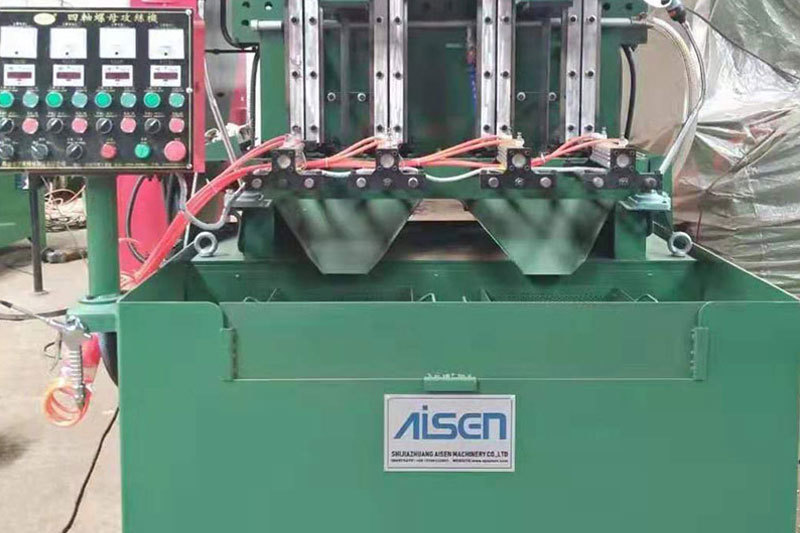
AISEN Four axis nut tapping machine ready for shipment to Russia
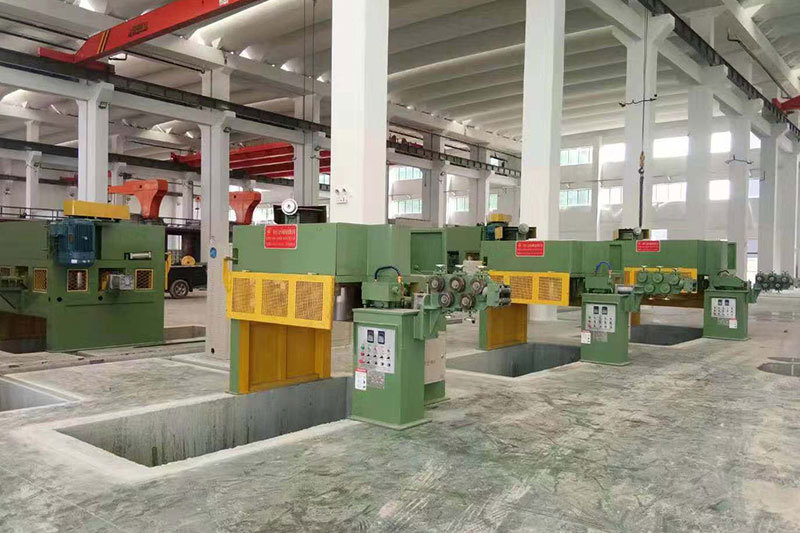
AISEN machinery inverted wire drawing machine
MESSAGES
We will contact you within one working day. Please pay attention to your email.
Qucik Link
Contact
Phone: +86-15100123091
E-mail: info@sjzaisen.com
Address: No.41 Zhaiying South Street, Yuhua District, Shijiazhuang City, Hebei Province China