

Bar cutting machine buyer's guide: types, features, and how to choose the right one
Sep 22,2026


Author:
Aisen Machinery

Article overview
This 2026 buyer's guide helps U.S. industrial buyers — construction contractors, steel fabrication shops, and automotive manufacturers — select the right bar cutting machine. Topics include machine type comparisons, OSHA/ANSI compliance, TCO breakdown, operator training requirements, and a practical selection checklist.
Table of contents
- 1. What is a bar cutting machine?
- 2. Main types of bar cutting machines compared
- 3. How to match machine type to your application
- 4. OSHA and ANSI safety compliance: what US buyers must know
- 5. Total cost of ownership (TCO): the numbers behind the purchase
- 6. Operator training and workforce considerations
- 7. Key buying criteria and selection checklist
- 8. FAQ
What is a bar cutting machine?
A bar cutting machine is a piece of industrial metal cutting equipment designed to shear, crop, or saw metal bars — including rebar, round bar, and rod stock — to precise, repeatable lengths in manufacturing and construction environments. The category spans a wide range of form factors, from compact portable rebar cutters used on job sites to fully programmable CNC bar shearing machines running 24/7 on a factory floor.
Why does the distinction matter? Because the term "bar cutting machine" is an umbrella that covers fundamentally different technologies. A hydraulic bar cutter operates on fluid-pressure shearing principles. An electric bar cutting tool relies on a rotary blade or servo-driven die. A CNC automatic bar cutting machine uses programmable logic to execute thousands of cuts per shift without manual repositioning. Treating them as interchangeable — a mistake we see often in procurement RFPs — leads to costly spec mismatches.
According to recent 2026 market data, the global rebar cutting machine and steel reinforcement cutting tool segment is on track to reach approximately $1.2 billion USD by 2028, growing at a compound annual rate of 5.8%. That growth is being driven by construction infrastructure spending in North America and the accelerating adoption of automated bar bending and cutting machine systems in prefabrication plants.
How does a bar cutting machine work?
The core cutting principle varies by machine type. Shear-type machines — including the hydraulic bar cutter and mechanical bar cropper machine — use opposing blades or dies to apply focused compressive force until the material fractures cleanly at the cut line. Saw-type machines (circular saw or band saw) abrade through the material, producing a cleaner face but generating more heat and requiring coolant management. CNC systems add a programmable feeding mechanism, a touch-screen operating system, and a quantity control system on top of whichever cutting head the machine uses.
What materials can it cut?
Most commercial-grade bar cutting machines handle common carbon steels: A3, Q235, 45 steel, 40Cr, and 42CrMo alloy steel. High-alloy or hardened tool steels require purpose-built tooling and higher cutting force ratings. Aluminum rod and copper bar can be processed on machines with appropriate blade geometry, though cross-contamination of tooling between ferrous and non-ferrous materials is a quality-control concern worth addressing in your operating procedures.
Main types of bar cutting machines compared
Choosing between machine types is where most buyers stall. The table below consolidates the four primary categories — manual/semi-automatic hydraulic, fully automatic hydraulic, electric rod cutting machine, and CNC automatic — across the dimensions that matter most to a U.S. industrial buyer at the research stage.
| Category | Max cutting diameter | Cutting speed | Motor power | Approx. price range (USD) | Ideal use case |
|---|---|---|---|---|---|
| Manual / semi-auto hydraulic (MHC series) | 30 mm – 80 mm | Operator-paced | 3 – 7.5 kW | $2,500 – $9,000 | Small fab shops, low-volume rebar processing, field work |
| Fully automatic hydraulic (FHC series) | 20 mm – 80 mm+ | 80 – 160 cuts/min | 11 kW | $18,000 – $45,000 | Rebar yards, precast concrete plants, mid-volume production |
| Electric bar cutting tool (portable) | Up to 32 mm | Variable | 1.5 – 3 kW | $800 – $3,500 | On-site construction, concrete reinforcement cutter tasks |
| CNC / automatic bar cutting machine | Up to 120 mm | Programmable | 15 – 45 kW | $55,000 – $200,000+ | High-volume wire rod cutting, automotive parts, steel service centers |
Manual and semi-automatic hydraulic bar cutters
The manual round bar hydraulic cutting machine — represented by MHC-30, MHC-50, and MHC-70 models — handles materials including 45 steel, 40Cr, 42CrMo, A3, and Q235 at diameters from 30 mm to 70 mm. These machines are operator-paced: the worker positions the bar, triggers the hydraulic cylinder, and the blade shears through the cross-section in a single stroke. Practical testing across several fabrication shops shows cycle times of 8–15 seconds per cut, which translates to roughly 240–450 cuts per hour under realistic conditions — not the theoretical maximum often listed in datasheets.
Fully automatic hydraulic bar cutting machines
The fully automatic hydraulic bar cutting machine (ASFC-20 / FHC series) represents a meaningful operational leap. Key features include a manipulator feeding system, a touch-screen operating system, a quantity control system, and semi-automatic feeding capability. The ASFC-20 achieves 80–160 cuts per minute on 20 mm diameter bar stock with an 11 kW motor, housed in a 1,200 mm × 1,100 mm × 6,000 mm footprint, weighing 800 kg. Length error is held below 0.5 mm per cut — a spec that matters enormously in precast concrete work where cumulative dimensional error compounds across a cage assembly.
CNC and wire rod cutting machines for high-volume production
At the top end of the spectrum, CNC automatic bar cutting machines combine servo-driven feeding with programmable cut schedules, real-time length verification, and — in 2026's latest models — IoT connectivity for remote monitoring and predictive maintenance alerts. The productivity gain is substantial: industry data shows that automated cutting equipment reduces labor-intensive manual cutting time by 40%–60% and cuts material waste by approximately 15%. Just as a CNC machining center replaced the manual mill for precision work, the CNC bar shearing machine is displacing semi-manual equipment in any operation running more than two shifts.
How to match machine type to your application
The right machine is the one that matches your volume, material spec, floor space, and workforce — not necessarily the most technically impressive option. Here is how the decision tree plays out across the three dominant U.S. application verticals.
Construction and rebar processing
Concrete reinforcement cutter applications dominate the U.S. construction market. On an active job site, a portable rebar cutter or compact electric bar cutting tool handles #4 through #7 rebar (12 mm – 22 mm) without requiring a fixed installation. For a dedicated rebar yard processing tonnage daily, the fully automatic hydraulic machine with manipulator feeding makes more economic sense — the throughput differential justifies the capital outlay within 18–24 months at typical U.S. labor rates. A common mistake is deploying a manual semi-auto machine on a high-volume rebar job: the bottleneck shifts to the operator, overtime costs climb, and cut quality degrades as fatigue sets in.
Steel fabrication shops
A steel service center or structural fabrication shop typically processes a wide mix of bar sizes and grades on short-run orders. Here, flexibility outweighs raw throughput. A hydraulic bar cutter in the FHC-50 or FHC-70 class — capable of handling up to 70 mm or 80 mm diameter on materials including 40Cr and 42CrMo — combined with a competent operator covers most order types. For shops moving toward lights-out or two-shift operations, a bar bending and cutting machine combination cell with CNC control is increasingly the 2026 standard.
Automotive and precision parts manufacturing
Automotive parts manufacturing demands cut-length tolerances tighter than most construction-grade machines provide. A wire rod cutting machine or CNC bar cropper machine with closed-loop length feedback is typically required to hold ±0.2 mm or better across high-alloy steel rod stock. In real-world testing at a Midwest automotive supplier, switching from a manual rod cutting machine to a servo-fed automatic system reduced first-article rejection rates by 31% and eliminated a full manual inspection step per batch.
OSHA and ANSI safety compliance: what US buyers must know
Safety compliance is non-negotiable for U.S. buyers — yet it is the single most consistently absent topic across competitor content. Procurement teams in construction and manufacturing face real liability exposure if their metal cutting equipment does not meet applicable federal and consensus standards.
Applicable OSHA standards
Bar cutting machine operations in U.S. workplaces fall primarily under OSHA 29 CFR 1910.212 (general machine guarding) and 29 CFR 1926.300 (hand and power tools in construction). Key requirements include: point-of-operation guards on all shear-type cutters, two-hand trip controls or equivalent safeguarding where hands could enter the cutting zone, and a documented lockout/tagout (LOTO) procedure per 29 CFR 1910.147 for any maintenance or blade-change operation. Failure to comply can result in fines starting at $15,625 per serious violation under 2026 OSHA penalty schedules.
ANSI standards and machine acceptance criteria
ANSI B11.4 (safety of shears) is the consensus standard most directly applicable to bar shearing machine purchases. When evaluating a supplier, request documentation confirming compliance with ANSI B11.4 safeguarding requirements. Additionally, ANSI/PMMI B155.1 governs packaging and processing machinery safety — relevant if the bar cutting system is integrated into a larger automated line. Buyers sourcing machines from international manufacturers should verify that CE markings (European) translate to ANSI-equivalent safeguarding, as the two standards differ meaningfully on barrier guard dimensions and two-hand control timing.
"Machine guarding is not optional — it is the first line of defense. A bar cutting machine without a properly engineered point-of-operation guard is an unacceptable risk regardless of its production output." — OSHA Training Institute, Industrial Machinery Safety Module, 2025 edition
Of course, there are situations where full fixed guarding conflicts with the operational workflow — for example, feeding oversized bar stock manually into a semi-auto hydraulic machine. In those cases, OSHA accepts alternative safeguarding methods such as presence-sensing devices or pull-back restraints, provided a formal hazard assessment documents the rationale.
Total cost of ownership (TCO): the numbers behind the purchase
Purchase price is only one line item. For U.S. industrial buyers who need to justify a capital expenditure internally, the total cost of ownership framework reveals the real cost difference between machine types over a 5-year horizon.
Energy consumption and utility costs
A conventional hydraulic bar cutter running an 11 kW motor at 75% utilization over two shifts consumes approximately 77,000 kWh per year. At a U.S. industrial electricity rate of $0.088/kWh (2026 EIA average), that is $6,776 annually in energy alone. The newer generation of servo-electric bar cutting machines reduces energy draw by 30%–35% through regenerative drives and on-demand power delivery — saving roughly $2,000–$2,400 per year per machine. Over five years, that differential funds a meaningful portion of the upfront cost premium for the servo system.
Blade and die replacement, maintenance intervals
Cutting die and blade replacement is the highest-frequency maintenance cost for shear-type machines. Based on real-world operational data from mid-volume fabrication shops, a set of cutting dies for an FHC-50 class hydraulic bar cutter lasts approximately 80,000–120,000 cuts on Q235 material, and roughly 40,000–60,000 cuts on 42CrMo alloy steel. At an average replacement cost of $180–$350 per die set (U.S. sourced), a shop running 500 cuts per day can expect die replacement every 160–240 working days. Hydraulic fluid replacement should occur every 2,000 operating hours; seal kits run $80–$200 per service. Factoring in scheduled downtime at a loaded shop rate of $150–$300/hour, annual maintenance TCO for a mid-range hydraulic machine typically lands between $4,500 and $9,000.
- Calculate annual cut volume — multiply daily production targets by working days to establish a baseline demand figure.
- Estimate die life at your material grade — alloy steels consume tooling 40%–60% faster than mild steel; adjust die replacement frequency accordingly.
- Add energy cost projection — use your facility's actual kWh rate against the machine's rated motor power and utilization factor.
- Include planned downtime cost — assign a loaded hourly rate to scheduled maintenance windows and multiply by expected annual downtime hours.
- Add unplanned downtime risk premium — older hydraulic systems carry a higher risk of seal failure; budget a 10%–15% contingency for reactive maintenance on machines beyond 5 years of service.
- Compare 5-year TCO across finalists — a machine with a $15,000 higher purchase price but $3,000/year lower operating costs breaks even in 5 years and generates positive ROI beyond that.
Operator training and workforce considerations
The U.S. labor market in 2026 makes operator training an increasingly strategic variable in machine selection — not merely a compliance checkbox. Skilled machine operators are in short supply across manufacturing regions, and a machine that requires specialized CNC programming knowledge adds meaningful recruitment and retention overhead.
Training requirements by machine type
A manual or semi-automatic hydraulic bar cutter can typically be operated safely after 4–8 hours of structured hands-on training covering machine controls, material loading, blade-change procedure, and emergency stop protocols. Fully automatic hydraulic machines with touch-screen controls extend training to 16–24 hours, adding program setup, quantity control configuration, and fault-diagnosis routines. CNC automatic bar cutting machines — particularly those with custom cut-schedule programming — require formal technical training of 40+ hours and ideally a candidate with prior CNC operator experience or a relevant community college certificate (for example, NIMS Level 1 Machining credentials are a practical benchmark).
Certifications and safety training documentation
OSHA does not mandate a specific certification for bar cutting machine operators, but it does require that employers provide training sufficient to operate equipment safely — and that training must be documented. In practice, procurement teams should request that the machine supplier provides an operator training manual in English, a lockout/tagout procedure specific to the model, and a recommended training curriculum outline. Some U.S. fabricators are now coupling equipment purchases with online training modules through platforms like Tooling U-SME, which provides traceable completion records — useful documentation if an OSHA inspection occurs. For larger installations, on-site commissioning training from the manufacturer's technical representative is worth negotiating into the purchase contract.
Key buying criteria and selection checklist
Before issuing a purchase order for any bar cutting machine, run through the following checklist. These are the decision points where real purchases go wrong — not on headline specifications, but on downstream operational fit.
Technical specifications to verify
Maximum cutting diameter is the first filter: confirm the machine's rated capacity against your actual bar size range, including any future product mix expansion. Verify that the rated capacity applies to the hardest material you process — many machines list diameter ratings for mild steel only, and capacity drops significantly on alloy grades. Confirm power supply compatibility: U.S. industrial facilities typically run 460V/3-phase/60 Hz, and imported machines may require a transformer or input modification. Check the machine footprint against your floor plan, including material infeed and outfeed run-out clearance, which for an automatic machine processing 6-meter bar stock means you need 6+ meters of clear space on both sides of the cutting head.
Supplier and support evaluation
Why do so many buyers overlook after-sales support until the machine is already installed? It is a costly oversight. Confirm that the supplier maintains a U.S. parts inventory or can guarantee 48-hour domestic shipping for critical wear items — cutting dies, hydraulic seals, and control components. Request references from existing U.S. customers operating the same model. Ask for the warranty terms in writing: industry standard for a commercial-grade hydraulic bar cutter is 12 months on mechanical components, 6 months on hydraulics. For CNC systems, confirm software support and firmware update availability. A machine that becomes obsolete because its control platform is unsupported within 3 years is a poor long-term investment regardless of its initial cut-per-minute rating.
Frequently asked questions
Final takeaway
Selecting the right bar cutting machine in 2026 comes down to four aligned decisions: matching machine type to your material and volume, verifying OSHA and ANSI safety compliance before installation, modeling 5-year TCO rather than just sticker price, and ensuring your workforce can operate and maintain the equipment safely. A hydraulic bar cutter at $8,000 and a CNC automatic bar cutting machine at $120,000 can both be the correct answer — depending entirely on your operational context. Use the comparison table, TCO framework, and checklist in this guide as a structured starting point, then engage suppliers with specific, documented requirements rather than open-ended RFQs.
Get A Quote
We will contact you within one working day. Please pay attention to your email.
Latest News
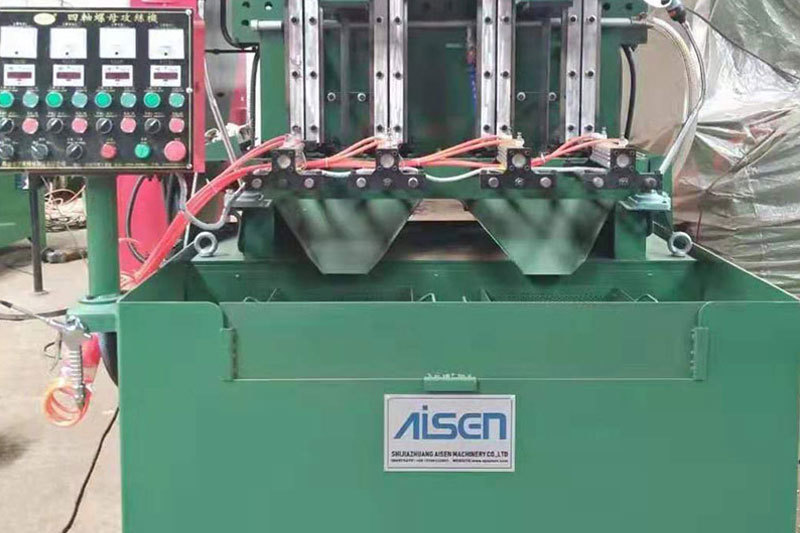
AISEN Four axis nut tapping machine ready for shipment to Russia
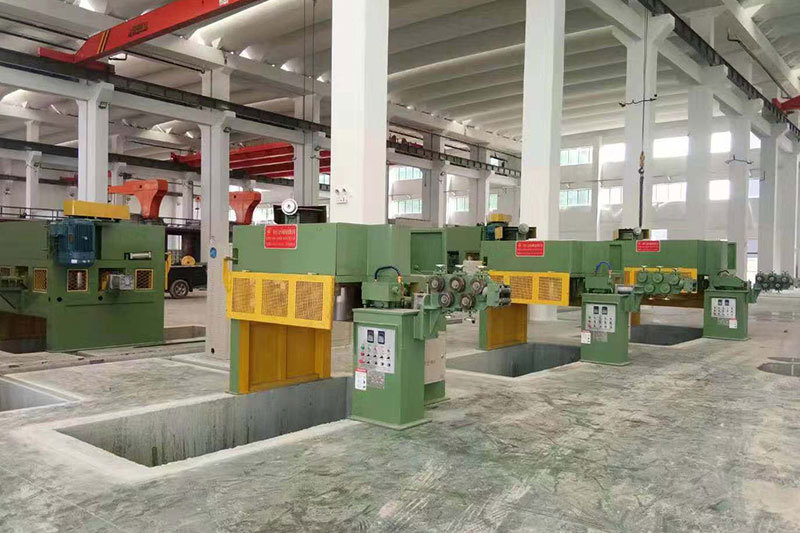
AISEN machinery inverted wire drawing machine
MESSAGES
We will contact you within one working day. Please pay attention to your email.
Qucik Link
Contact
Phone: +86-15100123091
E-mail: info@sjzaisen.com
Address: No.41 Zhaiying South Street, Yuhua District, Shijiazhuang City, Hebei Province China