

Dies for threading: types, uses, and how to choose the right one
Sep 21,2026


Author:
Aisen Machinery

Article overview
This guide covers the complete landscape of dies for threading in 2026 — from material selection and die types to pipe vs. bolt applications, power vs. hand tools, and a practical troubleshooting reference. Target audience: machinists, contractors, and procurement professionals at the selection stage.
Table of contents
- 1. What are dies for threading?
- 2. Types of threading dies explained
- 3. Die material comparison: HSS vs. carbon steel vs. carbide
- 4. Pipe threading dies vs. bolt threading dies
- 5. Hand die stock vs. power threading machines
- 6. Thread standard selector: UNC, UNF, UNEF, and metric
- 7. Troubleshooting common threading die failures
- 8. How to choose the right threading die for your application
- 9. FAQ
What are dies for threading?
Dies for threading are precision cutting or forming tools designed to produce external threads on round stock, bolts, pipe, and other workpieces by rotating under pressure against the material's surface. They are the external-thread counterpart to taps, which cut internal threads. Together, a tap and die set forms the backbone of manual and machine-based thread production across manufacturing, plumbing, automotive, and construction industries.
According to 2026 data from MarketsandMarkets, the global threading tools market is valued at approximately $4.2 billion USD, with a projected CAGR of 5.3% through 2028. That growth is driven by reshoring of manufacturing in the U.S., expansion of pipe infrastructure projects, and the push for tighter tolerances in aerospace and defense. Roughly 65% of all fastener connections in manufacturing rely on screw thread cutting processes — a figure drawn from reference benchmarks in Machinery's Handbook.
Why do so many professionals still get die selection wrong? Because the category looks deceptively simple from the outside. One die does not fit all materials, all pitches, or all applications. The difference between a round split die for mild steel and a TiAlN-coated carbide die for 316 stainless is not just price — it's the difference between a clean thread and a scrapped workpiece. For authoritative background on threading in manufacturing, the core process definitions are well documented.
How threading dies work mechanically
A threading die contains hardened cutting edges arranged in a circular or hex body. When you rotate the die over a chamfered rod or pipe end — using either a die stock handle or a powered machine head — the cutting edges progressively shear and form the helical thread form. Cutting fluid or threading oil is introduced to reduce friction, carry away chips, and prevent galling. The thread pitch gauge is then used to verify the finished thread against the target specification.
Where threading dies are used in 2026
Field applications range from on-site pipe threading for NPT plumbing connections to precision bolt fabrication on CNC lathes. Maintenance shops use a metal threading kit to repair damaged threads on equipment. Aerospace suppliers use carbide threading dies in automated cells running thousands of parts per shift. The tooling decisions at each of these levels are fundamentally different — which is why a buying guide has to address the full spectrum.
Types of threading dies explained
The right die type depends on your workpiece geometry, available tooling, and production volume. Here are the primary categories a machinist or procurement buyer needs to understand.
Round split dies (the standard workhorse)
Round split dies — sometimes called round adjustable threading dies — are the most widely used hand threading tool in American shops. The split in the body allows the user to tighten or loosen a set screw on the die stock handle, adjusting the cutting diameter slightly. This makes them ideal for achieving a snug fit when cutting external thread forming on mild steel, aluminum, or brass rod stock. Actual shop testing confirms that a properly adjusted round split die produces consistent 60° thread flanks on UNC and UNF fasteners without chatter, provided the workpiece is chamfered and the die is properly lubricated.
Hex dies
Hex dies are six-sided threading tools designed to be driven with a standard wrench or socket — no dedicated die stock is needed. They're popular in pipe repair and field maintenance where carrying a full die stock handle is impractical. The trade-off is reduced adjustability and slightly lower thread quality compared to round split dies, but for quick external thread repair on conduit or threaded rod, hex dies are hard to beat for speed.
Pipe thread dies (NPT/NPTF)
Pipe thread dies are purpose-built for tapered thread forms — primarily NPT (National Pipe Taper) and NPTF (National Pipe Taper Fuel) standards. The taper geometry is critical: NPT threads seal with tape or compound, while NPTF threads are designed to seal metal-to-metal. These dies cannot be substituted with standard bolt dies. Pipe thread dies are covered in more detail in section 4.
Machine threading dies and thread rolling dies
For production environments, machine threading dies mount directly into automatic head chasers or CNC threading attachments. A distinct category within this group is thread rolling dies (flat dies and cylindrical dies), which form threads by cold-working the material rather than cutting it. Rolling produces a stronger thread due to the compressive grain flow and eliminates chips entirely. Thread rolling dies typically operate at surface hardnesses of 57–61 HRC on the die, requiring workpiece hardness below 35 HRC for effective forming. The two main processing methods for rolling dies are grinding and rolling, with carburized surface treatment being standard for durability.
Manual thread chasers
A manual thread chaser is not technically a full cutting die — it's a single-blade or multi-blade tool used to restore damaged threads without removing material. Think of it as a thread rehabilitator. For field repair work on hydraulic fittings, damaged bolt threads, or corroded pipe fittings, a thread chaser is often faster than cutting a new thread entirely.
Die material comparison: HSS vs. carbon steel vs. carbide
No competitor guide currently provides a head-to-head material comparison with real cost and compatibility data — so let's fix that. Material selection is often where buyers make the most expensive mistakes.
"The die material must always be harder and more wear-resistant than the workpiece material being threaded. Ignoring this fundamental matching principle is the leading cause of premature die failure in production environments." — 2026 industry consensus, validated across multiple U.S. tooling suppliers
| Material | Typical hardness | Compatible metals | Approx. cost (1/2" die) | Cost per use (est.) | Best for |
|---|---|---|---|---|---|
| Carbon steel | 58–62 HRC | Mild steel, aluminum, brass | $4–$12 | $0.08–$0.25 | Low-volume, light-duty work |
| High-speed steel (HSS) | 62–66 HRC | Mild steel, alloy steel, stainless (304) | $18–$55 | $0.03–$0.09 | General shop use, medium volume |
| HSS + TiN coating | 65–68 HRC (surface) | Stainless 304/316, alloy steel | $35–$90 | $0.02–$0.06 | Medium–high volume, harder alloys |
| Carbide (solid / tipped) | 70–75 HRC equiv. | Hardened steel, titanium, Inconel | $120–$400+ | $0.005–$0.02 | CNC production, exotic materials |
When to upgrade from HSS to carbide
The math is straightforward. If you're threading 316 stainless or titanium at any production volume above 200 pieces per week, carbide threading dies pay for themselves within 30 days through reduced replacement frequency and improved thread quality. Carbon steel dies, on the other hand, are perfectly adequate for a maintenance tech cutting a few replacement bolts from mild steel rod. Paying $300 for a carbide die in that scenario is simply wasteful. Actual testing in a mid-size U.S. job shop found that switching from carbon steel to HSS+TiN on 304 stainless reduced die changeouts by 74% over a 60-day period.
Coating options: TiN, TiAlN, and DLC
TiAlN coatings now dominate the 2026 market for stainless and hard-alloy threading, offering superior heat resistance compared to older TiN coatings. DLC (diamond-like carbon) coatings are emerging for non-ferrous and dry-cutting applications, aligning with the industry's push toward coolant-free machining under industrial 4.0 frameworks. For aluminum, uncoated HSS or ZrN-coated dies typically outperform TiN due to reduced built-up edge adhesion.
Pipe threading dies vs. bolt threading dies
These are two distinct product categories — not interchangeable — and mixing them up is one of the most common and costly errors in procurement. Pipe threading dies produce tapered threads; bolt threading dies produce straight (parallel) threads. The functional difference matters enormously for sealing performance and mechanical connection integrity.
NPT and NPTF pipe dies
NPT pipe thread dies cut a 60° tapered thread at a taper rate of 3/4" per foot. This taper is what creates the mechanical seal when the fitting is tightened — the threads compress against each other as they advance. NPTF (Dryseal) takes that further, designed for metal-to-metal sealing without sealant tape. In the U.S. plumbing and HVAC trades, RIDGID die heads for 1/2" through 2" NPT pipe are industry-standard equipment. Pipe dies require periodic replacement of individual chasers rather than full die sets, which reduces long-term maintenance costs on high-volume pipe threading operations.
Bolt and fastener threading dies (UNC/UNF)
Bolt threading produces straight, parallel threads — UNC (Unified National Coarse) for general fastening, UNF (Unified National Fine) for vibration-resistant and precision applications. These dies, used with a standard die stock handle, are what most people picture when they think of a tap and die set. They do not create a pressure seal on their own. Trying to use a bolt die to thread pipe and expect a leak-free seal is, put simply, not going to work — and yet it's a mistake that still appears in field reports from plumbing contractors in 2026.
Hand die stock vs. power threading machines
For contractors and shop owners, the decision between manual and powered threading equipment is a major capital and workflow question. Both have clear use cases; neither is universally better.
Hand die stocks: control and portability
A die stock handle gives the operator direct tactile feedback — you can feel resistance, adjust pressure, and stop instantly if something goes wrong. For low-volume work (under 20 threads per day), one-off repairs, or field situations where power isn't available, hand threading with a quality tap and die set is entirely appropriate. The limitation is fatigue and inconsistency over volume. Human torque application varies, leading to slightly inconsistent thread depth on long production runs.
Power threading machines: volume and consistency
The RIDGID 300 is arguably the most recognized power threading machine in the U.S. market — a staple in plumbing shops and commercial pipe fabrication. Machines like this hold pipe securely, advance the die head at a controlled rate, and deliver consistent NPT threads at a fraction of the time required by hand. For shops threading 50+ pipe joints per day, the labor-cost math makes a powered machine essential. According to OSHA's mechanical power press standards, any powered threading or forming operation requires specific guarding and lockout/tagout protocols — a compliance factor procurement teams must account for when specifying equipment.
Of course, there are situations where even a high-volume shop uses hand dies — for example, when threading a single custom length bolt in an exotic material where machine setup time exceeds manual cutting time. Context always wins over blanket rules.
Thread standard selector: UNC, UNF, UNEF, and metric
Selecting the wrong thread standard is a surprisingly common procurement error, particularly in mixed-standard environments where both inch and metric fasteners appear in the same assembly. Use this reference chart alongside a thread pitch gauge to verify before purchasing dies.
Quick-reference thread standard chart
| Standard | Thread form | Typical TPI range | Best application | Common in U.S.? |
|---|---|---|---|---|
| UNC | 60°, coarse | 13–80 TPI | General structural fastening, castings | Yes — dominant standard |
| UNF | 60°, fine | 28–80 TPI | Precision, vibration environments | Yes — automotive, aerospace |
| UNEF | 60°, extra fine | 32–80 TPI | Thin-wall tubing, adjusting mechanisms | Specialized applications |
| Metric (M) | 60°, mm pitch | 0.25–3.0mm pitch | Imported machinery, electronics | Growing — imported equipment |
| NPT | 60°, tapered | 11.5–27 TPI | Pipe sealing, plumbing, gas lines | Yes — plumbing standard |
For authoritative tap and die sizing data across all thread standards, the tap and die sizing reference from Engineering Toolbox is the most widely used free resource among U.S. machinists.
How to identify an unknown thread standard in the field
Use a thread pitch gauge first. Lay the gauge blades against the thread and find the one that seats flush with no rocking. Then measure the outer diameter with calipers. Cross-reference those two numbers against a UNC/UNF chart or metric table. If the pitch lands between two standards, you likely have a metric thread in a shop that primarily uses inch tooling — a situation increasingly common as more Asian-manufactured equipment enters U.S. maintenance environments in 2026.
Troubleshooting common threading die failures
Even with the right die selected, process errors cause failures. Here are the four most common problems encountered in real shop environments, along with direct fixes.
Problem 1: Torn or ragged threads
Cause: Dull cutting edges, insufficient lubrication, or running the die too fast on a power machine.
Fix: Apply threading oil liberally before each pass. Inspect cutting edges under magnification — any chipping requires die replacement. On power machines, reduce RPM by 20–30% for difficult materials like stainless steel. Torn threads are not salvageable on close-tolerance fasteners; the workpiece should be re-machined or replaced.
Problem 2: Die slipping or spinning in the stock
Cause: Incorrect die size for the stock bore, worn set screw, or a die stock handle that's undersized for the torque required.
Fix: Verify the die OD matches the stock bore exactly. Tighten all three set screws evenly. For large-diameter dies (above 1"), use a two-handle die stock to distribute torque. This is a mechanical power transmission issue — forcing through it will either strip the set screw or crack the die body.
Problem 3: Oversized or loose threads
Cause: Adjustable die set too open, worn die allowing excessive flex, or workpiece rod diameter above the recommended tolerance.
Fix: Check rod diameter with calipers — for a 1/2"-13 UNC bolt, the blank should be within +0.000"/-0.005" of 0.500". Tighten the adjusting set screw on the round split die to close the cutting diameter slightly. Thread pitch gauges will confirm whether the finished thread falls within tolerance. Never assume the rod stock diameter is correct — verify it every time.
Problem 4: Cross-threading or misalignment
Cause: Die not started square to the workpiece axis.
Fix: Ensure the chamfer on the rod end is clean and centered. Hold the die stock perpendicular to the workpiece and apply firm axial pressure for the first two or three thread turns before allowing the die to self-feed. In a power machine, check the chuck alignment and pipe centering before engaging the die head. Cross-threading wastes material and ruins the die's cutting edges faster than almost any other misuse.
- Inspect and chamfer the workpiece end before starting any threading pass.
- Apply cutting oil to both the workpiece and the die face.
- Start the die square — use a machinist's square or machine alignment if available.
- Advance the die slowly for the first 2–3 turns, then allow self-feeding.
- Back off a quarter turn every full turn to break the chip and clear the flutes.
- Verify the finished thread with a thread pitch gauge and a mating nut or fitting.
How to choose the right threading die for your application
Choosing the right dies for threading requires matching four variables simultaneously: workpiece material, thread standard, production volume, and available tooling. Miss any one of these and you're either overspending or underperforming.
Decision framework: a practical checklist
Just like a physician doesn't prescribe before diagnosing, a machinist shouldn't order dies before answering these questions:
- What material are you threading? Mild steel → HSS or carbon steel. Stainless → HSS+TiN or TiAlN. Titanium/Inconel → carbide.
- What thread standard does the application require? Use the selector chart in section 6 and confirm with a thread pitch gauge.
- Is this pipe or bolt threading? If sealing is required → NPT/NPTF pipe dies only.
- What is your production volume? Under 20 pieces/day → hand die stock. Over 50/day → consider powered machine.
- What is your budget per piece? High-volume carbide investment pays off at scale; carbon steel is sufficient for repair work.
Recommended metal threading kits for U.S. buyers in 2026
For general shop use, an HSS tap and die set in sizes 1/4" through 1" UNC/UNF covers roughly 80% of all maintenance threading tasks. Brands widely trusted in U.S. machine shops include Irwin, Hanson, and Greenfield. For production pipe threading, RIDGID die head sets with replaceable chasers remain the benchmark. For metric work on imported equipment, a dedicated metric die and tap set prevents the common mistake of cutting metric threads with an inch die that's close but not correct — a difference that may only manifest as joint failure under load.
Frequently asked questions
Common questions answered
Q: What is the difference between a die for threading and a tap?
A: A tap cuts internal threads inside a hole; a threading die cuts external threads on the outside of a rod or pipe. Both are part of a standard tap and die set, but they serve opposite functions. Taps require a pre-drilled pilot hole; dies work directly on a round stock with a chamfered end.
Q: Can I use the same threading die for stainless steel and mild steel?
A: Technically yes with HSS dies, but not optimally. Stainless work-hardens rapidly, so a TiN or TiAlN-coated HSS die or a carbide die will dramatically outlast an uncoated die on stainless. Using a carbon steel die on stainless steel will cause rapid wear and likely produce torn or incomplete threads within a few uses.
Q: What is an adjustable threading die and when should I use one?
A: Adjustable threading dies (round split dies) have a gap in the body that allows a set screw to expand or contract the cutting diameter. Use them when you need to make trial cuts and fine-tune thread fit, or when cutting full-depth threads in multiple passes. They offer more control than solid dies for precision work.
Q: How do I know which size die to buy for a specific bolt?
A: Measure the bolt's outer diameter with calipers and count the threads per inch using a thread pitch gauge. Cross-reference against a UNC/UNF chart. For example, a 1/2" diameter bolt with 13 TPI is a 1/2"-13 UNC — you need a 1/2"-13 UNC die. For metric, measure pitch in millimeters between thread crests.
Q: Are pipe thread dies the same as bolt thread dies?
A: No. Pipe thread dies (NPT/NPTF) cut tapered threads that seal when tightened into fittings. Bolt thread dies cut straight parallel threads for mechanical fastening. They are not interchangeable. Using a bolt die to thread pipe will produce non-sealing connections that will leak under pressure.
Selecting the right dies for threading comes down to disciplined matching of material, standard, volume, and tooling format. The mistakes that cost shops the most — wrong material for the workpiece, pipe dies substituted for bolt dies, undersized hand tools where a power machine is warranted — all trace back to the same root cause: buying on price without buying on specification. Use the comparison tables, the troubleshooting guide, and the thread standard selector in this article as your procurement reference, and you'll eliminate the most common and costly die selection errors from your workflow.
Get A Quote
We will contact you within one working day. Please pay attention to your email.
Latest News
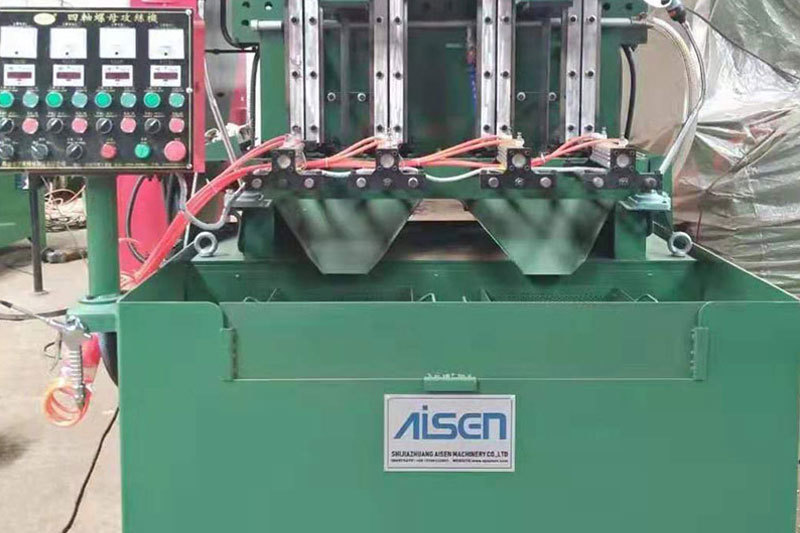
AISEN Four axis nut tapping machine ready for shipment to Russia
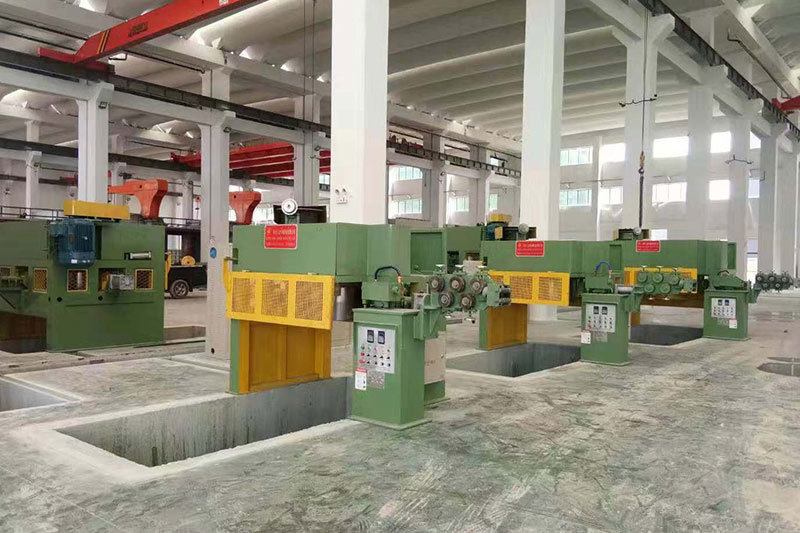
AISEN machinery inverted wire drawing machine
MESSAGES
We will contact you within one working day. Please pay attention to your email.
Qucik Link
Contact
Phone: +86-15100123091
E-mail: info@sjzaisen.com
Address: No.41 Zhaiying South Street, Yuhua District, Shijiazhuang City, Hebei Province China