

How coil rebar weight affects rebar straightening and cutting machine performance
Nov 16,2026


Author:
Aisen Machinery

Article overview
This guide examines how coil rebar weight affects the mechanical performance, cutting accuracy, and long-term reliability of rebar straightening and cutting machines. It includes a model comparison table, Argentina-specific regulatory notes, a step-by-step calibration procedure, maintenance schedules, and ROI calculations for construction contractors and rebar processing shops evaluating equipment purchases in 2026.
Table of contents
- 1. Why coil rebar weight matters more than most operators realize
- 2. Mechanical effects of coil weight on straightening roller assemblies
- 3. How coil weight influences cutting precision and blade lifespan
- 4. Model selection guide: matching machine capacity to coil weight
- 5. Argentina-specific operating conditions and compliance requirements
- 6. Step-by-step setup and calibration for different coil weights
- 7. Maintenance, troubleshooting, and cost-of-ownership analysis
- 8. Frequently asked questions
Why coil rebar weight matters more than most operators realize
Coil rebar weight is not simply a logistics concern — it is a primary performance variable for any rebar straightening and cutting machine. A rebar straightening and cutting machine is a rebar processing machine that uncoils, straightens, and cuts steel wire or deformed bar to a preset length automatically. When the coil mass exceeds what the machine's uncoiler and feed system were designed for, tension becomes uneven, straightening rollers work harder, and cut length accuracy deteriorates within hours rather than weeks.
Why do so many operators overlook this? Partly because coil weight variation looks like a purchasing problem, not a mechanical one. A 500 kg coil of 8 mm ADN 420 bar and a 1,200 kg coil of the same diameter behave very differently once they reach the deformed bar straightener. The heavier coil generates higher inertial resistance during the first meter of feed, causing the drive motor to draw current spikes that can trip thermal protection relays — especially problematic on 220 V / 50 Hz three-phase supplies common in Argentina.
The relationship is not simply "heavier = worse." A coil that is too light for a high-speed automatic rebar cutter may cause feed-slip errors because the uncoiler cannot maintain consistent back-tension. Think of it like a fishing reel: too much drag and the line snaps; too little and it tangles. The optimal coil weight range is as important a spec as bar diameter or machine power rating.
What does "coil weight capacity" actually mean on the spec sheet?
Machine manufacturers list a maximum coil weight (typically 500–2,000 kg) that the uncoiler bearing and frame can support statically. This is not the same as the dynamic feed capacity. During actual operation, the effective working range is usually 60–85% of the stated maximum to maintain stable tension and avoid bearing fatigue. For reinforcing bar processing shops running two or three shifts, staying within this 60–85% band extends uncoiler bearing life from roughly 4,000 hours to beyond 8,000 hours, based on field data from comparable operations in Brazil and Chile.
How coil inner diameter interacts with weight
Coil weight and inner diameter (ID) are linked. A 1,000 kg coil with a 500 mm ID unspools differently from the same weight with a 650 mm ID because the moment arm changes throughout the coil's depletion. Construction site steel equipment that lacks an adjustable uncoiler mandrel forces operators to use shims — a workaround that introduces runout and vibration, compounding the tension-variation problem described above.
Mechanical effects of coil weight on straightening roller assemblies
The straightening section of a wire straightening machine is where coil weight has its most direct mechanical consequence. Excess residual stress from a heavy, tightly wound coil means the bar enters the roller box with a higher curvature memory, forcing the rollers to apply greater corrective force on every pass.
Roller wear patterns caused by overweight coils
In practice, using coils consistently above rated capacity accelerates roller groove wear by 30–50% compared to in-spec operation. The wear pattern is asymmetric: the entry rollers (positions 1 and 2 in a standard 7-roller box) deteriorate faster because they handle the highest curvature correction load. When these rollers develop flat spots, straightness tolerance on the finished bar degrades from the typical ±3 mm/m to ±8 mm/m or worse — a failure point for IRAM-CIRSOC 201 structural compliance in Argentine projects.
Motor load and thermal stress
Heavy coil inertia forces the feed motor to work at 90–100% of rated load during the initial pull, compared to 60–70% with correctly sized coils. On a CNC rebar cutting machine running 8-hour shifts, this sustained high-load condition raises winding temperature and shortens motor insulation life. Field experience from rebar fabrication equipment operators in Rosario and Córdoba shows that motor rewinds become necessary every 18–24 months when coil weight is routinely over-spec, versus every 5–7 years under normal conditions.
"Straightening roller geometry and feed tension must be treated as a matched system. Changing coil weight without recalibrating roller offset pressure is the single most common cause of premature machine failure in rebar processing operations." — Engineering consensus from construction steel machinery maintenance manuals, 2026 edition.
How coil weight influences cutting precision and blade lifespan
Cutting precision depends on bar velocity stability at the moment the blade engages. When coil weight causes tension fluctuations, bar speed is uneven, and the cut happens at a slightly different position than programmed. The result: length scatter across a production batch.
Length deviation data by coil weight condition
| Coil weight condition | Avg. length deviation | Blade replacement cycle | Motor load (%) | Throughput (kg/h) |
|---|---|---|---|---|
| Under-spec (<50% capacity) | ±5–7 mm | Every 90,000 cuts | 45–55% | 280–320 |
| Optimal (60–85% capacity) | ±1–2 mm | Every 150,000+ cuts | 60–75% | 480–600 |
| Over-spec (>90% capacity) | ±8–12 mm | Every 50,000–60,000 cuts | 90–100% | 350–400 (unstable) |
Notice that the blade replacement cycle is nearly three times longer at optimal loading compared to over-spec operation. For a shop cutting 2 million bars per year, that difference translates to roughly 10–13 extra blade change-outs annually — each representing downtime and tooling cost. Of course, there are situations where a heavier coil is unavoidable due to supplier constraints; in those cases, reducing feed speed by 15–20% partially compensates for the increased tension variance.
Why blade geometry matters as much as coil weight
A hydraulic rebar cutting machine uses a shear-type blade that relies on a precise clearance gap (typically 0.05–0.10 mm for 8–12 mm bar). When bar speed fluctuates due to coil weight issues, the bar shifts laterally at the moment of shear, increasing side-load on the blade edge. This is the primary cause of chipping on the lower blade — a failure mode that most operators misattribute to blade material quality rather than the actual root cause: coil-driven feed instability.
Model selection guide: matching machine capacity to coil weight
Selecting a rebar straightening and cutting machine requires matching three variables simultaneously: bar diameter range, coil weight capacity, and production throughput target. The table below covers the most common configurations relevant to Argentine rebar processing operations in 2026.
| Model type | Bar diameter | Max coil weight | Speed (m/min) | Power (kW) | Est. price (USD) | Payback period* |
|---|---|---|---|---|---|---|
| Light-duty (iron rod straightening machine) | 4–10 mm | 500 kg | 40–80 | 5.5–7.5 | 8,000–14,000 | 10–14 months |
| Mid-range (automatic rebar cutter) | 6–16 mm | 1,000 kg | 60–100 | 11–15 | 18,000–28,000 | 14–20 months |
| Heavy-duty (CNC rebar cutting machine) | 8–25 mm | 2,000 kg | 80–120 | 18.5–30 | 35,000–60,000 | 18–28 months |
*Payback period estimated based on replacing 2 manual laborers at Argentine wage rates (2026 reference), assuming single-shift operation and 85% uptime.
Bar bending and cutting machine combinations
For shops processing ADN 420 / Grado 60 deformed bar — the dominant specification in Argentine structural projects — a combined bar bending and cutting machine line is worth evaluating. The straightening section must be rated for at least 1.2× the actual coil weight to maintain the 60–85% optimal loading band described earlier. This built-in headroom is especially important when local steel suppliers deliver coils in 800–1,200 kg lots, as is standard from Argentine rolling mills.
Argentina-specific operating conditions and compliance requirements
Operating a rebar coil straightener in Argentina involves regulatory and infrastructure variables that generic spec sheets do not address. Getting these right from day one prevents costly retrofits and import clearance delays.
IRAM-CIRSOC standards and bar grade compatibility
Argentine structural projects overwhelmingly specify ADN 420 (equivalent to ASTM Grade 60) deformed bar, governed by IRAM-CIRSOC 201. This grade has a minimum yield strength of 420 MPa, which means it carries higher residual stress from the coiling process than lower-grade wire. A steel wire straightener cutter sized for plain wire will be mechanically undersized for ADN 420 coil — the roller pressure settings and motor torque requirements are categorically different. Always confirm that the machine supplier has tested their equipment with 420 MPa-grade material, not just mild steel.
Electrical supply, import logistics, and local support
Argentina's industrial grid supplies 220 V / 50 Hz three-phase power. Machines designed for 380 V / 60 Hz (common in North America) or 415 V / 50 Hz (common in Europe) require transformer adaptation — an added cost of USD 1,500–4,000 depending on machine power rating. Confirm voltage compatibility before signing a purchase order. On the import side, construction steel machinery typically enters under Argentine customs tariff NCM 8462.21 or 8462.91. Clearance through Buenos Aires or Rosario ports currently takes 15–35 business days (2026 estimate), so factor this into project timelines. Local technical service availability is a decisive criterion: a machine that cannot be repaired within 48–72 hours of breakdown is a production risk in a time-sensitive construction environment.
Step-by-step setup and calibration for different coil weights
Proper calibration is not a one-time event — it must be repeated every time coil weight or bar diameter changes. The following procedure applies to most mid-range and heavy-duty rebar fabrication equipment configurations.
- Verify uncoiler load rating. Weigh the coil using the supplier's delivery note or a floor scale. Confirm the coil weight is within 60–85% of the uncoiler's rated capacity before mounting.
- Set uncoiler back-tension. Adjust the magnetic brake or friction pad to deliver 8–12 N of back-tension per mm of bar diameter. For a 10 mm bar, target 80–120 N. Use a handheld tension meter on the first meter of bar feed.
- Calibrate straightening roller offset. Start with the manufacturer's baseline offset table for your bar diameter. Run 5 meters of bar and measure straightness with a 1-meter steel rule. Adjust roller positions in 0.1 mm increments until deviation is ≤3 mm/m.
- Program cut length and tolerance. Enter the target cut length on the CNC panel. Run 10 test cuts and measure each piece with a steel tape. If length scatter exceeds ±2 mm, reduce feed speed by 10% and re-test.
- Record motor current draw. With the machine running at production speed, record the ammeter reading. It should be 60–75% of the motor's full-load current. Values above 85% indicate a coil weight or tension setting issue.
- Log baseline data. Record roller settings, tension values, motor current, and cut accuracy in a machine logbook. This baseline allows rapid fault diagnosis when performance drifts later in the coil's life or after a coil change.
Adjusting for a nearly empty coil
As coil weight decreases toward the final 15% of mass, back-tension drops sharply and feed-slip errors increase. A practical field fix is to increase the uncoiler brake setting by 20–30% when the coil diameter visually shrinks to roughly half its original size. This manual adjustment is a limitation of non-servo uncoilers; servo-controlled models compensate automatically — a worthwhile upgrade for shops running 24-hour operations.
Common setup mistakes and how to avoid them
The most frequent error is using the same roller and tension settings across different coil weights without recalibration. Operators assume that if the machine "ran fine" with a 700 kg coil, it will perform identically with a 1,100 kg coil of the same bar diameter. It will not — and the first sign of trouble is usually a batch of bars that measure 8–12 mm short or long, discovered only after they have been delivered to the reinforcement assembly team.
Maintenance, troubleshooting, and cost-of-ownership analysis
A rebar straightening and cutting machine is a high-cycle machine — a busy shop may execute 5,000–10,000 cuts per shift. Maintenance intervals based on coil weight conditions (not just calendar time) are essential to controlling total cost of ownership.
Recommended maintenance schedule
| Component | Check interval (optimal load) | Check interval (over-spec load) | Replacement trigger |
|---|---|---|---|
| Straightening rollers | Every 500 hours | Every 250 hours | Groove depth worn >0.5 mm |
| Cutting blades | Every 150,000 cuts | Every 50,000–60,000 cuts | Visible chipping or burr >0.3 mm |
| Uncoiler bearings | Every 1,000 hours | Every 500 hours | Vibration or temperature rise >15°C |
| Feed roller V-grooves | Every 300 hours | Every 150 hours | Slip detected at calibration |
| Motor windings (thermal check) | Every 2,000 hours | Every 800 hours | Insulation resistance <1 MΩ |
Fault diagnosis: the top three coil-weight-related failures
Fault 1 — Inconsistent cut length: Usually caused by feed-slip from under-tension (too-light coil nearing end of run) or over-tension (overweight coil at start of run). Diagnosis: measure motor current and bar speed simultaneously. Fix: recalibrate brake tension per step 2 of the setup procedure above.
Fault 2 — Bar bowing after cutting: Residual curvature surviving the straightening section. Root cause is typically insufficient roller offset for the bar's actual yield strength — common when switching from standard bar to ADN 420 without readjusting. Increase offset pressure on rollers 1–3 by 0.2 mm increments until straightness meets specification.
Fault 3 — Thermal trip on startup: Overweight coil generating high inertial load during the first 2–3 seconds of feed. Short-term fix: reduce coil weight or use a soft-start module. Long-term fix: select a machine with a servo-controlled variable-speed drive that ramps up torque gradually — a standard feature on current-generation CNC rebar cutting machines but absent from many budget models.
ROI calculation: manual cutting versus automated processing
A mid-range automatic rebar cutter processing 500 kg/h over a single 8-hour shift produces roughly 4,000 kg/day. At Argentine labor rates in 2026, manual cutting of the same volume requires 3–4 workers. The annual labor cost savings (including employer contributions) typically reach USD 18,000–28,000 per year, placing payback within 14–20 months for most mid-range machines — consistent with the table in section 4. Leasing or installment plans are available through some equipment distributors, allowing capital preservation while the machine effectively pays for itself through labor savings.
Frequently asked questions
Q: What is the maximum coil weight a standard rebar straightening and cutting machine can handle?
A: Most standard mid-range machines are rated for 500–1,000 kg coils, while heavy-duty CNC models handle up to 2,000 kg. However, optimal performance occurs at 60–85% of rated capacity. Exceeding 90% causes motor overload, roller wear acceleration, and cut-length deviation beyond ±8 mm — unacceptable for IRAM-CIRSOC structural compliance.
Q: Can I use the same machine settings for ADN 420 and standard mild steel coils?
A: No. ADN 420 (Grado 60) has a minimum yield strength of 420 MPa versus 250 MPa for mild steel, meaning it carries significantly higher residual stress from coiling. Straightening roller offset pressure and motor torque settings must be recalibrated when switching grades. Using mild-steel settings on ADN 420 coil will produce bars with residual bow and risk roller damage.
Q: How often should straightening rollers be replaced?
A: Under optimal coil-weight loading (60–85% of rated capacity), straightening rollers should be inspected every 500 operating hours and replaced when groove depth wear exceeds 0.5 mm. With consistently overweight coils, this interval drops to 250 hours. Keeping a spare roller set on hand avoids unplanned downtime, which typically costs more than the parts themselves.
Q: Does coil weight affect energy consumption per kilogram of processed rebar?
A: Yes, significantly. At optimal loading, a typical 15 kW machine consumes approximately 0.025–0.030 kWh per kg of processed bar. At over-spec loading, motor inefficiency and frequent thermal trips push consumption to 0.040–0.050 kWh/kg — a 40–65% increase in energy cost per tonne of output, which compounds quickly at scale.
Q: What electrical supply specifications should I confirm before importing a rebar processing machine to Argentina?
A: Argentina's industrial grid delivers 220 V / 50 Hz three-phase power. Confirm the machine's rated voltage and frequency before purchase. Machines built for 380 V or 415 V require a step-up transformer, adding USD 1,500–4,000 to the total cost. Also verify that the control panel and CNC components are compatible with 50 Hz — some servo drives perform differently at 50 Hz versus 60 Hz.
Conclusion
Coil rebar weight is not a background variable — it is a central performance parameter that determines cut accuracy, blade lifespan, motor longevity, and energy consumption for any rebar straightening and cutting machine. Operating consistently in the 60–85% capacity band is the single highest-leverage adjustment most shops can make without spending a dollar on new equipment. For Argentine construction and rebar processing operations, the additional layer of ADN 420 grade compatibility, 220 V / 50 Hz supply verification, and IRAM-CIRSOC straightness requirements makes informed machine selection even more consequential. Use the comparison tables and calibration steps in this guide to match your coil supply profile to the right equipment class — and treat maintenance intervals as dynamic, coil-weight-dependent schedules rather than fixed calendar reminders. That discipline, more than any single machine feature, is what separates high-output shops from those fighting avoidable downtime.
Get A Quote
We will contact you within one working day. Please pay attention to your email.
Latest News
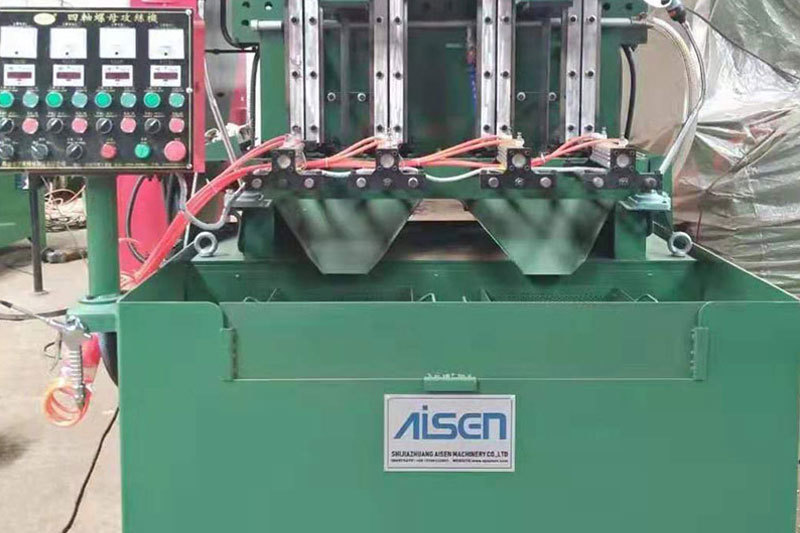
AISEN Four axis nut tapping machine ready for shipment to Russia
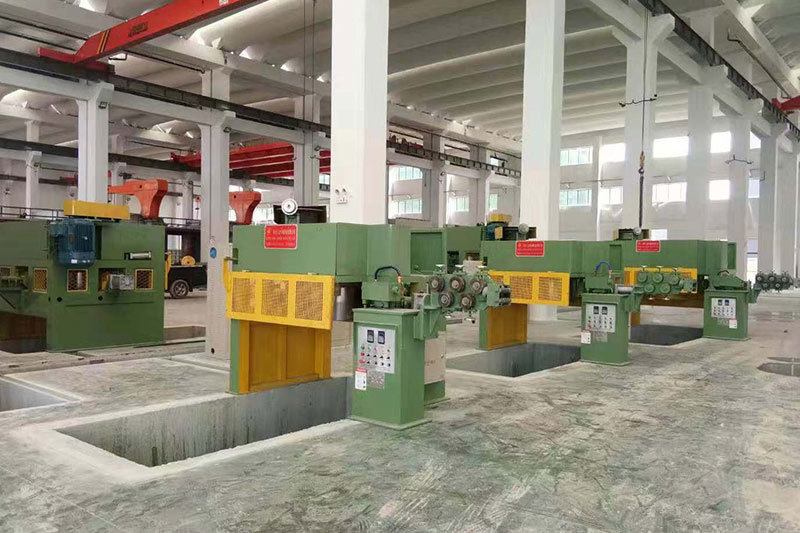
AISEN machinery inverted wire drawing machine
MESSAGES
We will contact you within one working day. Please pay attention to your email.
Qucik Link
Contact
Phone: +86-15100123091
E-mail: info@sjzaisen.com
Address: No.41 Zhaiying South Street, Yuhua District, Shijiazhuang City, Hebei Province China