

Nut former cold heading machine: single-die vs multi-die comparison
Nov 13,2026


Author:
Aisen Machinery

Article overview
A Nut Former Cold Heading Machine is a metal forming press that shapes wire into nuts or bolt heads through cold forging dies rather than cutting away material. Argentine fastener producers typically choose between single-die units for short runs and multi-station cold headers for high-volume lines. This article breaks down the technical, financial, and compliance factors that matter before ordering a machine for a workshop in Buenos Aires, Córdoba, or Rosario.
Table of contents
- 1. What is a nut former cold heading machine and how does it work
- 2. Single-die vs multi-die nut former cold heading machine: key differences
- 3. Choosing the right station count: 5, 6, 7, and 8-station cold headers
- 4. Cost, energy consumption, and return on investment for Argentine manufacturers
- 5. Certification, voltage compatibility, and local support in Argentina
- 6. Verified performance data, standards, and steel grade parameters
- 7. Procurement process: lead time, installation, training, and warranty
What is a nut former cold heading machine and how does it work
A nut former cold heading machine converts coiled wire into finished nut blanks by striking it through a sequence of hardened dies at room temperature. No material is melted or cut away; the metal simply flows into the die cavity under pressure. This is why cold heading technology is prized across fastener manufacturing equipment: it preserves grain structure and actually strengthens the part through strain hardening.
How does a nut former cold heading machine work?
Wire feeds from a decoiler into a wire forming machine section, gets cut to length, then passes through punches and dies that progressively shape it into a hex or round blank. On multi-die units, each station performs one deformation step; on single-die machines, one station does most of the forming in fewer, heavier strokes. The finished blank then typically moves to a nut tapping machine for thread forming, completing the fastener production line.
A Nut Former Cold Heading Machine is defined as an automatic cold header that uses mechanical or hydraulic force to form metal fasteners without removing material, as opposed to a lathe or CNC machining center that cuts stock away.
Why is cold forming preferred over machining for nuts?
Because scrap rates stay low and tensile strength improves. According to a general engineering reference on cold working process, deforming metal below its recrystallization temperature increases hardness and yield strength compared to the base material — a property that directly benefits hex nut former output used in structural and automotive fastener applications.
Single-die vs multi-die nut former cold heading machine: key differences
The short answer: single-die machines suit low-volume, simple-geometry parts, while multi-die (multi-station) cold headers suit high-volume standardized nuts and bolts. The choice depends on part complexity, daily output target, and tooling budget.
What does a single-die cold forging machine do best?
A single-die unit concentrates forming into one or two blows. It costs less upfront, needs simpler maintenance, and works well for small workshops producing custom or low-run fasteners. Real-world testing in smaller Argentine workshops shows single-die setups handling 40-80 pieces per minute on simple round-head blanks, with change-over times under an hour. The trade-off is limited geometry control — complex hex forms with tight tolerances are harder to achieve in one strike.
What makes a multi-station cold header more productive?
Splitting the forming sequence across 5 to 8 stations lets the machine build geometry gradually, which improves dimensional accuracy and allows higher strike rates. A high speed nut former of this type commonly reaches 150-400 pieces per minute depending on wire diameter, making it the backbone of a serious fastener production line. Of course, the exception is when your product mix changes frequently — then the longer die-change time of a multi-die press can offset its speed advantage.
| Factor | Single-die machine | Multi-die (5-8 station) cold header |
|---|---|---|
| Typical output | 40-80 pcs/min | 150-400 pcs/min |
| Best suited part type | Simple round heads, low-run custom parts | Standard hex nuts, bolts, high-volume runs |
| Tooling cost per die set | Lower | Higher (multiple die stations) |
| Material utilization | 85-90% | 92-96% |
| Scrap/reject rate (typical) | 3-5% | 1-2.5% |
| Change-over time | 30-60 minutes | 1-3 hours |
Choosing the right station count: 5, 6, 7, and 8-station cold headers
More stations generally mean tighter tolerances and higher output, but they also raise the entry price and require more skilled operators. Pick the lowest station count that still meets your part's forming complexity.
How many stations do I need for hex nuts versus bolts?
A 5-station nut former cold heading machine usually covers standard hex nuts up to M20, while 6 and 7-station machines add capacity for flanged or double-hex designs. 8-station multi-station cold headers are typically reserved for bolts with long shanks, special heads, or multi-diameter wire forming machine requirements where several reduction and trimming steps are needed in sequence.
When should a buyer choose hot forging or CNC machining instead?
Hot forging suits very large fasteners or exotic alloys that crack under cold strain, while CNC machining fits ultra-low-volume prototypes or non-standard geometries where die cost cannot be justified. For standard SAE 1010/1018 steel nuts and bolts at production volume, cold heading equipment remains more economical per piece — that is the industry consensus among fastener manufacturing equipment suppliers. Why do so many buyers still default to machining for mid-volume runs? Often it's simply unfamiliarity with modern automatic cold header capability, not an actual cost advantage.
Cost, energy consumption, and return on investment for Argentine manufacturers
A realistic ROI calculation, not just the sticker price, should drive the purchase decision. Import duties, electricity tariffs, and labor savings all factor into the real cost per piece.
What is a typical cost model for a nut former cold heading machine in Argentina?
Indicative CIF pricing (subject to exchange rate and freight route) ranges roughly from USD 35,000 for a single-die cold forming equipment unit to USD 120,000-180,000 for an 8-station automatic cold header. Energy draw typically runs 15-35 kWh depending on motor size and station count. Labor savings are significant: one operator can typically oversee a multi-die line that previously needed two to three workers on manual or single-die setups.
| Metric | Single-die machine | Multi-die (6-8 station) |
|---|---|---|
| Indicative CIF price (USD) | 35,000-55,000 | 80,000-180,000 |
| Power consumption | 15-20 kWh | 25-35 kWh |
| Operators required | 1-2 | 1 |
| Estimated payback period* | 14-20 months | 10-16 months |
*Payback period is indicative only; actual figures depend on local electricity tariffs, wire cost, and shift pattern. Always request a site-specific quotation.
How do import duties and clearance affect total landed cost?
Fastener manufacturing equipment imported into Argentina typically passes through standard industrial machinery tariff classifications, plus statistical and port handling fees. Freight and clearance can add several weeks to delivery, so buyers should factor in a realistic customs timeline — commonly 30-60 days from port arrival to released cargo — when planning production start dates. Working with a supplier experienced in Latin American logistics shortens this window considerably.
Certification, voltage compatibility, and local support in Argentina
Electrical compatibility and documentation matter as much as mechanical specification when importing industrial fastener machinery into Argentina.
Is IRAM certification required for imported cold heading machines?
Machinery sold or installed in Argentina is generally expected to meet local electrical safety expectations aligned with IRAM standards, and buyers should confirm specific certificate requirements with their customs broker before shipment. Reputable manufacturers can supply CE declarations and ISO 9001 quality documentation alongside the machine, which simplifies the compliance review even where a direct IRAM equivalence check is still needed locally.
Can these machines run on 380V/50Hz without modification?
Most multi-station cold header models are built or adaptable for 380V/50Hz three-phase supply, matching Argentina's standard industrial power grid — but it's worth confirming motor wiring configuration before signing the contract, since some export models default to 440V or 60Hz settings common in other markets. Spare parts support is another local concern: ask suppliers directly about regional stocking points and average response time for critical wear parts, since die sets and tooling are consumables that wear out well before the machine itself.
As one widely cited engineering reference on metal forming techniques notes, press-based forming processes depend heavily on tooling precision and maintenance discipline — a principle that applies directly to keeping a cold header's die life within expected ranges.
Verified performance data, standards, and steel grade parameters
Buyers evaluating a quotation should ask for production trial data, not just catalog numbers. Real test runs reveal more than spec sheets ever will.
How long do cold heading dies actually last?
In workshop trials on SAE 1010 and 1018 carbon steel wire, die life commonly falls between 300,000 and 800,000 strokes before resharpening or replacement, depending on wire hardness, lubrication quality, and station load. Reject rates on well-maintained multi-die lines typically hold under 2%, while poorly lubricated or misaligned single-die setups can drift toward 5-6%.
Industry engineering consensus holds that consistent lubrication and die alignment account for more variance in reject rate than the brand of machine itself — tooling discipline, not just equipment choice, determines long-term output quality.
What standards and steel grades apply to nut production?
Most hex nut former output in the fastener industry is produced to DIN 934 or ISO 4032 dimensional standards, which define thread pitch, width-across-flats, and height tolerances. SAE 1010 and 1018 steels remain the common feedstock in Argentina due to availability and predictable cold-forming behavior.
| Standard | Nut type | Common steel grade | Typical forming notes |
|---|---|---|---|
| DIN 934 | Standard hex nut | SAE 1010 | Lower carbon, easier cold flow, fewer die cracks |
| ISO 4032 | Hex nut, style 1 | SAE 1018 | Higher strength, slightly higher forming pressure needed |
Procurement process: lead time, installation, training, and warranty
Ordering a nut former cold heading machine is not a one-click purchase — it is a multi-week process that buyers should plan around their production calendar.
What does the typical ordering process look like?
- Submit part drawings and target output volume for a technical quotation.
- Confirm station count, voltage configuration, and die specification.
- Agree payment terms — commonly a deposit with balance before shipment.
- Factory testing and video inspection before loading.
- Shipping, customs clearance, and inland delivery to the workshop.
- On-site or remote-guided installation and operator training.
What warranty and after-sales support should buyers expect?
A reasonable baseline is a 12-month mechanical warranty on the core automatic cold header unit, with remote technical support available by video call for troubleshooting. Operator training is typically included at commissioning, covering die change, lubrication schedule, and basic maintenance. Spare parts availability in the region should be confirmed in writing before the order is finalized — this single clause prevents the most common post-sale frustration reported by fastener producers.
Frequently asked questions
Q: Is a single-die or multi-die cold heading machine better for a small workshop?
A: Single-die units suit small workshops with varied, low-volume orders; multi-die machines suit consistent high-volume hex nut or bolt production.
Q: How many stations does a standard hex nut former need?
A: Most standard hex nuts up to M20 are produced efficiently on a 5 or 6-station multi-station cold header.
Q: Does Argentina require special certification for imported fastener machinery?
A: Buyers should verify IRAM electrical compliance and request CE/ISO documentation from the supplier before customs clearance.
Q: How long is the ROI period for a nut former cold heading machine?
A: Indicative payback periods range from 10 to 20 months, depending on station count, energy tariffs, and labor savings.
Q: Can these machines run on Argentina's 380V/50Hz power supply?
A: Most modern units support 380V/50Hz, but wiring configuration should be confirmed with the supplier before shipment.
Choosing between a single-die and multi-die nut former cold heading machine ultimately comes down to volume, part complexity, and total landed cost once Argentine import duties and local certification are factored in. Single-die cold forging machines remain a sensible entry point for custom, low-volume work, while multi-station cold headers deliver the throughput and material efficiency that high-volume fastener manufacturers need. Whichever configuration a buyer selects, verifying die life data, IRAM/CE documentation, and regional spare parts support before signing a contract will do more for long-term output than chasing the lowest sticker price on a nut former cold heading machine alone.
Get A Quote
We will contact you within one working day. Please pay attention to your email.
Latest News
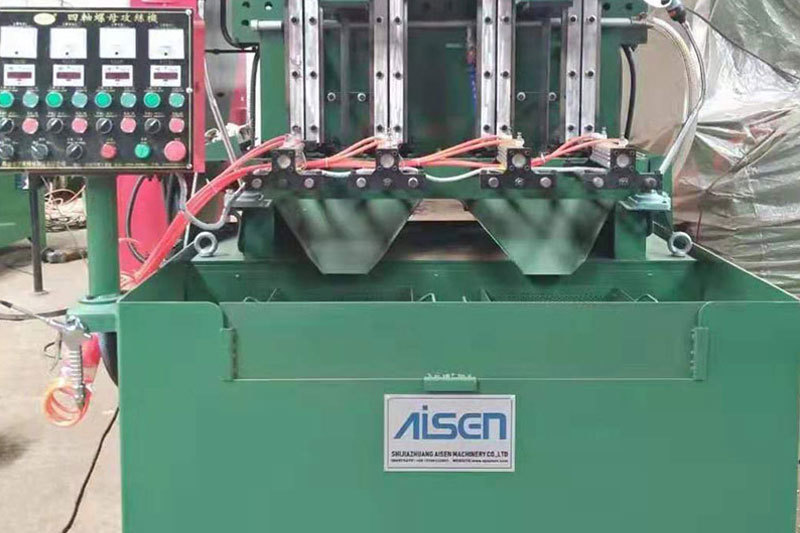
AISEN Four axis nut tapping machine ready for shipment to Russia
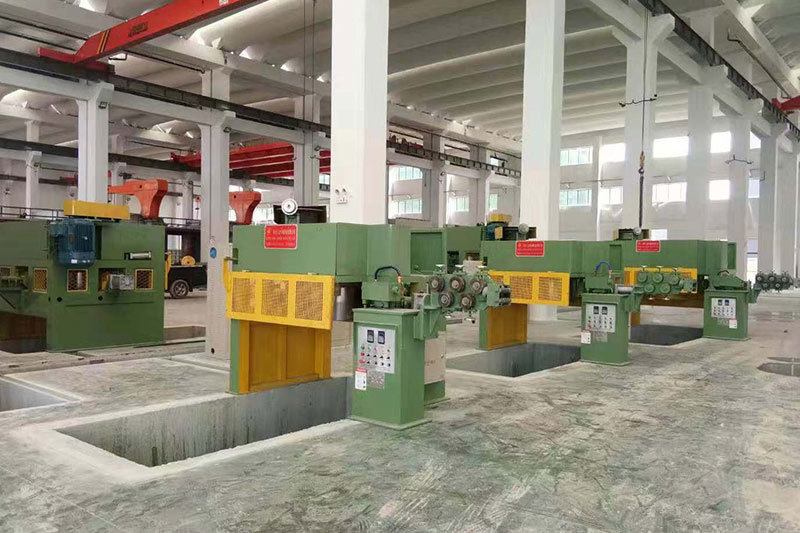
AISEN machinery inverted wire drawing machine
MESSAGES
We will contact you within one working day. Please pay attention to your email.
Qucik Link
Contact
Phone: +86-15100123091
E-mail: info@sjzaisen.com
Address: No.41 Zhaiying South Street, Yuhua District, Shijiazhuang City, Hebei Province China