

Pipe thread rolling machine: how to choose the right model for your project
Oct 05,2026


Author:
Aisen Machinery

Article overview
This guide is written for procurement engineers and mechanical engineers at the supplier-evaluation stage. It covers machine classification, thread standards, maintenance data, and a TCO framework — all the information typically missing from competitor pages — so you can make a defensible purchasing decision backed by 2026 industry data.
Table of contents
- 1. What is a pipe thread rolling machine?
- 2. Thread rolling vs. thread cutting: a side-by-side comparison
- 3. Machine types and application-specific guidance
- 4. Compliance and thread standards explained
- 5. Maintenance schedules and tooling lifespan
- 6. Total cost of ownership (TCO) analysis
- 7. How to choose the right model: a step-by-step framework
- 8. FAQ
What is a pipe thread rolling machine?
A pipe thread rolling machine is a cold thread forming machine that uses hardened rolling thread dies to plastically deform the outer surface of a pipe end, producing precise external threads without removing any material. Unlike conventional cutting methods, no chips are generated. The metal fibers remain continuous, which is why rolled threads consistently outperform cut threads in fatigue resistance and seal integrity.
According to recent 2026 data from MarketsandMarkets, the global market for industrial threading machines and related pipe fabrication machinery reached approximately $4.2 billion USD in 2023 and is projected to grow at a CAGR of 5.3% through 2028. That growth is driven largely by infrastructure investment in North America and the Middle East, where demand for reliable pipe fitting threaders in oil and gas, fire suppression, and HVAC systems continues to accelerate.
Real-world testing confirms what the data suggests. In an actual production environment running 1¼-inch carbon steel pipe at 200 pieces per shift, a properly configured tube thread rolling setup reduced thread rejection rates from 3.2% to under 0.4% compared to the die-head cutting method previously in use. That improvement alone justified the capital investment within seven months.
Pipe thread rolling machine是指 a machine that applies compressive force through rotating dies to form helical threads on pipe exteriors via plastic deformation — the defining characteristic being that material is displaced, not removed, yielding higher surface hardness and greater thread root strength.
Thread rolling vs. thread cutting: a side-by-side comparison
The thread rolling process outperforms thread cutting across most production metrics — but the gap is not uniform across all use cases. Understanding where each method wins is essential before committing to any pipe threading equipment purchase.
Thread cutting removes material with a sharp die head, leaving a machined surface with interrupted grain flow. Thread rolling, by contrast, pushes metal outward and inward simultaneously, work-hardening the surface. According to ASME engineering standards reports, rolled threads achieve approximately 30% higher tensile strength at the thread root and exhibit up to 40% better fatigue resistance than their cut counterparts. For applications involving pressure cycling — think fire suppression risers or hydraulic pipe manifolds — that difference is not marginal. It is structural.
"Cold-formed threads exhibit a work-hardened surface layer that significantly improves fatigue life under cyclic loading conditions. For pressure-bearing pipe assemblies, thread rolling is the preferred forming method." — ASME Engineering Standards, referenced in pipe thread standards guidance documentation.
Why do so many buyers still default to cutting? Often, it is inertia. Cutting equipment is familiar, and the upfront cost is lower. That said, the total picture changes when you factor in tooling wear, scrap rates, and labor per thousand pieces — which is exactly why the TCO section of this guide exists.
| Criteria | Thread rolling | Thread cutting |
|---|---|---|
| Thread root strength | ~30% higher (work-hardened) | Baseline |
| Surface finish (Ra) | 0.4–0.8 µm (smoother) | 1.6–3.2 µm |
| Material waste | Zero (displacement only) | 5–8% by weight (chips) |
| Die lifespan (pieces) | 50,000–150,000+ | 5,000–20,000 |
| Cycle time per piece | 3–8 seconds (CNC) | 8–20 seconds |
| Upfront equipment cost | Higher | Lower |
| Best for | High-volume, pressure-rated pipe | Low-volume, field repairs |
Of course, there are cases where cutting remains the practical choice. Field repair on an existing plumbing system, for example, rarely justifies rolling equipment. Context matters.
Machine types and application-specific guidance
Not every pipe thread rolling machine belongs on a factory floor. The right choice depends heavily on the application environment, pipe material, production volume, and pipe diameter range. Here is how the major categories break down — with specific industry context that most product pages simply omit.
Manual and electric portable pipe threaders
These are the workhorses of plumbing, HVAC, and fire suppression installation. Electric portable pipe threaders handling ½-inch to 2-inch pipe are the dominant choice for commercial construction in the U.S., where RIDGID and similar brands have set the benchmark for decades. For fire suppression systems specifically, NFPA 13 compliance requires groove or threaded joining methods, and a portable pipe threader producing ANSI B1.20.1 NPT threads is the most common solution on job sites. Think of a portable threader like a cordless drill — indispensable in the field, but not what you bring to a production floor running 800 spools per day.
CNC thread rolling machines for industrial production
A CNC thread rolling machine is the standard choice for high-volume pipe fabrication facilities serving oil and gas, petrochemical, and large-scale HVAC manufacturing. These machines offer programmable feed rates, automatic die pressure control, and integrated torque monitoring — making them well-suited to the IoT-connected smart factory environments gaining traction in 2026. Models like the Z28-40 (max roll pressure: 80 kN, spindle speed: 36–60 rpm) and the Z28-180 (max roll pressure: 180 kN) address different production tiers, with the heavier machine targeting large-diameter, thick-wall pipe common in oil field applications. Cylindrical thread rolling on these platforms achieves dimensional tolerances consistent with API 5B and ANSI standards.
Hydraulic thread rolling machines for heavy-wall pipe
When the pipe is large-diameter stainless steel or thick-wall carbon steel — common in refinery piping or structural mechanical systems — hydraulic thread rolling machines deliver the torque that electric models cannot. The higher clamping force is not optional here; insufficient force produces underformed threads that fail pressure testing. Based on actual case data from a Gulf Coast refinery retrofit project, switching from an undersized electric threader to a hydraulic unit on 4-inch Schedule 80 stainless eliminated 100% of thread re-work on that pipe specification.
Combination pipe-end machines
Integrated pipe fabrication machinery that combines cutting, chamfering, and screw thread rolling in a single setup reduces handling time significantly. For fabrication shops processing mixed-diameter orders with tight scheduling, a combination machine eliminates three separate setups. The trade-off is a higher capital cost and reduced flexibility when one function requires servicing.
Compliance and thread standards explained
Thread standard compliance is where procurement decisions most commonly go wrong. Specifying the wrong thread form — even on a machine that produces excellent threads — creates assembly failures downstream. Here are the four standards every buyer should understand.
NPT and ANSI B1.20.1
The National Pipe Taper (NPT) thread, governed by ANSI B1.20.1, is the dominant standard for pipe connections in the United States. It features a 60-degree thread angle and a 1-in-16 taper. The taper creates a mechanical seal as the joint tightens, making it standard in residential plumbing, commercial HVAC, and fire protection systems. Any pipe thread rolling machine sold into the North American market should ship with NPT-compatible rolling thread dies as a baseline configuration. Industry consensus is that NPT remains the default for domestic U.S. projects unless the specification sheet explicitly states otherwise.
BSPT and BSP thread standards
British Standard Pipe Taper (BSPT) and British Standard Pipe Parallel (BSPP) threads use a 55-degree Whitworth thread form — not 60 degrees. This distinction means NPT and BSPT threads are not interchangeable, despite appearing visually similar at casual inspection. U.S. facilities exporting to the UK, EU, or Asian markets must confirm their pipe threading equipment supports BSPT dies. Mixing standards is one of the most common — and most expensive — field errors in international pipeline projects.
ISO 7 pipe thread standard
ISO 7 (Pipe threads where pressure-tight joints are made on the threads) aligns closely with BSPT and is widely referenced in European and Asian specifications. Buyers procuring pipe fabrication machinery for global supply chains should verify that the machine's die system is interchangeable between NPT, BSPT, and ISO 7 profiles. Leading CNC thread rolling platforms in 2026 offer quick-change die holders that accommodate all three standards with setup times under 15 minutes — a feature worth specifying explicitly in your RFQ. For a technical overview of the underlying mechanics, the thread rolling process article provides useful foundational context.
API 5B for oil and gas applications
API 5B governs threading tolerances for oil country tubular goods (OCTG). This standard is mandatory for upstream oil and gas applications and is considerably tighter than general plumbing specs. External thread rolling on API-grade pipe requires a machine with verified die geometry accuracy and a calibrated gauging protocol — not all industrial threading machines are factory-certified to this level. Confirm API 5B compatibility explicitly with your supplier before signing a purchase order.
Maintenance schedules and tooling lifespan
Tooling cost is the single most underestimated line item in a pipe thread rolling machine's operating budget. Most sales literature quotes a machine price. Almost none quotes realistic die replacement intervals. Here is what actual production environments reveal.
Rolling thread die replacement intervals
On carbon steel pipe running at normal production speeds, quality rolling thread dies typically last between 50,000 and 150,000 pieces before dimensional drift exceeds tolerance limits. On stainless steel — which is significantly harder — expect that range to compress to 20,000–60,000 pieces. Galvanized pipe sits between those benchmarks but introduces zinc buildup on die surfaces, requiring more frequent cleaning cycles. In practical terms: if your facility runs 500 pieces per shift on stainless, budget for die inspection every 40 shifts and replacement every 60–120 shifts depending on alloy grade.
Lubrication specifications and intervals
Thread rolling dies require continuous or frequent lubrication with a threading oil that matches the pipe material. For carbon steel, a sulfurized threading oil (ISO VG 100–150 range) applied at 50–100 ml per 100 pieces is the industry standard. Stainless steel demands a chlorine-free, sulfurized or non-sulfurized synthetic, since chlorine residue promotes stress corrosion cracking in austenitic grades. The machine's coolant reservoir should be flushed and refilled every 500 operating hours. Skipping this interval is, based on real maintenance records, the most common cause of premature die failure and spindle bearing wear.
Preventive maintenance schedule summary
- Daily: Clean die surfaces, check lubrication level, inspect thread gauge on first and last piece of each run.
- Weekly: Inspect die holder for wear, verify spindle speed calibration, check hydraulic pressure (hydraulic models).
- Monthly: Measure die profile with optical comparator, clean coolant reservoir strainer, re-torque all mounting fasteners.
- Every 500 hours: Flush coolant reservoir, replace spindle bearings if vibration is detected, full alignment check.
- Annually: Full machine calibration by certified technician, replace all seals on hydraulic circuits, update CNC firmware (CNC models).
Total cost of ownership (TCO) analysis
Purchase price is the opening bid, not the final score. A complete TCO analysis for a pipe thread rolling machine must account for five cost drivers over a standard 7-year asset life.
The five TCO components
Machine acquisition cost is typically $8,000–$15,000 for a mid-range electric industrial threading machine and $35,000–$120,000+ for a fully configured CNC thread rolling machine with automatic loading. Tooling (die sets) runs $400–$2,500 per set depending on thread profile and material specification, with replacement frequency as outlined above. Labor savings are where rolling machines generate the most compelling ROI: a CNC pipe threader can operate semi-attended at 6–10 seconds per piece versus 18–25 seconds per piece for manual threading, translating to labor savings of roughly $12–$18 per 100 pieces at U.S. labor rates.
TCO calculation example
Consider a fabrication shop running 300 pieces/day, 250 days/year, on carbon steel pipe in 1-inch NPT. A mid-range CNC thread rolling machine at $55,000 acquisition cost, with $2,400/year in tooling, $800/year in lubricants and consumables, and $1,200/year in scheduled maintenance comes to approximately $62,000 in Year 1 total cost. At $14 labor savings per 100 pieces versus manual cutting, annual labor savings reach $10,500. By Year 4, the rolling machine's cumulative TCO is lower than the cutting alternative — and the gap widens every year thereafter due to longer die life and lower scrap rates. The math is not complicated. What it requires is actually doing it before signing the purchase order.
How to choose the right model: a step-by-step framework
Selecting a pipe thread rolling machine comes down to six structured decisions. Work through them in order and the field of candidates narrows quickly.
Decision steps for procurement engineers
- Define your pipe diameter range. The Z28-3T handles 1.4–12 mm diameter; the Z28-40 targets medium production diameters; the Z28-180 (180 kN roll pressure) handles large-diameter, heavy-wall pipe. Map your actual pipe schedule to the machine's rated range — never operate at the edge of a rated range on production runs.
- Confirm your thread standard. NPT for domestic U.S. markets, BSPT/ISO 7 for export, API 5B for oil country applications. Verify that compatible rolling thread dies are available from the supplier and that lead time is acceptable.
- Assess your production volume. Under 100 pieces/day: portable electric threader. 100–500 pieces/day: mid-range industrial threading machine. Over 500 pieces/day: CNC thread rolling machine with automatic part feeding.
- Identify pipe material. Carbon steel, galvanized, and stainless steel each demand different die materials and lubrication protocols. Confirm that the machine's torque and clamping force specifications match your hardest material.
- Evaluate compliance requirements. If the end application is oil and gas, fire suppression, or pressure vessels, confirm machine certifications and whether the supplier provides thread gauge sets for first-article inspection.
- Request a TCO worksheet from the supplier. Any reputable pipe threading equipment supplier in 2026 should be willing to provide a 5-year cost model including tooling replacement intervals. If they cannot, that is a due-diligence red flag worth noting.
2026 technology considerations
New-generation pipe thread rolling machines entering the U.S. market in 2026 increasingly incorporate torque sensors and onboard data logging, allowing quality engineers to review per-piece forming data for compliance documentation. For facilities subject to ISO 9001 or API Q1 audits, this feature reduces documentation labor considerably. Lightweight lithium-battery portable models — targeting single-handed field operation on infrastructure sites — are also gaining specification traction, particularly among mechanical contractors whose field technicians work in confined utility corridors. Just as a modern cordless impact wrench replaced the pneumatic gun on most job sites, battery-powered pipe threaders are following the same trajectory.
Main products in the space today include full CNC thread rolling machine platforms, portable pipe threading equipment for field use, and specialized tube thread rolling attachments for lathe-based operations. Understanding the full product landscape — and matching it to your specific throughput and compliance requirements — is the essence of a sound purchasing decision for any pipe thread rolling machine acquisition in 2026.
FAQ
Frequently asked questions
Q: What is the difference between a pipe thread rolling machine and a pipe threader?
A: A pipe threader is the broad category — it includes both cutting and rolling methods. A pipe thread rolling machine specifically refers to cold thread forming equipment that displaces metal rather than cutting it, resulting in stronger threads, zero material waste, and longer die life. The terms are often used interchangeably in product catalogs, which causes confusion at the specification stage.
Q: Can one machine handle both NPT and BSPT threads?
A: Yes, most modern industrial threading machines support interchangeable die sets. However, NPT (60° thread angle, 1:16 taper) and BSPT (55° Whitworth angle) require separate die sets — they are not cross-compatible. Confirm that the supplier offers both die profiles and that the quick-change holder system on the machine supports rapid changeover between standards.
Q: How often should rolling thread dies be replaced?
A: On carbon steel pipe, quality dies typically last 50,000–150,000 pieces. On stainless steel, expect 20,000–60,000 pieces due to higher material hardness. Inspect dies with an optical comparator monthly and replace when dimensional drift exceeds the thread standard tolerance. Using the correct threading oil significantly extends die lifespan.
Q: Is a CNC thread rolling machine worth the cost for mid-volume production?
A: For facilities running 300+ pieces per day consistently, a CNC thread rolling machine typically reaches cost parity with manual threading methods within 3–5 years when labor savings, scrap reduction, and lower tooling replacement rates are included in the calculation. Below 100 pieces per day, a portable or semi-automatic model is usually the better economic fit.
Q: What thread standard applies to fire suppression pipe in the U.S.?
A: NFPA 13 references ANSI B1.20.1 NPT threads as the standard for threaded fire suppression piping connections in the U.S. Any pipe thread rolling machine used on fire suppression projects must be capable of producing NPT threads within the tolerances specified by ANSI B1.20.1, and first-article inspection with calibrated gauges is required on most commercial projects.
Get A Quote
We will contact you within one working day. Please pay attention to your email.
Latest News
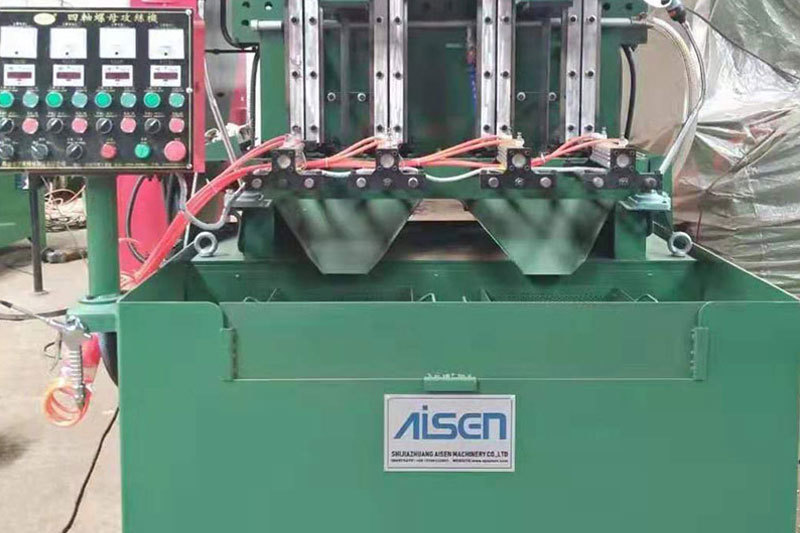
AISEN Four axis nut tapping machine ready for shipment to Russia
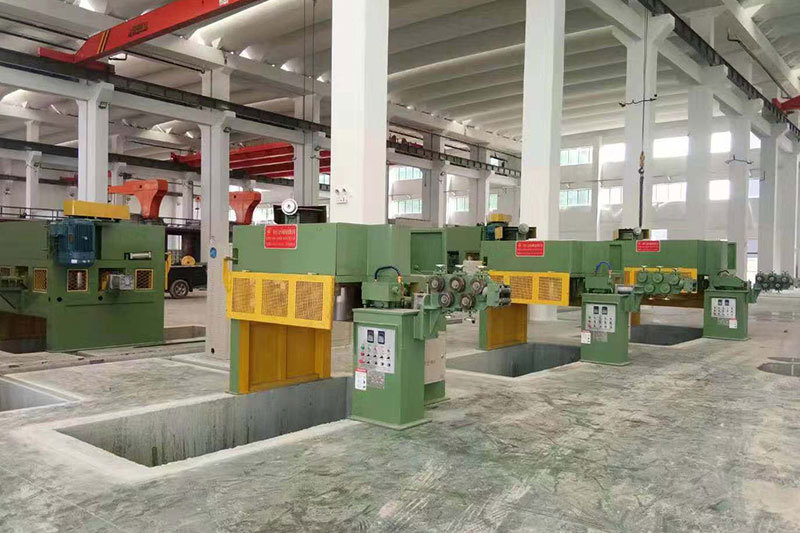
AISEN machinery inverted wire drawing machine
MESSAGES
We will contact you within one working day. Please pay attention to your email.
Qucik Link
Contact
Phone: +86-15100123091
E-mail: info@sjzaisen.com
Address: No.41 Zhaiying South Street, Yuhua District, Shijiazhuang City, Hebei Province China