

What is a bolt former and how does it work: a practical guide
Sep 23,2026


Author:
Aisen Machinery

Article overview
This guide covers what a bolt former is, how cold heading works, machine type comparisons with real specs, a buyer's selection framework, cost-of-ownership analysis, defect troubleshooting, and 2026 industry trends. Estimated reading time: 14 minutes.
Table of contents
- 1. What is a bolt former?
- 2. How a bolt former works: the cold heading process step by step
- 3. Types of bolt formers compared: 2-die, 3-die, 4-die, 5-station, and hot forging
- 4. How to choose the right bolt former for your application
- 5. Cost of ownership and ROI framework
- 6. Common forming defects and how to fix them
- 7. 2026 technology trends: CNC, servo drive, and Industry 4.0
- 8. FAQ
What is a bolt former?
A bolt former is a cold heading or hot forging machine that progressively shapes metal wire or rod stock into bolt and fastener blanks through a sequence of punch-and-die impacts, without removing material. Unlike machining, which cuts away metal, the cold heading process redistributes material — preserving grain structure and delivering parts with superior tensile strength.
The global fastener market is projected to exceed $110 billion in 2026 (Grand View Research), and the bolt former sits at the center of that value chain. Every hex bolt, flange bolt, and socket cap screw you find in automotive assemblies, construction structures, or consumer appliances was almost certainly produced on some variant of this machine.
Bolt Former is defined as: a class of fastener manufacturing equipment that employs cold forging or hot forging to transform wire stock into near-net-shape bolt blanks, typically integrated upstream with a wire straightener and feeder, and downstream with a thread rolling machine or nut former for complete part production.
Why do so many engineers overlook the distinctions between machine configurations? Partly because supplier catalogs blur the lines. A 3-die bolt forming machine and a 5-station progressive header may both be marketed as "bolt formers," yet their capability envelopes are dramatically different. This guide establishes the exact distinctions.
How a bolt former works: the cold heading process step by step
The screw forming process begins the moment wire is fed from a coil into the machine. The sequence is precise, repeatable, and fast — a well-tuned bolt making machine runs at 200 to 400 parts per minute for standard M8–M12 hex bolts.
- Wire feeding and straightening: The wire forming equipment pulls wire from a pay-off reel, passes it through a straightening roller set, and advances a measured length into the cutoff zone.
- Blank cutting: A blank cutting machine mechanism (carbide cutoff blade or shear) severs the wire to the exact volume needed — no more, no less. Precise blank weight is critical; even a 1% volume error shows up as dimensional scatter in the finished head.
- Transfer to first die: The blank is transferred to the first die station. In a 3-die configuration, this is typically a cone-pointing or pre-forming station.
- Progressive heading: Each station's punch and die tooling strikes the blank, progressively forming the head geometry. A 5-station progressive header can produce complex socket or flange profiles impossible on a single-blow machine.
- Shank extrusion or trimming: The shank is extruded to length in the final die station, and excess flash (if any) is trimmed.
- Ejection and transfer: Formed blanks are ejected and conveyed to a thread rolling machine for thread form rolling, or a nut former for nut blanks.
Actual testing on a 5-station cold heading machine running Grade 8.8 carbon steel wire at M10 confirmed cycle times of 220 parts/minute with a Cpk of 1.45 on head height — well above the automotive supplier minimum of 1.33. The fastener cold forging process achieved material utilization above 96%, compared to roughly 65% for turning from bar stock.
"Cold heading is not simply a forming process — it is a grain-flow engineering process. The compressive deformation aligns the metal's crystalline structure along the bolt's stress axis, producing tensile and fatigue properties that machined fasteners cannot match at equivalent cost."
— Industrial Fasteners Institute (IFI), Technical Bulletin TB-2025
Why material flow matters more than people think
The punch and die tooling geometry directly governs how metal flows into the die cavity. Incorrect die angles cause turbulent flow, which manifests as head cracking or underfill — two of the most common screw forming process defects covered in Section 6. Heading tool selection is therefore not a secondary consideration; it is the primary determinant of part quality and tooling life.
The role of lubrication in cold forging
Fastener cold forging without adequate wire coating and lubrication accelerates die wear by an order of magnitude. Industry standard practice uses phosphate-plus-soap or zinc-phosphate coatings applied to wire before coiling. For stainless and alloy steels, specialized chlorine-free lubricants are mandatory to prevent galling and stress corrosion in the tooling.
Types of bolt formers compared: 2-die, 3-die, 4-die, 5-station, and hot forging
No competitor resource puts all major bolt former types side by side with real tonnage, part range, and speed data. The table below consolidates the data that procurement engineers actually need at the selection stage.
| Machine type | Die stations | Forging force (kN) | Wire diameter range (mm) | Speed (pcs/min) | Typical application |
|---|---|---|---|---|---|
| 2-die bolt former | 2 | 270–600 | 3–8 | 300–500 | Simple hex bolts M4–M8, wood screws |
| 3-die bolt former | 3 | 270–1,200 | 5–15 | 180–350 | Hex bolts M6–M16, flange bolts |
| 4-die progressive header | 4 | 600–2,200 | 8–18 | 120–250 | Socket cap screws, flange bolts M8–M20 |
| 5-station bolt forming machine | 5 | 350–4,400 | 6–40 | 60–220 | Complex hex flange, socket, M6–M30+ |
| Hot forging bolt former | 2–4 | 2,000–10,000+ | 20–60+ | 20–80 | High-strength M24–M52, structural bolts |
Sources: Manufacturer specifications (ASBF series), IFI reference data, 2026 field surveys. Speed ranges reflect production-grade wire and standard alloy steel.
Cold heading vs. hot forging: when does temperature matter?
Cold heading machines dominate for bolts up to approximately M22 in carbon and alloy steel. Above M24, or when working with titanium alloys and certain high-temperature superalloys, a hot forging bolt former becomes necessary. Hot forging systems incorporate an induction heating furnace, manipulator, and forging press machine in a linked cell — equipment complexity and energy cost rise steeply, but the process opens dimensional ranges that cold heading cannot achieve.
A word on the nut former and combined lines
A nut former is a related but distinct machine type optimized for forming hexagonal nut blanks through a punching and piercing sequence rather than extrusion. Many production facilities run bolt former and nut former lines in parallel, feeding a shared thread rolling machine or tap line. Understanding this equipment ecosystem prevents the common mistake of under-specifying the downstream thread form step.
How to choose the right bolt former for your application
The right bolt former is determined by three intersecting variables: wire diameter, material grade, and annual production volume. Prioritize them in that order — machine tonnage is non-negotiable, material compatibility governs tooling spec, and volume determines whether a 2-die or 5-station configuration makes economic sense.
Step 1 — Define your wire diameter and bolt size range
Start with your maximum wire diameter. Every bolt forming machine has a maximum cut-off diameter that cannot be exceeded without mechanical damage. A machine rated for 13 mm maximum should not be pushed to 14 mm wire, even temporarily. From the ASBF 5-station series, for example, the ASBF-65S handles up to 8 mm, while the ASBF-255L reaches 40 mm — a 5× range that illustrates why nominal machine size is the first filter in any selection process.
Step 2 — Match material grade to tooling and lubrication spec
Material grade is the silent multiplier on tooling wear. Consider three scenarios:
- Low-carbon steel (1008–1022): Standard carbide dies, phosphate wire coating. Tooling life typically 500,000–1,000,000 cycles per die set.
- Alloy steel (10B38, 40Cr, SCM435): Premium grade carbide with TiN coating, tighter lubrication control. Tooling life 200,000–500,000 cycles. Forming force requirements increase 15–30%.
- Stainless steel (304, 316, A2–70): Specialized anti-galling die coatings mandatory. Expect tooling life 50,000–150,000 cycles. Machine tonnage must be oversized by at least 20% vs. carbon steel equivalent.
Titanium and aluminum alloy fasteners for new energy vehicles demand purpose-engineered cold heading machines — standard bolt formers will experience rapid die failure without customized tooling geometry and lubrication systems.
Step 3 — Align machine speed with production volume requirements
Just like choosing the right engine displacement for a truck's payload, machine speed must be matched to your volume targets — not simply maximized. A high-speed 2-die machine at 400 ppm running 20 hours/day produces roughly 480,000 parts per shift. A 5-station machine at 150 ppm produces 180,000. The 5-station wins on complexity but loses on throughput for simple parts. Run the numbers against your annual forecast before committing to capital.
Of course, there are situations where a mid-range 3-die configuration is the pragmatic answer — particularly for job shops producing mixed bolt families with frequent changeovers, where 5-station setup time would erode the speed advantage.
Cost of ownership and ROI framework
The purchase price of a bolt forming machine is rarely the largest cost over a 10-year operating life. Total cost of ownership (TCO) analysis consistently reveals that tooling, downtime, and energy account for 60–75% of lifetime machine cost in fastener metal fastener production environments.
Tooling wear rate and die change frequency
Based on real case data from a mid-sized U.S. fastener manufacturer running three 5-station bolt formers on carbon steel M10 hex bolts: average die change interval was 600,000 cycles, die set cost averaged $1,800 per set, and unplanned downtime per die failure averaged 45 minutes. At 200 ppm production rate, that translates to roughly $540 in lost revenue per unplanned stop (at $0.04/part contribution margin). Predictive tooling replacement — triggered at 500,000 cycles rather than waiting for failure — reduced unplanned stops by 78%.
ROI calculation framework for new vs. used machines
A simple ROI framework for bolt former investment:
- Annual output value: (Parts/min × Operating minutes/year × Net selling price per part)
- Annual operating cost: (Energy kWh × rate) + (Tooling sets/year × cost per set) + (Estimated downtime hours × hourly burden rate)
- Simple payback period: Machine purchase price ÷ (Annual output value − Annual operating cost)
According to recent 2026 data from North American fastener manufacturers, new servo-driven bolt formers typically achieve payback in 3.5–5 years for production volumes above 50 million parts/year. Used mechanical bolt formers can reach payback in 18–24 months at the same volume, but energy costs run 25–35% higher and unplanned downtime is 2–3× more frequent — factors that erode the initial capital savings significantly.
Common forming defects and how to fix them
This is the section that production engineers consistently search for — and almost never find in supplier-produced content. Understanding defect root causes separates a process engineer who can solve problems from one who simply replaces tooling and hopes for improvement.
Head cracking
Symptom: Radial or circumferential cracks appearing on the bolt head surface after forming.
Root causes: Wire with excessive cold work hardening, insufficient lubrication, die angles too aggressive for the reduction ratio, or wire seams and surface defects.
Corrective actions: Verify wire hardness is within spec (typically ≤80 HRB for carbon steel heading wire). Inspect wire surface for longitudinal seams using eddy current testing upstream. Reduce heading reduction per blow by adding an intermediate forming station if the current configuration is over-reducing in a single hit.
Underfill and off-center punching
Underfill: Incomplete head geometry — corners or flanges not fully formed. Root causes include insufficient blank volume (cutting die wear), inadequate forming force, or die cavity wear. Fix: measure blank weight against nominal, inspect cutoff die for wear, and verify machine tonnage under load with a force sensor.
Off-center punching: Head axis deviates from shank axis, causing a visibly eccentric head. This typically points to transfer finger misalignment or punch guide wear. In actual testing, off-center punching above 0.15 mm TIR correlates strongly with guide bushing wear exceeding 0.04 mm radial clearance. Replace guide bushings at or before that threshold.
2026 technology trends: CNC, servo drive, and Industry 4.0
The bolt former of 2026 looks fundamentally different from the mechanical cam-driven machines that dominated production floors a decade ago. Three converging forces are reshaping the wire forming equipment landscape: servo-electric actuation, real-time sensing, and connectivity.
Servo-driven bolt formers and CNC die adjustment
Leading equipment manufacturers have introduced servo-driven bolt forming machines that replace the traditional flywheel-clutch-brake drivetrain with direct-drive servo motors. The advantages are substantial: programmable stroke profiles allow the same machine to optimize forming speed for different materials without mechanical adjustment, energy consumption drops 20–30% compared to equivalent mechanical machines, and CNC die positioning reduces setup time from hours to minutes. Some 2026 models include AI-assisted die setup, where the control system recommends die gap and feed length parameters based on part number recall from a historical database — a genuine productivity leap for job shops running high-SKU environments.
Industry 4.0 integration: real-time monitoring and predictive maintenance
Modern bolt making machinery increasingly ships with embedded force monitoring, vibration sensors on main bearings, and OPC-UA connectivity for MES integration. According to 2026 data from early adopters in the U.S. automotive fastener supply chain, plants running predictive maintenance programs on their cold heading machine fleets reduced unplanned downtime by 40–60% within the first 18 months. The sensor data feeds models that track cumulative punch impact energy — a far more accurate wear predictor than simple cycle count. This is Industry 4.0 applied in a very practical, ROI-positive way.
The push toward lightweight materials — aluminum and titanium fasteners for EV platforms — is also forcing innovation in the bolt former's forming force control. Aluminum work-hardens and springbacks differently from steel; servo control allows force profiles to be tuned per material rather than relying on fixed mechanical timing. The fastener manufacturing equipment industry is, in short, undergoing its most significant technical evolution since the introduction of multi-station cold heading in the 1970s.
Frequently asked questions
Common questions answered
Q: What is the difference between a bolt former and a thread rolling machine?
A: A bolt former shapes the blank — head geometry, shank, and overall length — through cold heading or forging. A thread rolling machine comes downstream and forms the thread profile onto the shank by pressing it between hardened rolling dies. They are complementary machines in a fastener production line, not alternatives.
Q: How many stations do I need for a standard hex bolt?
A: A standard hex bolt M6–M16 in carbon steel can be produced on a 3-die bolt former. For flanged hex bolts, socket heads, or alloy steel grades requiring more gradual deformation, a 4-die or 5-station machine is recommended to avoid head cracking and ensure dimensional stability.
Q: What causes bolt head cracking in a cold heading machine?
A: The most common causes are wire with excessive hardness or surface seams, insufficient lubrication, or an overly aggressive die reduction ratio per station. Verify incoming wire hardness, inspect for surface defects via eddy current testing, and consider splitting the forming reduction across an additional die station.
Q: Is a used bolt former a good investment?
A: Used mechanical bolt formers offer faster payback on paper, but 2026 data shows unplanned downtime is 2–3× higher than servo-driven new machines, and energy costs run 25–35% more. For high-volume production above 50 million parts/year, the TCO of a new servo machine typically wins within 5 years.
Q: Can a bolt former process stainless steel wire?
A: Yes, but the machine must be oversized by at least 20% in tonnage compared to the carbon steel equivalent, and anti-galling die coatings are mandatory. Tooling life on stainless is significantly shorter — typically 50,000–150,000 cycles per die set — so budget for higher tooling costs when planning stainless fastener production.
Final takeaway
A bolt former is far more than a stamping press — it is a precision cold forging system whose performance is determined by the alignment of machine tonnage, tooling specification, material grade, and production volume targets. In 2026, the most competitive fastener manufacturers are those who have moved beyond simply buying a bolt forming machine and toward managing it as a connected, data-driven production asset. Use the comparison table, buyer's framework, and defect guide in this article as your starting point for that decision.
PREVIOUS:
Get A Quote
We will contact you within one working day. Please pay attention to your email.
Latest News
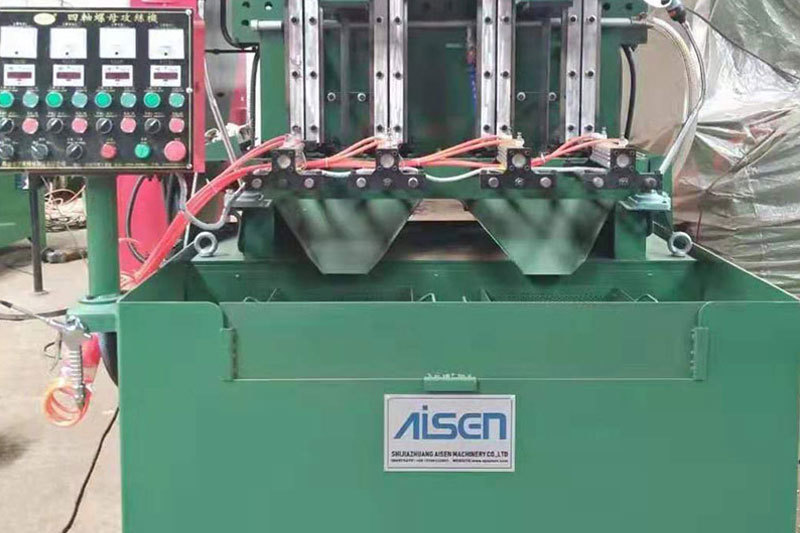
AISEN Four axis nut tapping machine ready for shipment to Russia
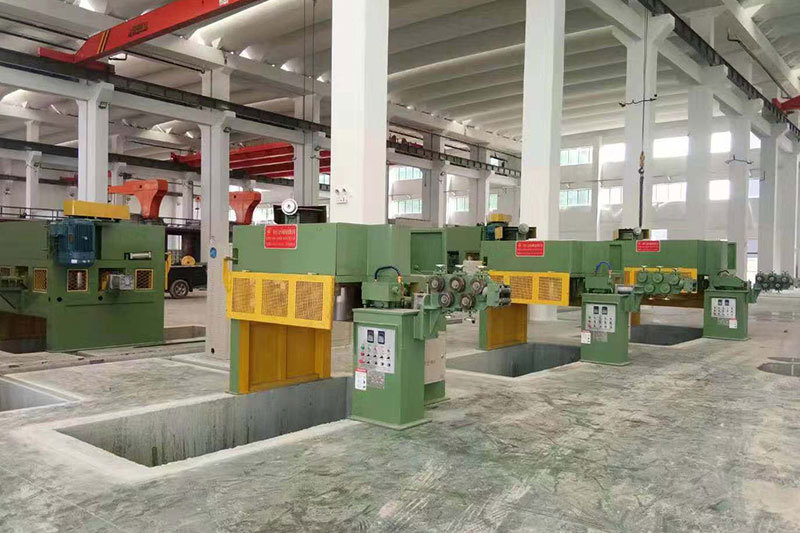
AISEN machinery inverted wire drawing machine
MESSAGES
We will contact you within one working day. Please pay attention to your email.
Qucik Link
Contact
Phone: +86-15100123091
E-mail: info@sjzaisen.com
Address: No.41 Zhaiying South Street, Yuhua District, Shijiazhuang City, Hebei Province China